by Deborah Lipp
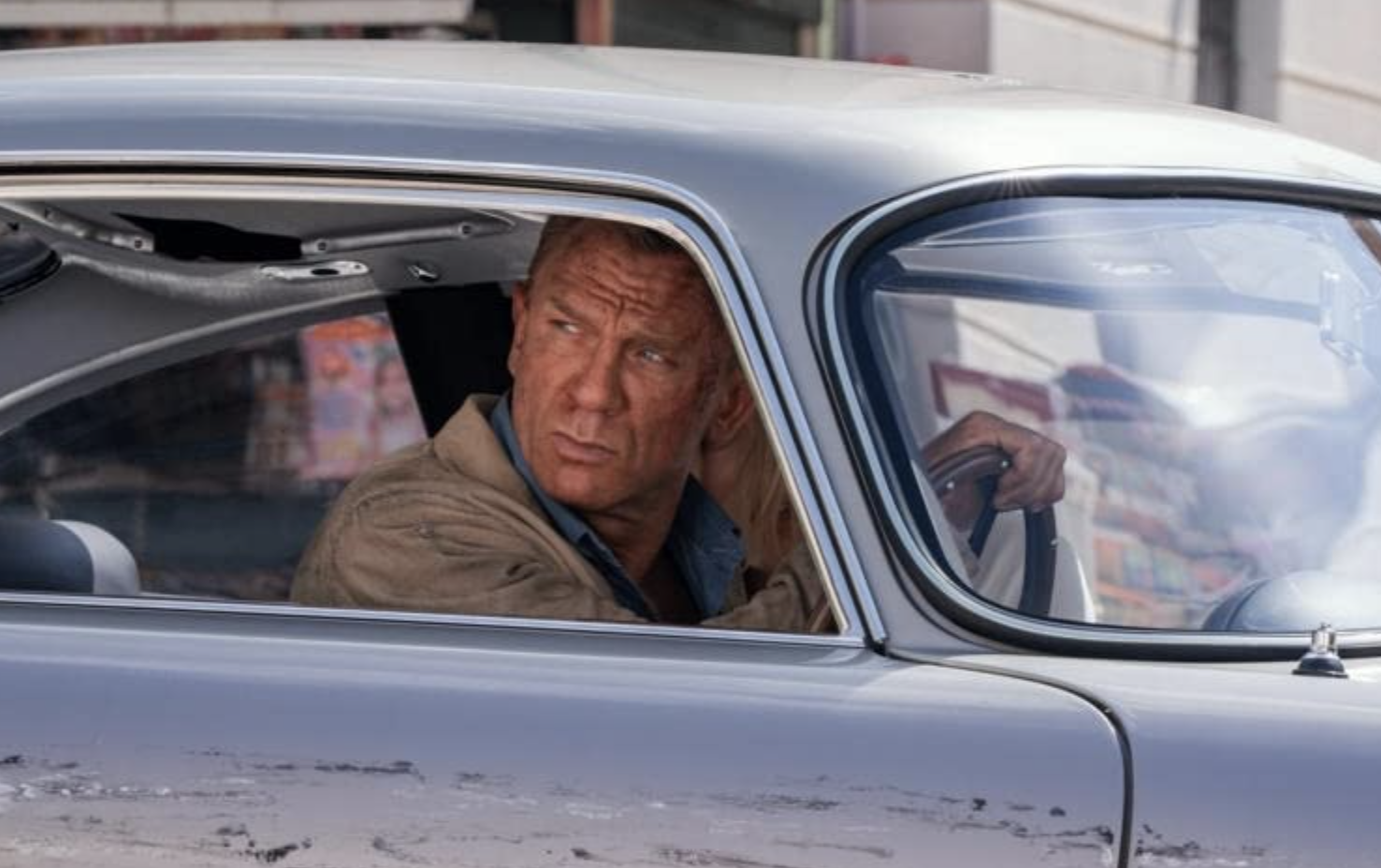
No Time To Die explicitly advertises itself as “the conclusion” of a series that began with Casino Royale (2006), so there’s no spoiler in talking about No Time to Die (2021) as the conclusion of Daniel Craig’s James Bond series. I will keep major spoilers out, but I will certainly talk about this film in a way that understands it in the context of the Bond franchise, and as a “conclusion” of sorts. Fair warning and all that.
As we have come to expect from the Bond films of the last twenty or so years, No Time to Die is lavishly produced, has an A-list cast, and is beautiful to look at. As a standalone film, it’s good, perhaps very good, but the whole point of No Time to Die is that it isn't a standalone film. As a “conclusion,” it makes you ask questions: About James Bond and his future, about Daniel Craig and his legacy, about what a Bond film ultimately is...
Let’s deal with the standalone movie first. For the longest movie in Bond history, the pacing is excellent, and rarely feels bloated. The writing and directing, despite the sturm und drang of musical chairs in both those jobs, is strong. Cary Fukunaga directs in a clean, readable style that is refreshing for those of us who sat through Quantum of Solace. He isn’t creating visual masterpieces like Sam Mendes, but he doesn’t get in the way, either. Similarly, Linus Sandgren is no Roger Deakins, but the film is often quite beautiful, and never muddy or murky. The action sequences—especially some of the chases—are thrilling. The opening pre-titles is a mini-movie, a journey with a lot of mystery, thrills, and a strong payoff. It just works.

As a villain, Rami Malek’s Safin is creepy in exactly the right ways. His megalomania and world-shattering plot is actually quite welcome. It’s been many years since a Bond villain was after anything but a petty pile of money. Ultimately, Safin’s motivations are confusing, though, and a little more exposition wouldn’t have hurt. He was doing what now? Because why? By the time he explained himself, you'll be ready for a real mic drop moment, and it didn’t happen. Shortly thereafter, Bond lets us know that the movie was never really about Safin, and that’s nicely symbolic and all, but Safin is the villain, so yes, it matters.
Also, with Phoebe Waller-Bridges on board, we finally learn that Daniel Craig just isn’t very good at clever Bond quips, even when well-written.
In the course of three hours, we get thrills, chills, romance, surprise explosions, fatal confrontations, boats, helicopters, cars, three continents, a new 00 agent, an exquisite soundtrack, and a dramatic, breathtaking finale. So sure, go see it.
But what does it all mean?
 CASINO ROYALE (2006)
When Casino Royale rebooted James Bond, it was a good idea. It didn’t hurt that it was a magnificent movie, nearly perfect in its execution, but it also made sense. Why should Bond have a canonical marriage to a woman whose grave states she died when the current star was still a baby? Why carry all that around? A reboot clears the playing field and allows the character and the writers some breathing room. Even Quantum of Solace, unforgivable as that trainwreck is, made its own kind of sense. Allow the dramatic Vesper Lynd story to be a two-parter, clean up the previous film’s loose ends while moving forward. Quantum of Solace gave us a new story (albeit a bad one) while sweeping up the previous film’s leavings.
But then we get to Skyfall, and now there are questions. Like, in his third film, why are we still on Craig’s origin story? But again, Skyfall was a good movie, if sometimes a silly one, so maybe we can set aside the whole Freudian childhood home thing. By Spectre, though, it’s clear that EON Productions wants to double down on all the “Bond’s past” stuff. You could have looked past it, for the most part, in the prior three movies. Skyfall gave fans pause, but mostly we were getting Bond, James Bond, agent 007. Only in Spectre is it genuinely important that it’s always been about Daniel Craig’s specific Bond, his childhood, and his story. This is all new to the franchise, and it’s disturbing. First, it’s not exactly well done—Blofeld is diminished by making his story a fight between brothers, and the retconning is transparently dumb. But more than that—why are they doing this and where does it lead? Bond is not made more interesting by this, but he’s clearly made more limited. As the ad campaign for No Time to Die indicates, that which begins must end. You can’t just spin this out forever, can you? Previously, Tracy’s death was canonical—Moore grieved her, Dalton grieved her. Is Vesper’s death now canonical? Is Blofeld still Bond’s brother, regardless of who plays Bond? What do we do with all this history.
With No Time to Die, the franchise makes the decision for us. They conclude the pentalogy of Craig Bond films. Whatever happens next is not this.
The producers are telling us we can and should view Craig’s pentalogy as a single story. What next? Is it just, oh, those five films were a story and now we’re back to basically disconnected one-off films? Or do we have to endure another reboot? Does a new Bond earn his 00 again, and have a new childhood and—God help us—a new brother? I don’t think I could stand that.
The thing that’s so frustrating is none of this was necessary. None of it genuinely enhanced James Bond as a character or as a film series. Imagine a different group of five movies:
-
Casino Royale: We start with the absolutely perfect reboot. Necessary and delightful.
-
Quantum of Solace: Unforgiveable and irredeemable. Throw it away and start over.
-
Skyfall: A really good movie. Excise everything about Bond’s childhood home, parents, and groundskeeper, film your exciting conclusion some other way, and you have a classic Bond film, great villain, silly plot holes, and all.
-
Spectre: Requires a lot more rewrites. Bring back Blofeld (yay!) and SPECTRE (yay!) but not as Bond’s brother (boo!) or with a retcon of Bond’s past (boo!). The plot is dumb enough that we’ll still complain, but it’s the bones of a good movie and the first twenty minutes remain magnificent.
-
No Time to Die now needs a complete rewrite. Okay, you can bring back Madeline Swan if you must, love interests are nice, and Safin is potentially a great villain. Trash everything else.
For Daniel Craig, this is a sad legacy, compared to what might have been.
Deborah Lipp is the author of The Ultimate James Bond Fan Book