Oscar History
Film Bitch History
Welcome

The Film Experience™ was created by Nathaniel R. All material herein is written by our team. (This site is not for profit but for an expression of love for cinema & adjacent artforms.)

Follow TFE on Substackd

Powered by Squarespace
DON'T MISS THIS
COMMENTS
What'cha Looking For?
Subscribe

Entries in Joan Fontaine (24)

Wednesday
Apr102019

Happy National Siblings Day!

by Mark Brinkerhoff

Fontaine and de Havilland in 1967 at a Marlene Dietrich show

“I bequeath all my beauty to my younger sister Joan, because she has none.”
- Olivia de Havilland, according to her “will,” age nine
 Apocryphal? Who can say. Delicious? 100 percent!
 
Though chronicled to death (at TFE and elsewhere), the purported feud between the most famous siblings of Hollywood’s Golden Age endures like no other. Why? Because it seems silly and pointless in retrospect, as most sibling rivalries and familial angst do. But rather than dwell on the negative, let’s turn our attention to more positive outpourings of mutual love and respect, shall we?
 
Here are 10 of the more famous (in some cases infamous) siblings over the years on the ties that bind—and unbind—them to each other, not to mention the public’s imagination...

Click to read more ...

Tuesday
Oct242017

Joan Fontaine Centennial: The Witches (1966)

by Jason Adams

Tell me if you've heard this plot before: a closed-minded outsider with a sordid spiritual history comes to a rural UK village where they slowly unravel a plot involving each and every member of the town being in on the ritual sacrifice of a virginal young woman, with a twist. You're thinking The Wicker Man, right? Well seven years before Christopher Lee did his exuberant little dance beside that infamous flaming totem Joan Fontaine got there first in 1966's The Witches, an actual Hammer production (I always think The Wicker Man is from Hammer, but it ain't) that really doesn't get the love it earns...

Click to read more ...

Sunday
Oct222017

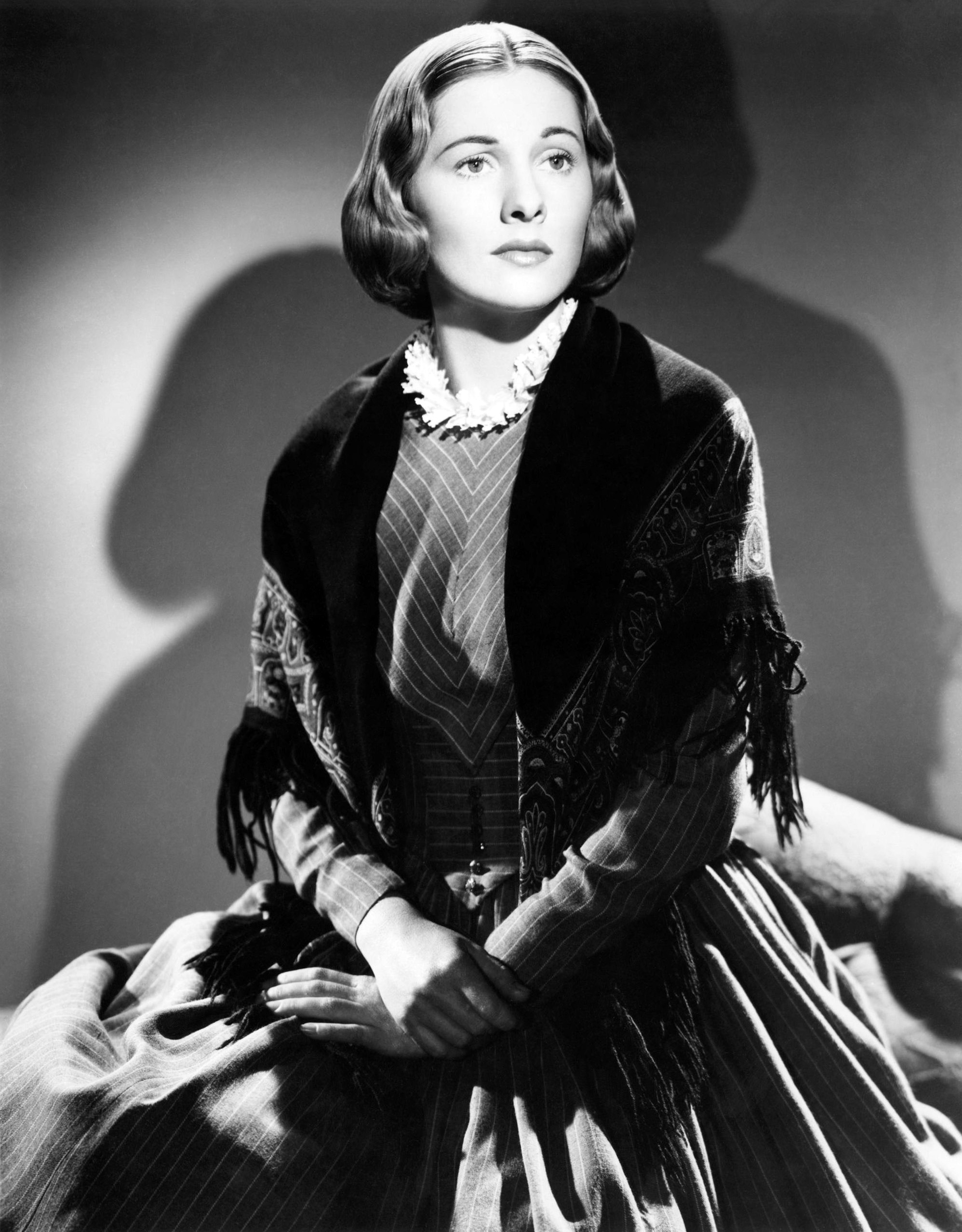
Joan Fontaine Centennial: Jane Eyre (1943)

Part two of our Joan Fontaine celebration. Here's Tim Brayton...

Joan Fontaine's reign at the top of the Hollywood pyramid was short and intense: three out of four movies made in three out of four years netted her Oscar nominations, with a win for the second, Suspicion. We come now to the film made immediately after this golden run: the second talkie adaptation of Charlotte Brontë's 1847 classic Jane Eyre, released in the United Kingdom at the very end of 1943, but held back from the U.S. until February, 1944.

By the time the film arrived at 20th Century Fox, it had already passed through the hands of super-producer David O. Selznick, who had assembled all of the main components in an apparent bid to replicate his Oscar-winning Rebecca. Fontaine appears once again as a delicate, innocent ingénue dropped into a rambling Gothic mansion where a bullying man falls in love with her, in a story whose horror-film atmosphere (courtesy, in both cases, of cinematographer George Barnes) could be given the gloss of prestige and class thanks to the material's literary origins. I will commit an act of grave apostasy by suggesting that Fontaine is better here than she was in that 1940 film; there's a certain toughness in her posture and facial expressions that hadn't much appeared in her screen acting prior to this, and which considerably deepens the "meek virgin" trope she's once again saddled with.

Click to read more ...

Saturday
Oct212017

Fontaine Centennial: Mrs de Winter in "Rebecca"

For the next few days we'll be celebrating Joan Fontaine's Centennial. Here's Eric on her most famous picture...

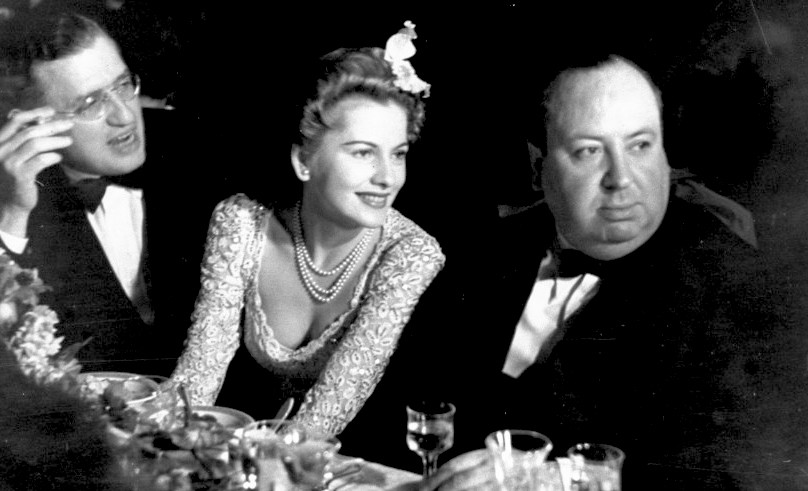
David O. Selznick, Joan Fontaine, and Alfred Hitchcock at the Oscars for Rebecca. The film won... but Fontaine and Hitch didn't.

One of the best things about writing for The Film Experience is the chance to open up windows of your film history you haven’t explored before.  For some reason, throughout all the years, I had never seen a movie with Joan Fontaine.  Just one of those black holes.  And because she stopped acting before I was born, I have zero frame of reference for her (unlike, say, sister Olivia de Havilland)... 

Click to read more ...

Friday
Jun262015

Letter from an Unknown Woman (1948)

Continuing the theme of looking back at 1948 ahead of this weekend's Smackdown. Here's Angelica discussing one of Joan Fontaine's greatest roles...

A few years ago when working at the Chicago International Film Festival I got into a conversation with a coworker about classic Hollywood actresses who, for whatever reason, do not connect with modern women as much as they did in their own time. The conversation centered on Norma Shearer but I think it can also apply to Joan Fontaine. I’ve often had trouble introducing my friends to Fontaine. Sure, they may like Rebecca but the tenor of her infatuation and willingness to lose her identity in love always hits a sour note. At her best, Fontaine made martyrdom on the altar of love an art form. This was never clearer than in the 1948 Max Ophuls film, Letter from an Unknown Woman. If Now, Voyager represents the women’s picture at its most transformative, Letter from an Unknown Woman shows the genre at its most tragic and masochistic.

Based on the novella by Stefan Zweig, the film begins in Vienna 1900. We meet Stefan (Louis Jordan) a rakish pianist planning to run out of town before a scheduled duel. Before he can do so his mute servant (Art Smith) gives him the titular letter. It begins ominously, “By the time you read this letter I may be dead.”

More...

Click to read more ...