

Oscar History
Film Bitch History
Welcome

The Film Experience™ was created by Nathaniel R. All material herein is written by our team. (This site is not for profit but for an expression of love for cinema & adjacent artforms.)

Follow TFE on Substackd

Powered by Squarespace
DON'T MISS THIS
What'cha Looking For?
Subscribe

Entries in László Nemes (2)

Thursday
May212026

Cannes at Home: A Polarizing Pandemonium

by Cláudio Alves

Adèle Exarchopoulos won a César for Jeanne Herry's ALL YOUR FACES. Will her new collaboration with the director, presently at Cannes, produce similar results?

The 2026 Cannes Film Festival is drawing to a close, so I should probably hurry up with this corresponding Cannes at Home program. In the past few days, a number of titles have come and gone on the Croisette, most of them eliciting wildly divisive reactions. Nobody seems to agree on the merits of Na Hong-jin’s Hope, and Arthur Harari’s The Unknown has proven similarly polarizing. While some bet on Cristian Mungiu’s Fjord for the Palme, others are decrying it as a minor work, if not an outright failure. Elisa is a fan, for instance, but TFE’s old friend Nick Davis is a naysayer. In the middle of all this, László Némes’ historical Moulin and Jeanne Herry’s Garance have mostly slipped by under the radar, drawing little attention while also sparing themselves the lacerating putdowns their bolder, more ambitious competition has inspired in film critics and audiences alike.

For this lightning round of Cannes at Home, let’s run this gamut of filmmakers in capsule form. Their films are Nemes’ handsome Sunset, Herry’s actorly All Your Faces, Na’s go-for-broke bonkers The Wailing, Harari’s portrait of Onoda, and Mungiu’s first foray into the intolerance that can emerge in European communities beset by the arrival of outsiders, R.M.N...
Click to read more ...

Friday
Oct092015

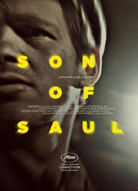
NYFF: The Oscar Contender "Son of Saul"

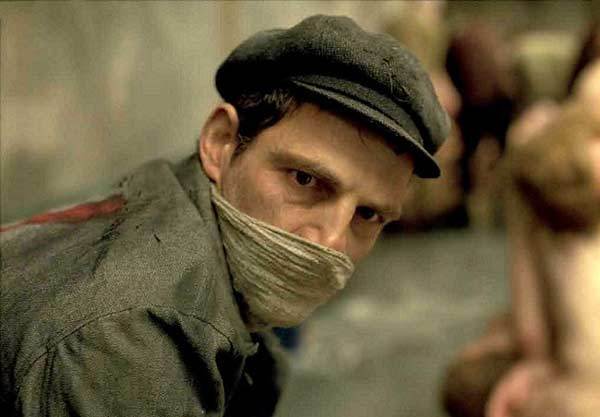
Manuel here reporting from the New York Film Festival on Hungary's Oscar submission, a powerful debut film...

The Holocaust film is, as historical subgenres go, perhaps the most well-worn. From John Ford and George Stevens’ documentary footage of the camps liberation all the way through Spielberg’s Schindler’s List and Benigni’s Life is Beautiful, cinema has been irrevocably tied to our cultural remembrance of that most barbaric killing machine. Cinema’s ability to record, to bear witness, has no doubt played a central role in this artistic canon. Of course, at the heart of the cinematic project of the Holocaust lie conflicting and controversial ethical questions. From Theodor Adorno’s “There is no poetry after Auschwitz” dictum to storied arguments about the validity and usefulness of recreating the images of Western civilization’s most gruesome chapter, directors, victims, and historians have asked plenty of hard to answer questions.

Does the depiction not merely replicate the dehumanization on which that enterprise depended? Is there a way to narrativize this barbaric act without simplifying history? Can cinema’s images ever do anything more than ring hollow when compared with the immensity of human life lost?

If all of this sounds heady as an intro to a review of László Nemes’s debut film Son of Saul, you should’ve heard leading man (and poet) Géza Röhrig and his director talk at length about these very issues while quoting Primo Levi at the press conference a few days ago...

Click to read more ...