Oscar History
Film Bitch History
Welcome

The Film Experience™ was created by Nathaniel R. All material herein is written by our team. (This site is not for profit but for an expression of love for cinema & adjacent artforms.)

Follow TFE on Substackd

Powered by Squarespace
COMMENTS


What'cha Looking For?
Subscribe

Entries in interview (278)

Thursday
Mar142019

Interview: Jia Zhang-Ke on 'Ash Is Purest White' and his collaboration with Zhao Tao

by Murtada Elfadl

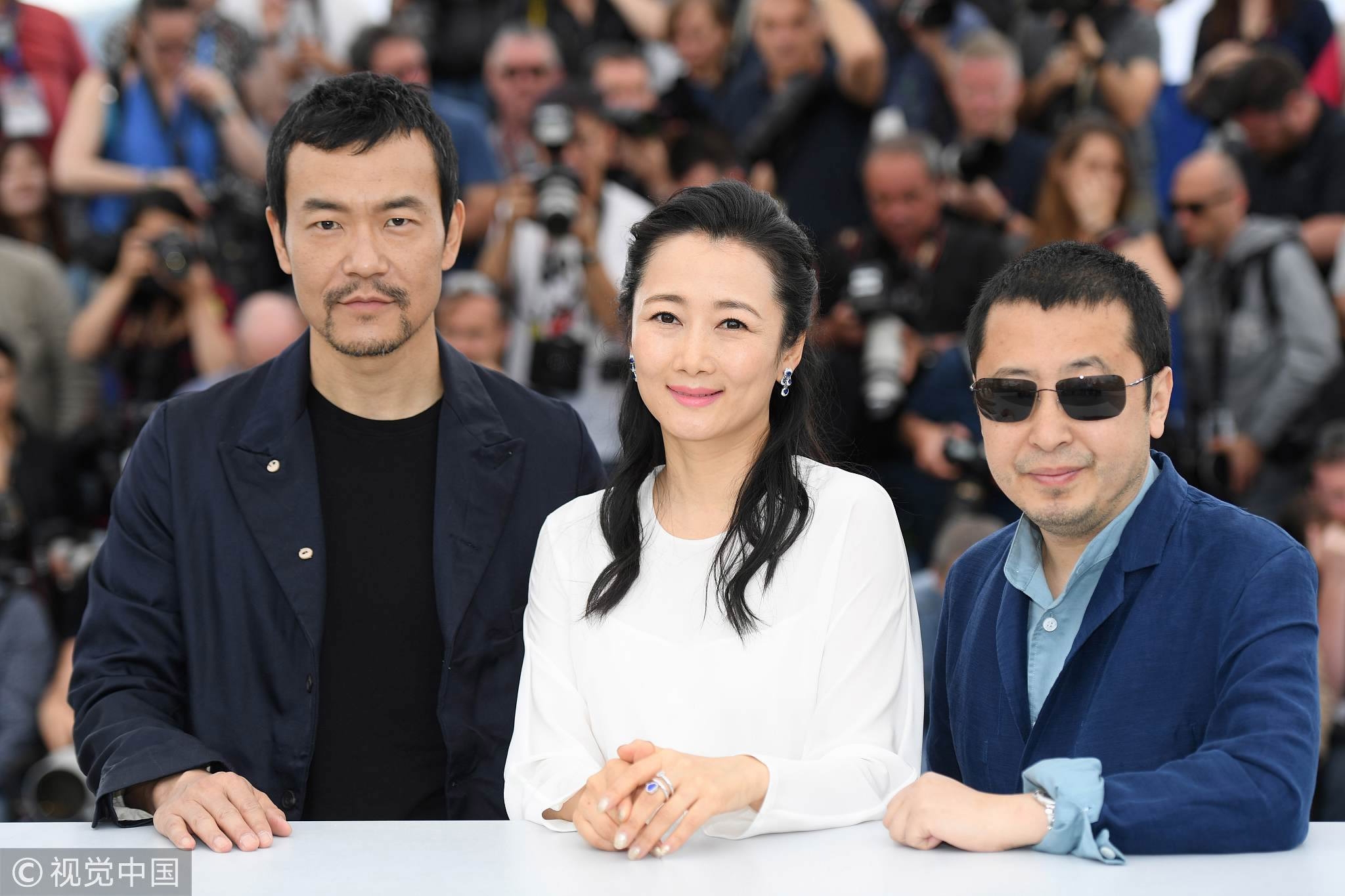
Fan Liao, Zhao and Jia at the 2018 Cannes Film Festival

Ash Is Purest White, opening tomorrow in select theaters, is Jia Zhang-Ke’s latest film. It has his trademark immersive, decades spanning storytelling. This time it is also a blend of gangster film, romance, and social critique. Again it starts his muse and collaborator Zhao Tao, this time playing Qiao, a quick-witted resourceful woman who falls into a decades long epic entalegment with her mobster boyfriend Bin (Fan Liao) within the jianghu (criminal underworld) of post-industrial Datong. We called it "bold, epic and fully detailed in equal measures" in our review. While in New York last October for NYFF, we got a chance to talk with Jia about his film. This interview has been edited and condensed for clarity.

Murtada Elfadl: What ideas did you want to push forward with this film?

Jia Zhang-Ke: This film spans from 2001 to 2018 and within these 17 years I wanted to examine how Chinese people are living in this particular historic context. For this particular film, even though it has the same thread of my previous films of examining the transformation of society and its impact on interpersonal relationships among characters, this time I focused on the principles and values that people either uphold or give up during societal transformation. I created these two characters who are moving in opposing directions. Bin was a drifter at the beginning, then he decided to join the mainstream culture which is very much about power, money and fame whereas the female character Qiao takes the opposite route so we can see how diametrically they have changed...

Click to read more ...

Thursday
Feb282019

Interview: Christian Petzold on 'Transit', melodramas and the influence of Fassbinder and Ackerman

by Murtada Elfadl

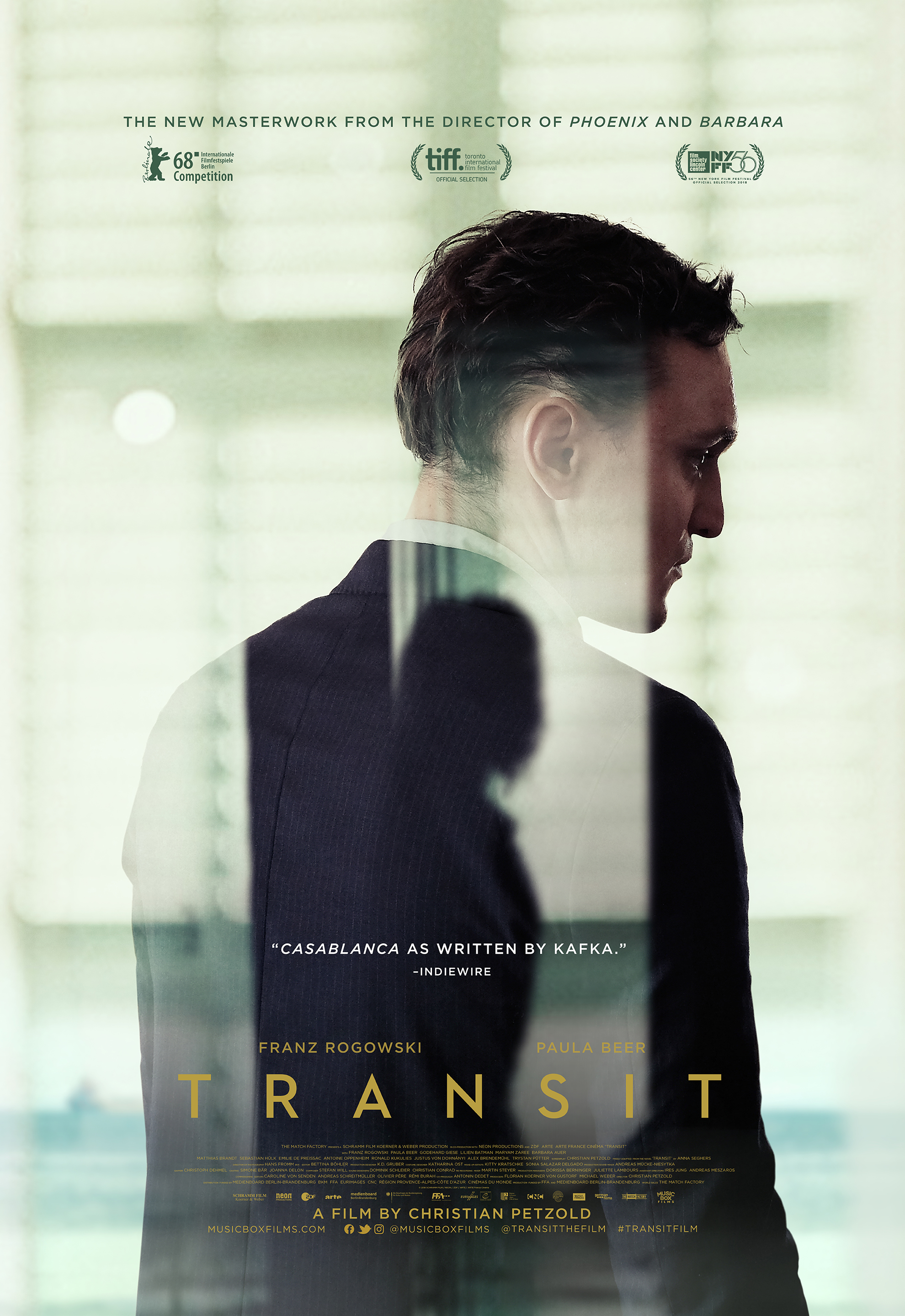
Transit, opening this weekend in limited release, is the latest from the gifted German director Christian Petzold (Barbara, Phoenix). It is a haunting modern day adaptation of Anna Seghers 1942 novel "Transit Visa". The film stars Franz Rogowski (Happy End) and Paula Beer (Never Look Away, Frantz) as would-be lovers desperate to escape an occupied France. We got a chance to interview Petzold in January when he visited New York for a retrospective of his work by the Film Society of Lincoln Center. When we meet he informs us that he’s been up for more than 24 hours because of a flight delay, so he might struggle to find the words in English. But that's not what happens. There’s a translator but she only chimes in a couple of times in our half hour conversation. Perhaps delirious from no sleep, he’s in the mood to talk.

This interview has been edited and condensed for clarity...

Murtada Elfadl: How did you come to the decision to clash the contemporary setting with the period story. Can you talk about the choice for that dissonance?

CHRISTIAN PETZOLD: I started to write the script as a typical period picture, everything was set in 1942. I was with my son on a father / son journey through California and the writing was coming easy to me --  everything going well is not a good sign. My Mac notebook was destroyed by the sun when I left in the car. I didn't have any back ups. Actually I was relieved that everything was destroyed. Period pictures are mostly museum pictures as if you are going on a journey to old times, you get to see Sherlock Holmes or Keira Knightley in costume. I thought I’d have to cast Ben Kingsley in my movie...

Click to read more ...

Monday
Feb182019

Interview: Screenwriter Deborah Davis on her 20 year passion project "The Favourite" 

by Nathaniel R

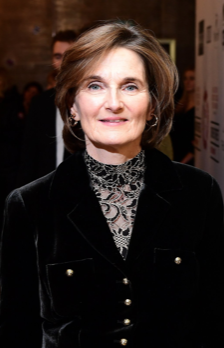
Deborah Davis, first time screenwriter, is up for an Oscar this weekendDeborah Davis recently took home the BAFTA for her work on the screenplay to Yorgos Lanthimos's stunning tragicomedy and Best Picture hopeful The Favourite. Though Lanthimos has previously co-written his own features this time was attached to a project already in progress. Davis and cowriter Tony McNamara than retooled the screenplay to match Lanthimos's vision. The results were magic, as has long since become obvious.

Before the hardware started arriving we hopped on a cross Atlantic phone call with Deborah Davis briefly. We couldn't find much info about her at the time and were reeling from the realization that the dearth of info came from the fact that The Favourite was her very first movie. As it turns out she became a screenwriter specifically to tell this story. And what a story it is.

Our interview, edited for length and clarity follows...

NATHANIEL: I'm still gobsmacked that this is a first screenplay!

DEBORAH DAVIS: That’s correct, yes. By training I'm a lawyer, but I’ve done quite a lot of journalism. I started to research The Favourite 20 years ago, and I was actually convinced that this story about women in power and the female triangle would make a wonderful film, so I went and learned how to write a script...

Click to read more ...

Monday
Feb182019

Interview: Richard E Grant on lucky breaks, film diaries, and "Can You Ever Forgive Me?"

by Nathaniel R

Richard E Grant's timing was impeccable during my own journey into cinephilia. I was in the process of falling madly deeply in love with movies when he made his debut in the cult classic With Nail and I (1987) and as I became more invested in not just movie stars but the crucial contributions of character actors to rich movies, he was everyone in so many movies I loved: Henry & June (1990), L.A. Story (1991), Bram Stoker's Dracula (1992), The Age of Innocence (1993). I bought his first book "With Nails: The Film Diaries of Richard E Grant" in hardcover right when it was published and later bought it again in paperback. I bring up this chronological personal fandom so that'll you'll understand that I was surely as visibly thrilled to sit down with Richard E Grant as he has appeared to be for the entirety of this awards season. We're both giddy about the Oscar nomination for his incredible performance as the slippery but loveable Jack Hock in Can You Ever Forgive Me?

But we began by discussing the book. I'd read it too often to begin anywhere else...

[The interview has been edited for length and clarity.]

One of the funniest film books you'll ever read. A must-have for fans of 1990s cinemaNATHANIEL R: Do you still do film diaries or did you do it only for your book 'With Nails: The Film Diaries of Richard E Grant"?

RICHARD E GRANT: I've kept diaries since I was 11 years old, since I saw my mother shagging my father’s best friend on the front seat of a car, by accident. I tried religion, got no reply, couldn’t tell my friends, certainly couldn’t tell my parents what I’d seen, so I kept a diary to keep sane, and it has kept me relatively sane all these years. I was on the ill-fated  Ready to Wear (Prêt-à-Porter) movie for Robert Altman, and a newspaper in England asked me if I would write a diary, so I did, and they published it...

Click to read more ...

Thursday
Feb142019

Interview: Rachel Weisz on "The Favourite" and why she hasn't peaked yet.

by Nathaniel R

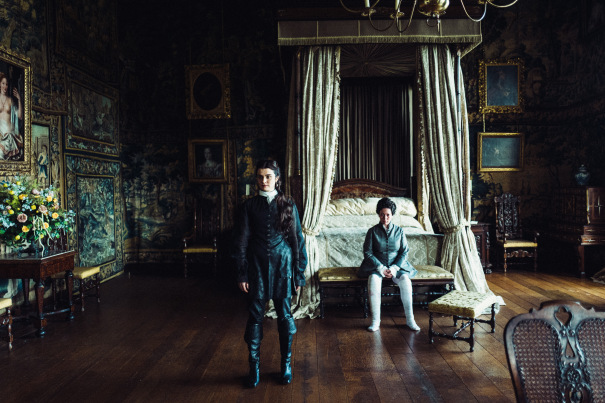
Rachel with her BAFTAWhen we sat down with Rachel Weisz to discuss The Favourite, she was as intimidating as the Lady Sarah Marlborough. Not, we think, on purpose. Sometimes an actor so slays a role that, if you've never met them before and have a tendency to live for the movies, it's like looking straight into the character's eyes. Weisz, cool and measured, impeccably dressed, offered tea. Remembering Lady Sarah's own downfall, I chose water.

We'd both seen The Favourite just once at the time but were eager for round two. "I'm so glad you liked it," she cooed, if somewhat cooly. All business, and why not, ready for questions but not any question. Taking the hint I steered clear of the past though I couldn't resist a brief question about one early role (The Shape of Things), since it had been a rare chance and my first to ever see an actor do a role on stage and then watch them repeat it on film. She found it, "a bit hard, that particular one" citing the need for freshness and spontanity in filmmaking and "...we'd said the words so many times before."  But we were there to discuss The Favourite, and spontaneity and freshness are in no short supply in that electric movie. She even shared how they managed to get them.

She hadn't yet been nominated when we spoke but the honors would soon, quite obviously, pile up including a BAFTA win for Best Supporting Actress and the Oscar nomination. Our interview, edited for length, follows:

NATHANIEL R: You've had such a strong handful of years now: The Deep Blue Sea, The Lobster, Disobedience, The Favourite. But you won an Oscar 14 years back or so and I wonder if at that point, before these recent peaks, you thought 'well, what now?' 

RACHEL WEISZ: I mean, it’s a thing [The Oscar] that you never think will happen to you. I don’t really feel like I can rest on my laurels and it’s all over now. I just don’t feel like that. There’s so much to explore. Hopefully I get better at my job. I think the more work you do… well, for me, the more I've done, the more I’ve figured out what kind of work I want to do...

Click to read more ...