Oscar History
Film Bitch History
Welcome

The Film Experience™ was created by Nathaniel R. All material herein is written by our team. (This site is not for profit but for an expression of love for cinema & adjacent artforms.)

Follow TFE on Substackd

Powered by Squarespace
What'cha Looking For?
Subscribe

Entries in LGBTQ+ (180)

Wednesday
Jun282023

First & Last 011

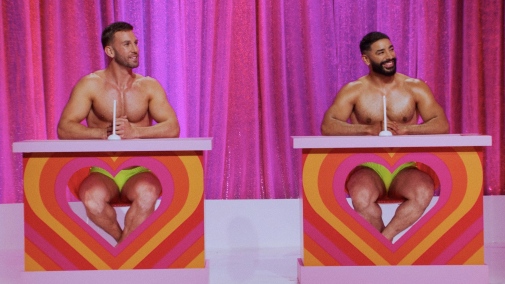
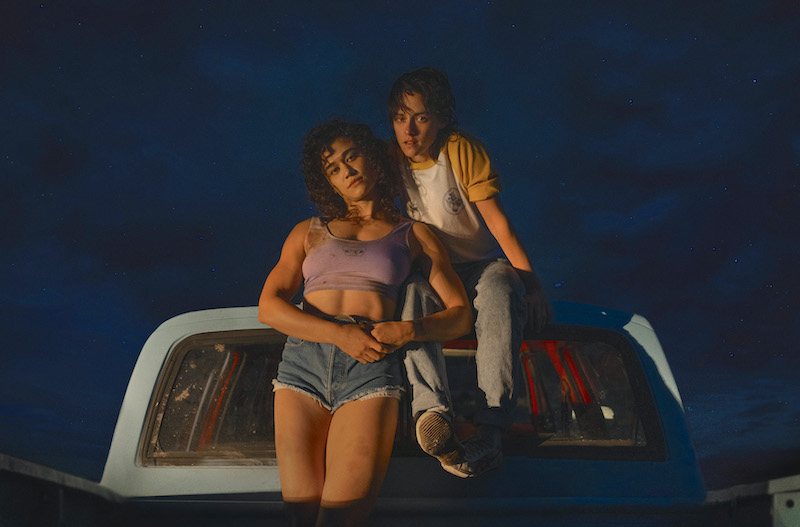
Can you guess the movie from its first and last shot? This one is for Pride Month

The answer if you scroll down is after the jump...

Click to read more ...

Saturday
Jun242023

Queering the Oscars: Bruce Davison in "Longtime Companion"

by Cláudio Alves

As nominees, presenters, and other attendees arrived on the red carpet for the 63rd Academy Awards, they were met with righteous commotion. ACT-UP members picketed the ceremony, holding banners decrying universal inaction when over 102,000 people had already died by the modern plague of AIDS. During the festivities proper, activist David Lacaillade, who had found his way to the audience, stood up and shouted invective against the proceedings, demanding action and calling those who do nothing hypocrites. AIDS Action Now! Sadly, there seemed to be very little in the way of open solidarity inside the Shrine Auditorium.

Earlier, protestors offered button pins emblazoned with "SILENCE = DEATH" to the folk walking the red carpet. Most people declined to wear them, but Bruce Davison was one of the few to don the message. He was also the rare example to wear it all ceremony – some people took them down before the opening monologue was through. Davison was present as the sole nominee from Longtime Companion, the first mainstream feature to depict the effects of AIDS in the gay community. Walking into the Oscars, he felt a heavy responsibility pressing down on his shoulders. In his own words, the actor was "carrying the torch for the people represented in this film"... 

Click to read more ...

Wednesday
Jun212023

First & Last 009

Can you guess the movie from its first and last shot? This one is ironically for Pride month.

The answer is after the jump when you scroll down...

Click to read more ...

Tuesday
Jun202023

Queering the Oscars: Best Original Screenplay "Far From Heaven"

by Patrick Ball

It certainly isn’t a stretch to consider any Todd Haynes filmography part of the Queer Oscar Canon. The filmmaker brought us La Blanchett in the all-timer Carol and as a gender-bent Bob Dylan in I’m Not There. He directed Laura Dern and Kate Winslet on the small screen in prestige HBO offerings Enlightened and Mildred Pierce (respectively). And I know I’m not alone in my extreme anticipation for his forthcoming May/December, his third collaboration with primary muse Julianne Moore. If the proverbial Dorothy is 'a great actress or queer icon of her generation' than the man is a *friend* of Dorothy. But my favorite, and an early example of how a queer perspective permeates through his style, enriching the work, is Far From Heaven

Far From Heaven, a juggernaut on the 2002 Critics Circuit, eventually was nominated for four Academy Awards- including one for Haynes’ himself for Best Original Screenplay. Though it didn’t take home any trophies that night (in an intensely competitive and notorious Oscar race), Far From Heaven was considered a breakthrough for Haynes as a filmmaker...

Click to read more ...

Monday
Jun192023

Queering the Oscars: Visconti's "The Damned"

by Cláudio Alves

At the 42nd Academy Awards, the Best Original Screenplay category was a rarity of historical importance. You wouldn't know it in 1969, but all nominees would be studied for years to come. Whether seen as seminal works in their author's careers or cultural milestones with much to reveal about the society that produced them, the films form an illustrious bunch, going from Bob & Carol & Ted & Alice's pop psychology to the revisionist brutality of The Wild Bunch. The winner was Butch Cassidy and the Sundance Kid, a western which has inspired queer readings for over half a century though it was far from the queerest picture in the race. 

That would be Luchino Visconti's The Damned, marking the start of his German trilogy, the international metamorphosis of his cinema, and the most open expression of gay sensibilities in his oeuvre to that point…

Click to read more ...