Oscar History
Film Bitch History
Welcome

The Film Experience™ was created by Nathaniel R. All material herein is written by our team. (This site is not for profit but for an expression of love for cinema & adjacent artforms.)

Follow TFE on Substackd

Powered by Squarespace
What'cha Looking For?
Subscribe

Entries in Sundance (227)

Tuesday
Jan262016

Retro Sundance: 1991's Poison

Since we're not in Sundance this year, a look back at Sundance classics. Here's David on Poison...

Glenn kicked off our Sundance retrospective with a look at Desert Hearts, a film with more than a passing resemblance to Todd Haynes' Carol; a few years down the line, and we come to Haynes’ own appearance in the Utah festival, with his feature debut Poison. Winner of the 1991 festival’s Grand Jury Prize - Dramatic, Poison is considered a vital film in the ‘New Queer Cinema’ movement of the early 1990s, as coined by B. Ruby Rich the following year. Rich’s theory involved not just the presence of LGBT characters and themes, but the queering of filmmaking form itself. Haynes had already demonstrated his inventive, radical eye in the controversial short film Superstar: The Karen Carpenter Story, and Poison, with its triptych of homonymic narratives, consolidated the director’s manipulation of nostalgia and classic cinematic forms to produce a strikingly different approach to cinema.

Each segment is presented in an individual and vivid stylistic form. 'Hero', the story of a young boy who shoots his father and literally flies away, comes as an oversaturated tabloid news documentary, containing interviews with scandalised neighbours, incisively lurid narration and tremulous recreations of the event itself. [More...]

Click to read more ...

Monday
Jan252016

Sundance Buzz Pt 1: Birth of a Nation, Manchester by the Sea, Tallulah

Let's check in with the high altitudes of Sundance for a moment. Before we begin a word of 'don't believe the hype' caution. Sundance has the dubious distinction of being the single festival with the highest ratio of critical raves morphing suddenly to real world mehs. Altitude sickness? Long delays between festivals and premieres? Who knows. The buzz sometimes translate (Precious) but you can't ever fully trust it and sometimes it's the films with very quiet receptions that the real world actually embraces (last year's key examples: I'll See You In My Dreams and A Walk in the Woods).

Let's talk about eight new films after the jump, okay?

Click to read more ...

Monday
Jan252016

Sundance Retro: 1990's "Longtime Companion" 

Team Experience is looking back on past Sundance winners since we aren't attending this year. Here's Kyle Turner on an LGBT indie that took the Audience Award and proved so popular in release that it even snagged a Best Supporting Actor nomination (Bruce Davison) at the Oscars a year later.

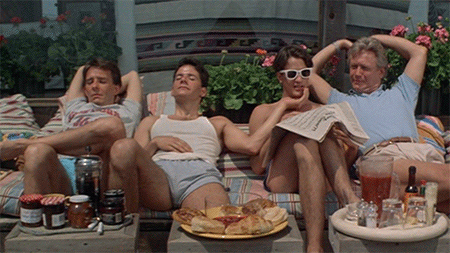
an early scene in Longtime Companion

In the first fifteen minutes of Longtime Companion, the words “Did you see the article?” fall from around a dozen different characters’ mouths. It’s July 1981, when the New York Times published its piece titled “Rare Cancer Seen in 41 Homosexuals”, and the way news gets around is by press and by word of mouth. These characters, all gay men in their 20s and 30s, shrug it off, try to carry on with their lives. 

To them, this cancer is nebulous, unworthy of their time, and yet something that occupies their thoughts all the same. Thus, the film exists within a particular time, where information is dispersed differently, yet dismissed similarly.

Click to read more ...

Friday
Jan222016

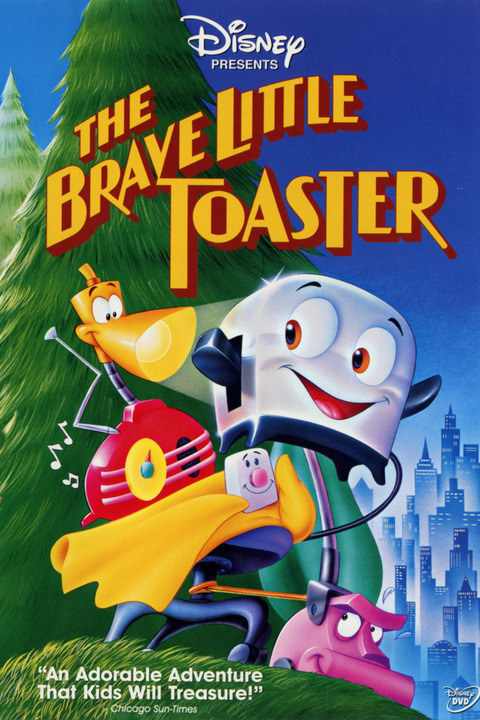
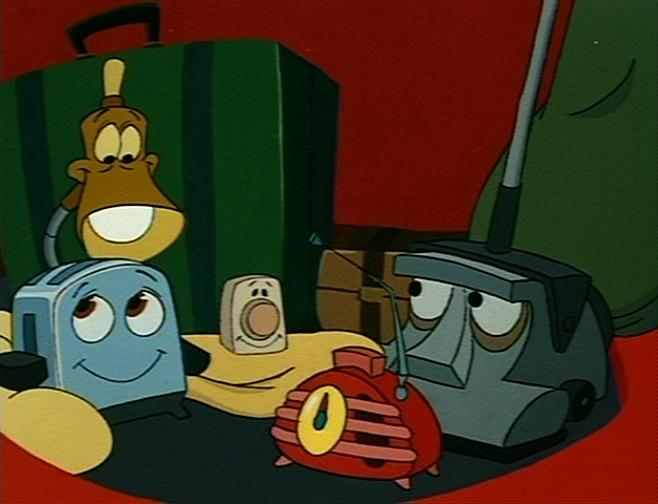
Retro Sundance: 1988's "Brave Little Toaster"

Team Experience is looking back on past Sundance winners since we aren't attending this year. Here's Tim on an animated indie honored early on...

The Sundance Film Festival isn't necessarily what you think of as a hotbed of animation: even a simple animated feature takes a large budget and hundreds of hours to produce, and these are resources that indie movies are particularly noted for lacking. So when The Brave Little Toaster screened at Sundance in 1988, it was quite the aberration. Such an aberration, in fact, that it would be 13 years before another animated feature would show up at the festival. It was well-received, however: the film received a special citation from the jury at the festival's awards ceremony, and director Jerry Rees has maintained in later years that he was told that it was only a concern that awarding a cartoon would dilute the festival's prestige kept it from serious consideration for the grand prize.

The film is a curious beast in every way possible. The project was initiated by Walt Disney Feature Animation – future Pixar guru John Lasseter had it in mind as a project while he was with Disney – and much of its financing came from Disney's coffers, and its talent Disney's staff, which would seem to be enough to disqualify it from "independent" status. [more...]

Click to read more ...

Thursday
Jan212016

Retro Sundance: 1986 Special Jury Prize Winner, Desert Hearts

Team Film Experience isn't at Sundance this year, so instead we're going back through the years to discover and revisit some Sundance classics. Here is Glenn with the 1986 winner of the Special Jury Prize, Donna Deitch's Desert Hearts.

It was a happy accident that on a whim I picked the 1985 drama Desert Hearts to write about today given we’re still very much wrapped up in the warm bosom of Carol. I had not seen Donna Deitch’s film before and had no idea prior to sitting down to watch it that it shared so much in common with Carol, 30 years its senior. I was aware of course that it was a lesbian romance, and I was also aware that the film is (famously) regarded as the first film to allow a lesbian romance to end without tragedy. Still, there were moments where beat-for-beat the films are almost identical. I would be interested to read the novels side by side and see if they’re as alike as their adaptations.

Adapted from Jane Rule’s novel Desert of the Heart, this Sundance Special Jury Prize winner is also set in the 1950s with two women (Helen Shaver and Independent Spirit Award nominee Patricia Charbonneau) of a significant age difference, the eldest of whom is currently in the process of a divorce, who come together much to the surprise of at least one of the pair – although this time it is the younger of the two who finds herself attempting to coax the older woman out from behind her guard. Most striking is how both end not just on similarly optimistic notes, but with almost identical build. Of course, Desert Hearts differs in the way its romance blossoms under the heat of a Reno sun, Shaver’s impractical clothing choices and sever hairstyle slowly becoming more free and loose as her worldview expands thanks to the frank openness of Charbonneau’s younger casino floor-girl a neat costume-oriented touch among the film's mise-en-scene.

More...

Click to read more ...