Oscar History
Film Bitch History
Welcome

The Film Experience™ was created by Nathaniel R. All material herein is written by our team. (This site is not for profit but for an expression of love for cinema & adjacent artforms.)

Follow TFE on Substackd

Powered by Squarespace
DON'T MISS THIS
What'cha Looking For?
Subscribe
Thursday
Nov132014

AFI Fest: 'Tales of the Grim Sleeper' and the Politics of Telling Other People's Stories

Margaret reporting from the AFI Fest...
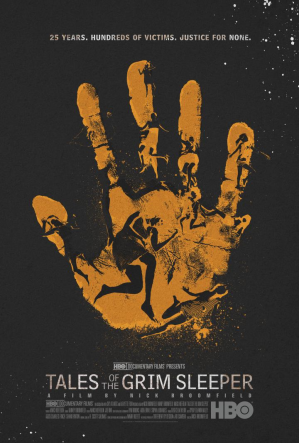
The new documentary Tales of the Grim Sleeper, on the long list of eligible Oscar doc titles, screened for the first time in Los Angeles not ten miles from the scene of the brutal crimes it addresses. The feature investigates a serial murderer and his staggering number of victims over two decades in a close-knit South L.A. community-- and these are not the kind of crimes that "could have happened anywhere." Visited on an already underserved and overlooked neighborhood, the killings targeted upwards of one hundred black women, many prostitutes and drug users, whose lives the police disregarded so entirely that for years the crimes were designated by the LAPD as NHI-- No Human Involved. 

The entry point for the film is an investigation of Lonnie Franklin, Jr., the suspect in custody who is still awaiting trial, but as the documentary picks apart layers of the case it instead becomes a scathing indictment of a broken justice system.

Director Nick Broomfield, a white British man whose background gives him little in common with the subjects of his narrative, has significant advantages in accessing and broadcasting this story. A pioneer in the self-reflexive documentary style that has since been employed by Michael Moore and Morgan Spurlock, he inserts himself into the narrative just enough be transparent about his outsider relationship to the community, and his platform as an affluent white filmmaker.
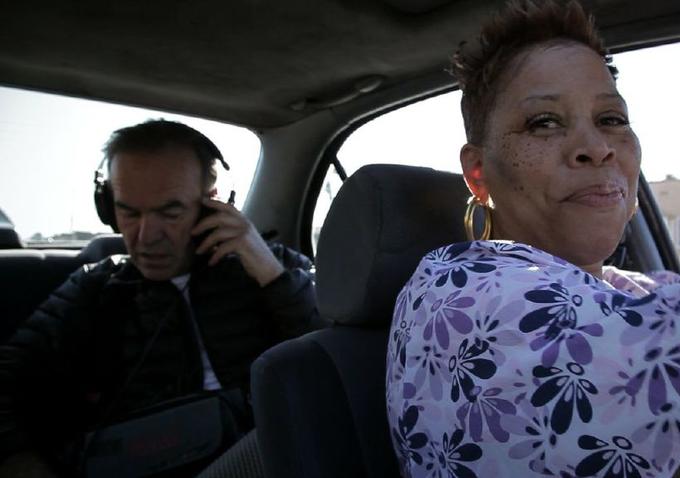
Thankfully, Broomfield doesn't seem to labor under the impression that it's his story to tell. For his Q&A after the AFI Fest screening, he brought up Pam Brooks, who makes invaluable contributions to the movie as a neighborhood guide and storyteller, and Margaret Prescod, tireless spokesperson for the Black Coalition Fighting Back Serial Murders. Broomfield deftly redirected audience questions about the victims, miscarriage of justice, and the apartheid in L.A. to Margaret and Pam. 

Lonnie Franklin's public defender, a minor presence in the documentary who came off as a sloppy, hapless suit, emerged from the audience to make a tone-deaf bid to co-opt the Q&A, talking over Margaret and Pam and offering unsolicited advice. This tasteless move only served to underline the film's point about invisibilization of the affected community, and the importance of supporting their voices.

Someone in the audience asked, "What can we do?" Nick Broomfield deferred again to Margaret Prescod. "This film should be shown all over this city. Make sure people see it. Make sure city officials see it. How many black women died, were murdered? We're still waiting to find out. It took a British filmmaker to come here and tell this story... We are not done here."

So, what can we do? We can think about who gets to tell these stories, and try to listen and respect the people who are telling their own.
Thursday
Nov132014

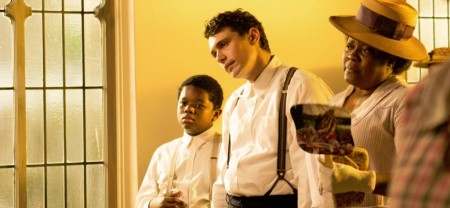
Stockholm Film Festival: The Franco and the Faulkner

Glenn has been attending the 25th Stockholm Film Festival as a member of the FIPRESCI jury. Today he looks at James Franco's latest creative endeavour, 'The Sound and the Fury'.

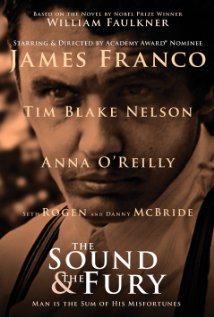
James Franco’s latest isn’t a part of the films I was sent to Sweden to judge, but in my apparent need to one day become the pre-eminent expert on the 36-year-old’s career, I decided to find time for The Sound and the Fury. His second Faulkner adaptation after last year’s As I Lay Dying shows that Franco is improving as a director when it comes to the creation of coherent and engaging cinematic worlds, but while somebody like the equally fast-moving Xavier Dolan is able to take his inspirations and weave them throughout his own auteurial style, Franco’s films still feel like he’s merely copying what he has seen elsewhere without putting his own stamp on it.

For instance, his misguided debut film about the murder of Sal Mineo, titled simply Sal, was Gus Van Sant lite to say nothing of My Own Private River, while last year’s Child of God was incredibly indebted to Debra Granik’s Winter’s Bone. Faulkner’s novel, from what I gather, isn’t the easiest to make work on screen and Franco with his editor Ian Olds have chosen an elliptical form that layers flashbacks upon memories within sun-drenched images of nature and human innocence to symbolize how precious this life is. It’s style is representative of the source material’s structure, but it comes off visually as derivative of other films, predominantly The Tree of Life and it’s swirling, time-skipping narrative.

For those unfamiliar, The Sound and the Fury tells the story of the Compson family, a formerly rich and powerful Mississippi dynasty who are devoured by misfortune and resentment. Divided into three chapters (the book’s fourth chapter is integrated throughout), each devoted to one of the family’s three brothers: Benjy (Franco, clearly having never seen Tropic Thunder), Quentin (newcomer Jason Loeb, anchoring the film’s strongest segment) and Jason (a slimy, cowardly Scott Haze, much improved over his similarly hot-tempered role in Franco’s Child of God). It was wise of Franco to not indulge in a lavish adaptation, keeping the ensemble low-key (he does, however, find time for cameos by Seth Rogen and Danny McBride – most unexpected Pineapple Express reunion ever!). Yet at the same time his devotion to the novel means more interesting characters don’t get the attention they deserve.

Ahna O’Reilly as scandalous sister Caddy, Joey King as her deserted child, and Loretta Devine as the long-serving family maid are all impressive – Devine especially gets one killer showdown with Haze that begs for a director to capitalize better on her intense face. Despite their stories feeling redacted with large blank holes of history left untouched, they are the more emotionally and dramatically complex characters. Perhaps a narrative shift to these unsung female characters is the brave direction Franco needed to allow his film to truly separate itself from both the novel and similarly-themed films. The film looks handsomely made, the period details appearing nicely deteriorated, but in terms of impact I was left wanting. The Sound and the Fury is a step in the right direction for Franco the director, but it still doesn’t quite suggest he’s on the verge of something truly great. Yet, at least.

Thursday
Nov132014

101 Days 'Til Oscar


WARNING: We are now entering our Oscar countdown trance. Do not resist. Resistance is futile. 

COMING SOON: Tomorrow every Oscar chart will be updated to reflect last two weeks of buzz and actual first hand knowledge. Plentiful interviews coming your way.

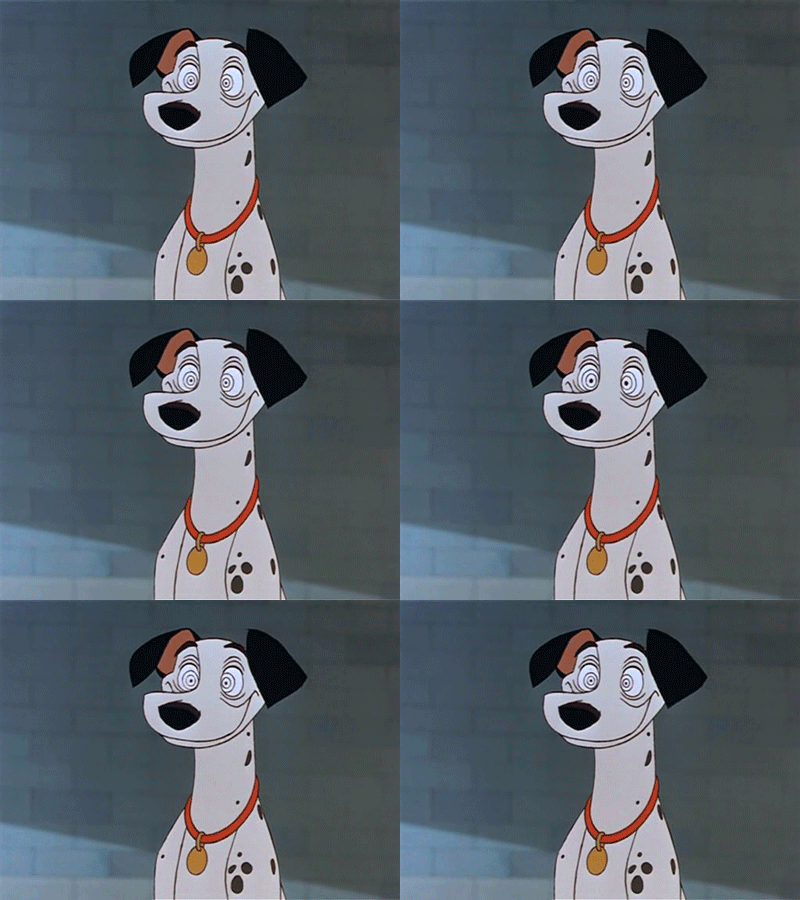
TRIVIA: Neither 101 Dalmatians (1961) nor 101 Dalmations (1996) received an Oscar nomination of any kind. No, not even an Original Song nomination in '61 for Roger's in-film hit single "Cruella De Vil" 


Thursday
Nov132014

AHS: Freakshow "Bullseye"

While Nathaniel catches up with his DVR post-AFI, here's Adam - Editor.

American Horror Story, and in particular this season's "Freak Show," has about as much forward progression as a treadmill. This week's episode trudged ahead with its story by the smallest margin possible that could still be labeled "forward". Miraculously, the episode somehow managed to contain four plotlines: Elsa, further displaying her ruthlessness to survive on her birthday of all days, reveals a dangerous new act for the Freak Show (after surely watching Theo James perform a similar routine in Divergent); Stanley exerts pressure on Maggie to murder the Freaks; Paul indulges in a secret romance with Penny as he juggles his illicit affair with Elsa; and Dandy attempts to woo Bette and Dot much to the chagrin of his mother.

Most Quotable: Elsa dismissing Penny’s entrance into her tent as she consoles a wounded Paul, “Speaking of cheap perfume.”

Best Line Reading: In the midst of Amazon Eve expressing her concern on Ma Petite’s absence from breakfast, she manages to still include her curiosity for her eating habits, “She never misses breakfast – I don’t know where she puts it.”

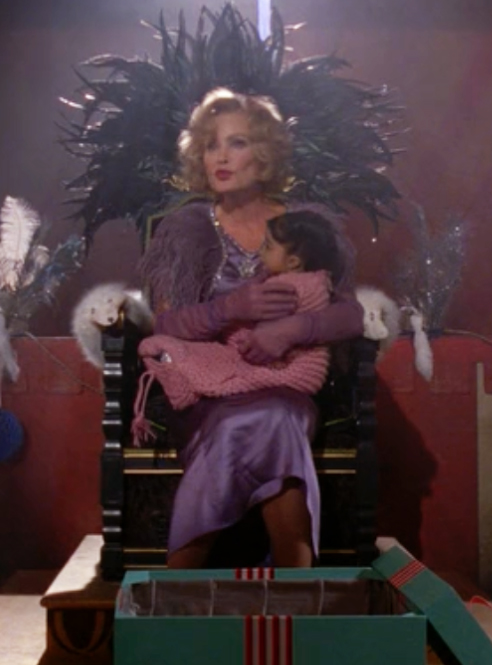
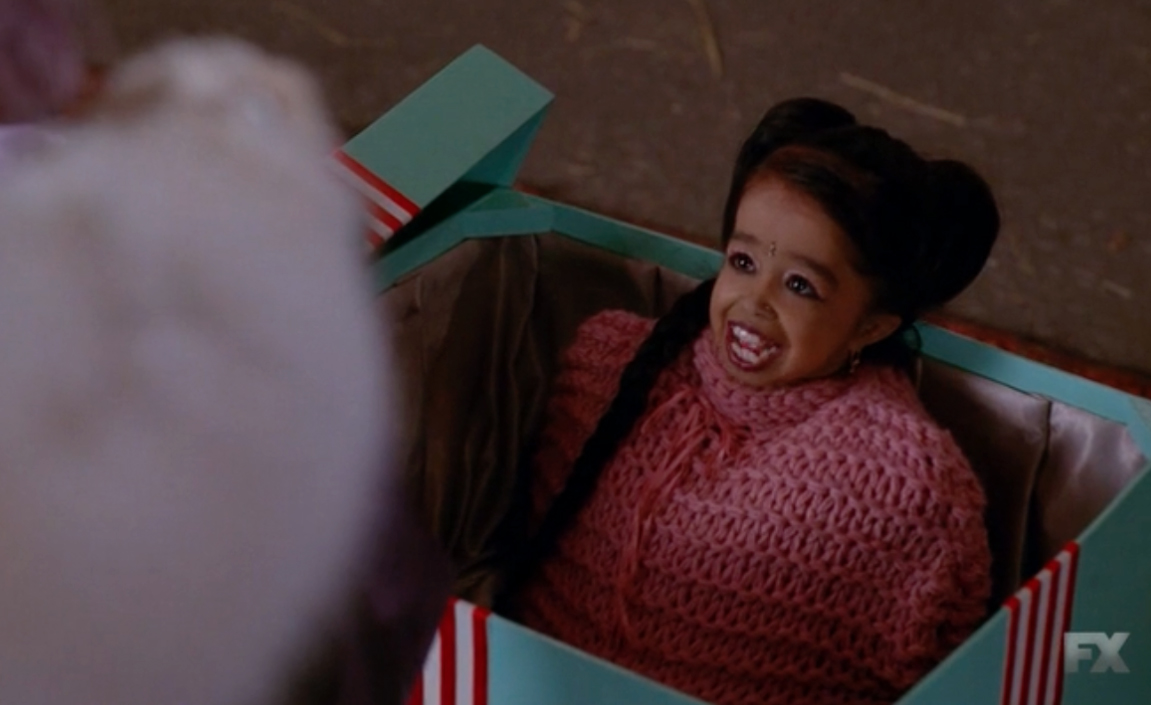
Best Entrance: A swaddled Ma Petite being opened from her box as Elsa’s birthday gift. 


Episode MVP: Jyoti Amge, the world's smallest woman at 2'6", as Ma Petite. Runner up: Costume designer Lou Eyrich for Elsa's Temple Grandin outfit in the opening scene.

Movie/TV References: The chair Elsa sits in while she opens her gifts resembles the Iron Throne from Game of Thrones. How well do you think Elsa would fair in the world of Westeros? My guess is that Cersei would dispense with her with the same ease that Bette ate that spoonful of caviar.

Body Count: None, right? Unless I missed something, but Paul isn't looking too great.

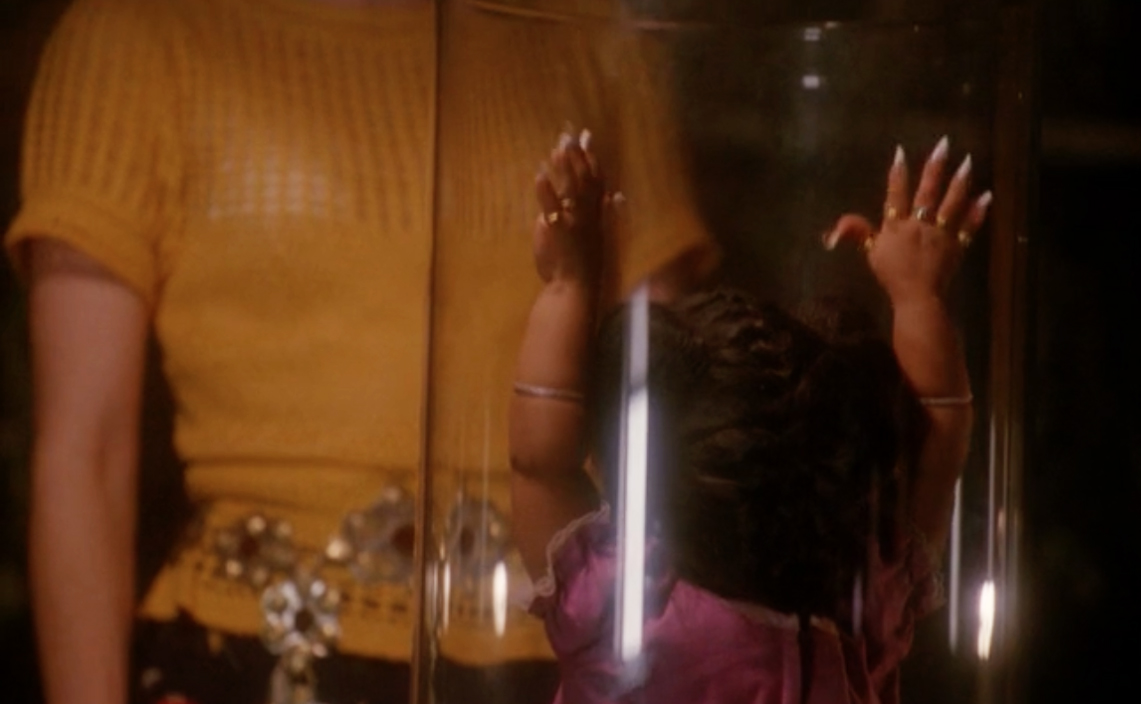
Funniest Moments: At least this episode had a handful to get me through to the end credits, like Elsa cuddling Ma Petite on her throne, Ma Petite's butterfly imitation with her tiny figures inside a specimen jar. And Paul, accused of pickpocketing Dandy wiggling his fingers and dryly countering, “That’s a laugh.” 

Episode Grade: D. As evidence I list for you the following scripted lines in all their subtlety:

  1. Paul articulating his loss of innocence, “Before life stole my innocence.”
  2. When prompted by Ethel to blow out her candle and make a wish, Elsa exclaims through voiceover that all she wants is to be loved by another person by saying, “I just want to be loved.” 

previously... 

Thursday
Nov132014

AFI Fest: Weta Digital Celebrates 20 Years with New Technology

Anne Marie here at the AFI Fest with another special event. Weta Digital, the pioneering VFX company behind some of the biggest blockbusters, including the Marvel franchise, Avatar, and The Hobbit, is celebrating its 20th anniversary this year. In  “State of the Art: The Evolution of Weta Digital," Visual Effects Supervisor Dan Lemmon gave audiences a peek behind the digital curtain of Weta Digital’s latest film, Dawn of the Planet of the Apes, to show how the company develops performance capture to assist and augment cinematography.

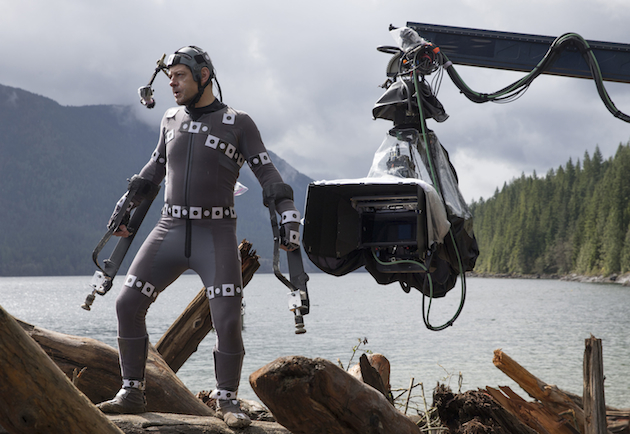
 Weta Digital is probably best known for its motion capture process (dubbed “performance capture” by James Cameron "because they also capture emotions"). Dan Lemmon explained that this evolved from Andy Serkis filming scenes as Gollum twice for The Lord of the Rings, into a sophisticated system called a “Capture Volume,” a cube of space surrounded by infrared cameras that record the actors’ movements. For Dawn of the Planet of the Apes, director Matt Reeves wanted to shoot the apes on location, so a new “portable” version was developed. The result had a profound effect not only on the technology of performance capture, but also on the look of the film--both digital and real.

Serkis in Dawn of the Planet of the Apes

Since Avatar won the Oscar for Best Cinematography in 2009, each subsequent winner has been a VFX-heavy film, so the unspoken question was how Weta Digital interacted with Michael Seresin, the cinematographer of Dawn. Shooting on location allowed Seresin to light the ape actors as he would real characters. Then, Weta Digital could match that lighting on the pixelized primates. In addition, Seresin and Reeves developed a look book, pulling images from The Godfather and grittier 70s films. Dan Lemmon explained that Weta’s job was to mimic Seresin’s intentions, for instance digitally creating the vertigo-inducing helicopter shot for the climax. However, Lemmon also proudly pointed out how Weta Digital improved on Seresin’s vision, whether it was by manipulating the light to capture a digital ape’s eyes, or by adding fake “flaws” to the helicopter shot in order to make the synthetic image more real. 

The result of Weta Digital’s collaboration with Seresin is undoubtedly remarkable, and pushes VFX to be accepted as an art, rather than a gimmick. Still, Weta's additions to Seresin's work mark a definite change in the visual landscape of moviemaking. As VFX are integrated from pre-production to filming to post-production and digital effects get clearer, the line between cinematography and visual effects is going to get increasingly muddy.