Oscar History
Film Bitch History
Welcome

The Film Experience™ was created by Nathaniel R. All material herein is written by our team. (This site is not for profit but for an expression of love for cinema & adjacent artforms.)

Follow TFE on Substackd

Powered by Squarespace
What'cha Looking For?
Subscribe

Entries in Production Design (232)

Wednesday
Nov182020

The Furniture: "À Nous la Liberté" and Freedom from Industrial Design

"The Furniture," by Daniel Walber. (Click on the images for magnified detail)
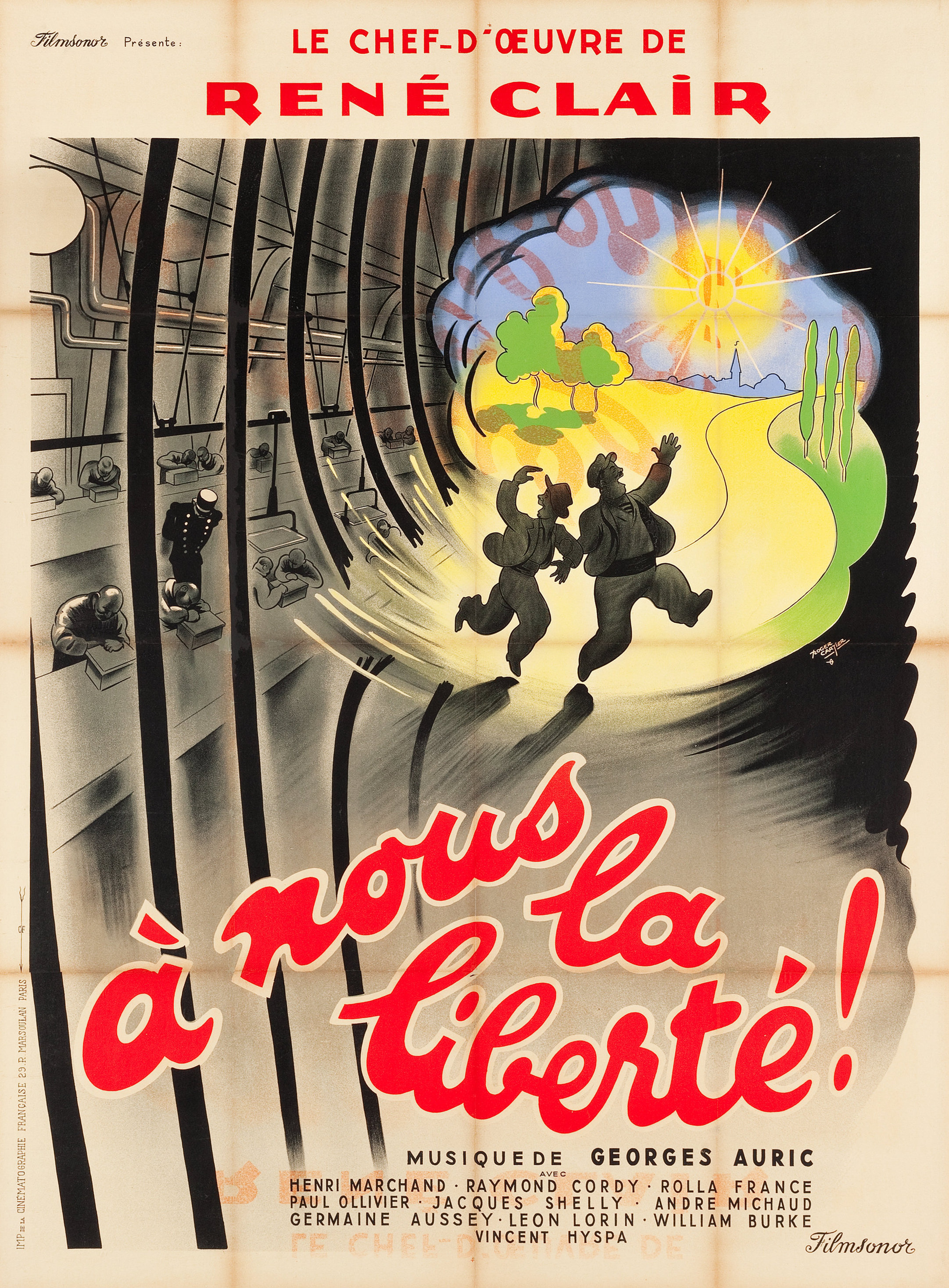
Once upon a time, the Oscars were in November! Well, thrice upon a time. The 3rd, 4th and 5th Academy Awards were held in the fall - the last of them on November 18th, 1932. Nathaniel covreed the biggest piece of trivia from that night earlier this morning. But there were also a few firsts, including the debut of the short film categories and the first-ever foreign-language nominee. René Clair’s À nous la liberté was nominated for Best Art Direction, an award it lost to a cruise ship comedy called Transatlantic.

But it’s Clair and art director Lazare Meerson who have the last laugh, as their losing film is now largely regarded as a classic and Transatlantic barely has a Wikipedia page. A nous la liberte is a charming little oddity, a musical comedy about the alienation inherent in modern industry. It opens in a prison, where cellmates Émile (Henri Marchand) and Louis (Raymond Cordy) are at work hand-carving toy horses. The cavernous space evokes the ominous architecture of the modern prison, its high balconies a reminder of constant surveillance...

Click to read more ...

Wednesday
Nov112020

The Furniture: Promoting the Forbidden City with The Last Emperor

"The Furniture," by Daniel Walber. (Click on the images for magnified detail)

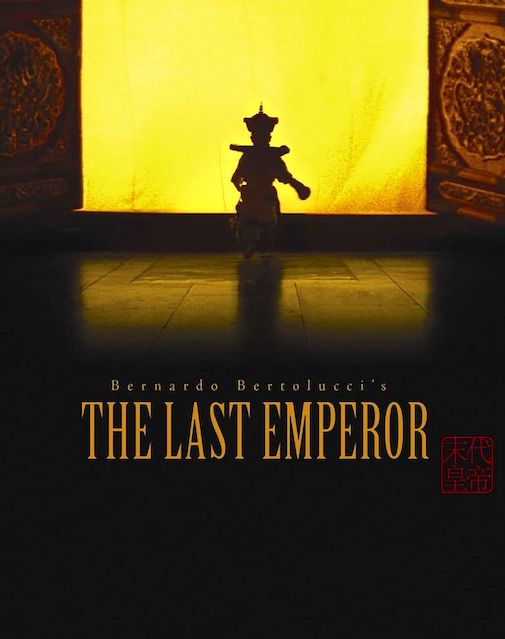
The Last Emperor is enormous, as is its reputation. The shorter version is nearly three hours long. It swept the 1987 Oscars, winning all nine categories in which it was nominated. Its plot tracks events of global significance, across nearly six decades of Chinese history. The production required more than 10,000 costumes and 19,000 extras, many of them recruited from the People’s Liberation Army

But beyond its stature as a film, it is also something of an act of economic diplomacy. China, which had heavily restricted tourism before the late-1970s, began a major about-face with Deng Xiaoping’s 1978 “Reform and Opening Up” program.  Part of this effort included the promotion of heritage tourism. China ratified the World Heritage Convention in 1985, and added its first six World Heritage Sites in 1987. The Forbidden City was at the top of the list.

It’s not a coincidence that Bernardo Bertolucci was granted permission to film in the Forbidden City right at this time, the very first Western production allowed through the palace gates...

Click to read more ...

Wednesday
Oct282020

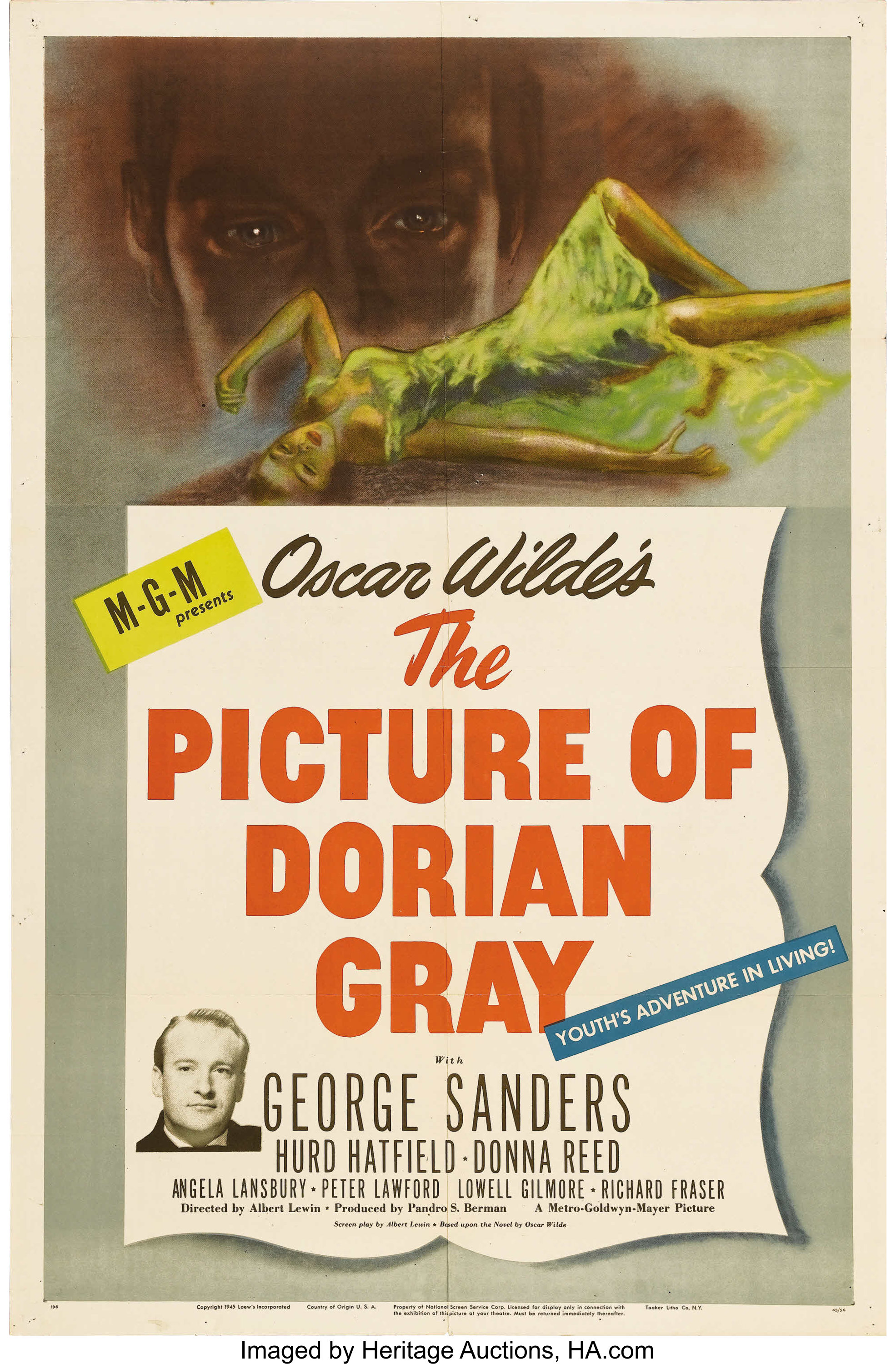
The Furniture: Finding the Fear in "The Picture of Dorian Gray"

"The Furniture," by Daniel Walber. (Click on the images for magnified detail)

Watching The Picture of Dorian Gray as a horror film in this, its 75th anniversary year, is a bit of a puzzle. It’s almost unrecognizable within the genre, though director Albert Lewin does treat the revelation of the deformed painting itself as something of a jump scare. But the overall vibe is more akin to a period drama or a film noir than anything we would consider spooky today.

That is, until you think about it a little more closely.

 The Picture of Dorian Gray is an atmospheric horror film about things that don’t necessarily scare us nearly as much anymore: arrogance, beauty and the simple fact of sexuality. In this way it does actually resemble the great horror films of its time, monster movies that make much out of giant laboratories and cavernous castles, unnerving the audience through the use of production design. Dorian Gray’s home is of a piece with Dracula’s castle and the Mummy’s tomb...

Click to read more ...

Wednesday
Oct212020

The Furniture: "Martin Eden" and Designing Outside of History

"The Furniture," by Daniel Walber. (Click on the images for magnified detail)

Jack London was befuddled by the reception of Martin Eden. He intended the novel to be a sharp critique of individualism and was surprised when the public took his protagonist as something of a libertarian hero. Though as J. Hoberman points out in his extremely perceptive reading, the novel is more of a “tragic celebration” than a bitter condemnation. And perhaps the “misreading” of an antihero is always inevitable, the unintended seduction of an unexpected contingent of the audience.

This tension has followed Martin Eden into the 21st century. Pietro Marcello’s new adaptation moves the story from California to Italy and places it outside of time, replenishing some of the aesthetic mystery that is inevitably lost when a novel is cast, shot and projected onto a screen. The production design helps, contributing to the atmosphere at both high and low registers. 

Martin Eden begins, in part, as a love story. Martin (Luca Marinelli) is a sailor who falls for Elena Orisini (Jessica Cressy), the daughter of a wealthy liberal family...

Click to read more ...

Wednesday
Oct142020

The Furniture: All the World's a Circus in "Topkapi"

"The Furniture," by Daniel Walber. (Click on the images for magnified detail)

Last week’s column on Suddenly, Last Summer was a bonus sidebar to our ongoing Montgomery Clift retrospective. Today, I offer a diversion from our wall-to-wall Monty programming, in the form of a tribute to someone else’s centennial: Melina Mercouri. None of this film star's movies were nominated for Best Production Design at the Oscars, but I adore her anyway. And one of her films, made at the peak of her fame, is a perfect fit: Topkapi (1964)

Mercouri’s brand, so to speak, was one of obstinate vitality. In Stella, her film debut, she played a nightclub singer who simply refuses to be married, even at the expense of love. Her character in Never on Sunday, for which she received her only Oscar nomination, insists upon her own chipper versions of the Greek classics. Medea, who didn’t really murder her children, gets her husband back and they all go to the seashore. Mercouri’s signature vivacity is always at odds with her surroundings, defying the rules of both tragedy and society.

But the visual climax of this attitude comes in Topkapi, for which the entire world seems to have been refashioned to fit the expectations of Mercouri’s persona. She even introduces it, casting the world as a funfair even before the opening credits...

Click to read more ...

Page 1 ... 6 7 8 9 10 ... 47 Next 5 Entries »