Oscar History
Film Bitch History
Welcome

The Film Experience™ was created by Nathaniel R. All material herein is written by our team. (This site is not for profit but for an expression of love for cinema & adjacent artforms.)

Follow TFE on Substackd

Powered by Squarespace
What'cha Looking For?
Subscribe

Entries in Production Design (231)

Wednesday
Oct072020

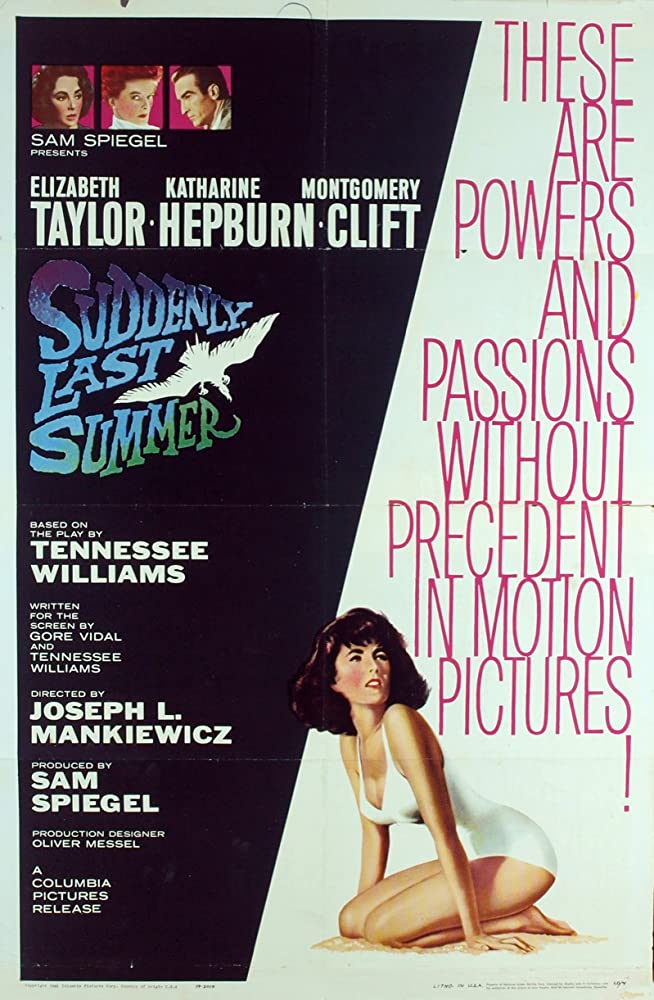
The Furniture: Suddenly, Last Summer and the Dawn of Creation

As a special side dish to our ongoing Montgomery Clift Centennial celebration, The Furniture (our series on Production Design) is looking at one of his most fascinating pictures...

by Daniel Walber

Saint Sebastian had to be martyred twice. Violet Venable (Katherine Hepburn) tells his story with a certain vicious pride, lending her own Sebastian a supernatural authority. The saint was shot full of arrows but survived, miracuously, only to be beaten to death with cudgels. The first death has been depicted by countless artists, a hauntingly beautiful and frequently homoerotic image. The second, meanwhile, is unspeakably violent and ugly. It’s almost forgotten, a brutal footnote to a transcendent aesthetic.

Mrs. Venable’s Sebastian, however, gets it in reverse. As is revealed at the end of Suddenly, Last Summer, he was torn limb from limb under the white hot sun of Cabeza de Lobo. And for what crime? In accordance with the aging Hays Code, it appears to be his homosexuality. But beneath this ultra-thin surface lingers something much darker...

Click to read more ...

Monday
Oct052020

Oscar Predictions: Cinematography, Production Design, Editing

by Nathaniel R

we're in mourning that we won't get to see DUNE this year...

You've probably heard that Dune is no longer a 2020 picture and will now arrive in the final quarter of 2021. This necessitated yet another revision just as we'd finished nearly all of the Oscar charts -- our work is never done! The biggest impact is in the visual categories. These should be interesting to follow this year in the absence of the kind of big budget spectacle films that often dominated visual categories. Does this mean voters will get more creative and search out further afield Production Design possibilities like, say, Shirley, or First Cow or I'm Thinking of Ending Things or more lax and just nominate their favourite Best Picture candidates in every visual category even if those pictures are mostly contained in one location (hi One Night in Miami, Ma Rainey's Black Bottom) or out on the open road in a beaten down van (hi Nomadland)... 

Click to read more ...

Wednesday
Sep302020

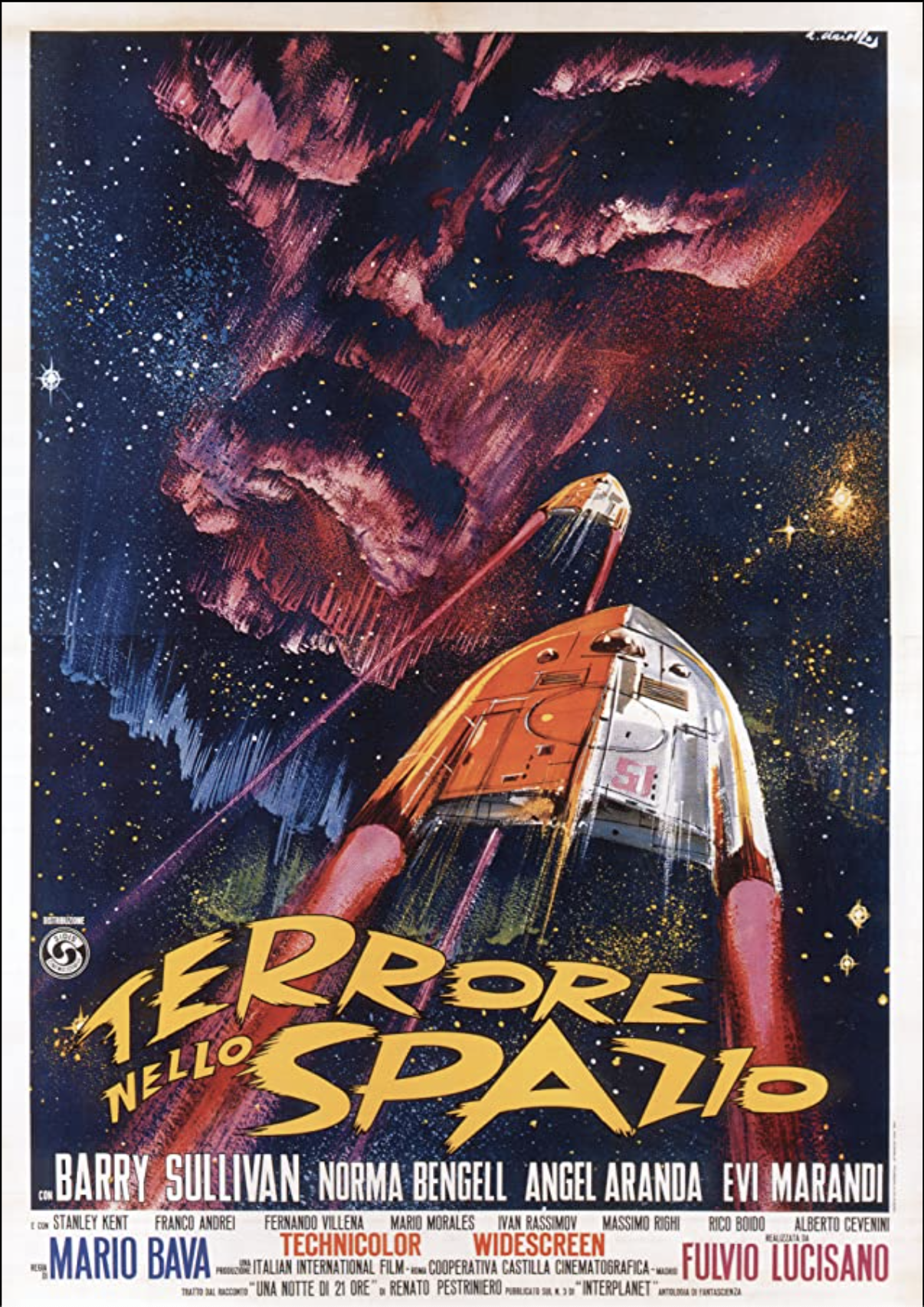
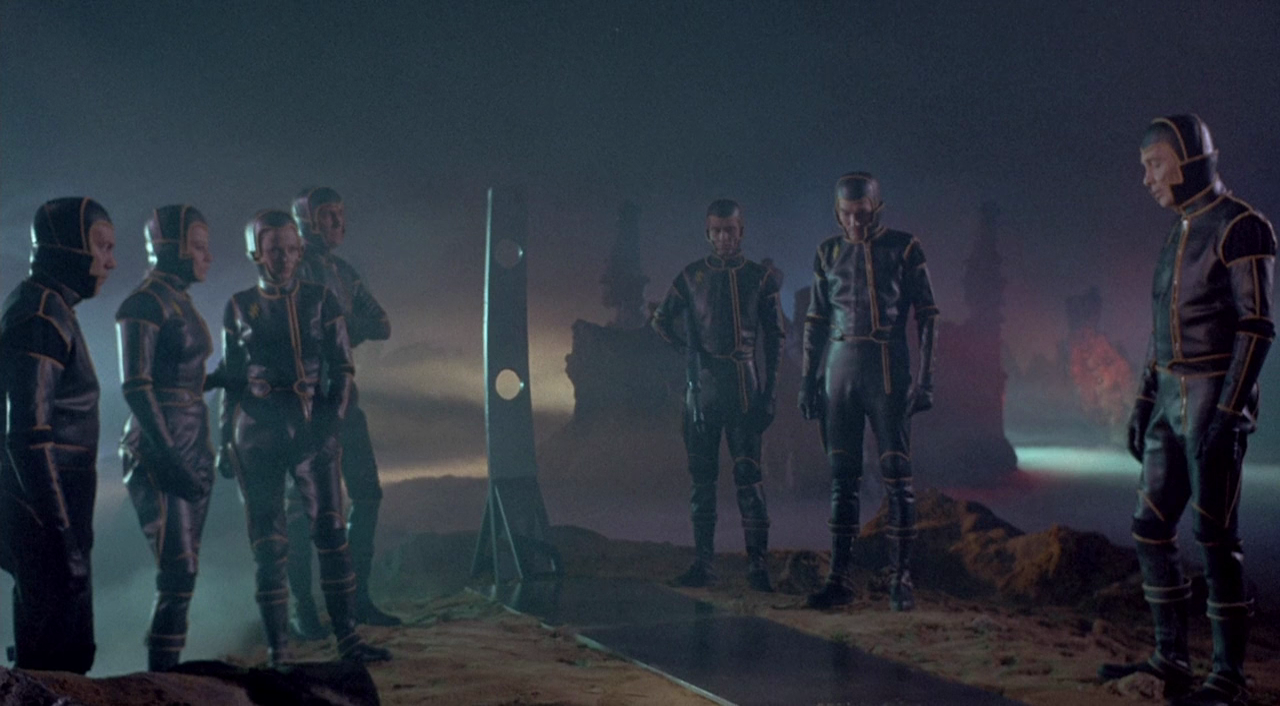
The Furniture: SciFi on a Budget in Planet of the Vampires

"The Furniture," by Daniel Walber. (Click on the images for magnified detail)

Last week’s column was about Dr. Zhivago, the obvious first choice for any 1965 celebration of production design. But where do we go for Part 2? None of the other 9 nominees really leap forward as worth a column, though I do like King Rat. Outside Oscar’s purview, meanwhile, there’s a lot. There are sweeping historical dramas, like The Saragossa Manuscript and Forest of the Hanged. There are wildly bizarre fantasies, like Juliet of the Spirits and Shadows of Forgotten Ancestors. But I think it would be fun to follow Dr. Zhivago with something entirely different, a movie with only a handful of sets and a budget of $200,000.

Mario Bava’s Planet of the Vampires was perhaps never destined to be a hit. Bava was disappointed with the casting of Barry Sullivan as Captain Mark Markary, who he considered far too old. Sullivan, for his part, took one look at the script and assumed the worst. It wasn’t until he showed up for ADR recording that he saw just how much magic Bava could get out of $200,000. The images took his breath away...

Click to read more ...

Wednesday
Sep232020

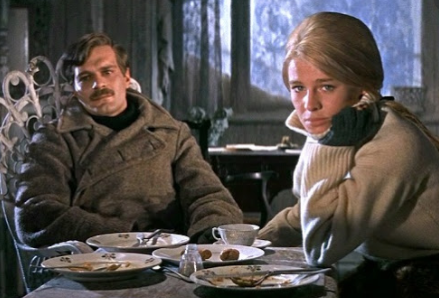
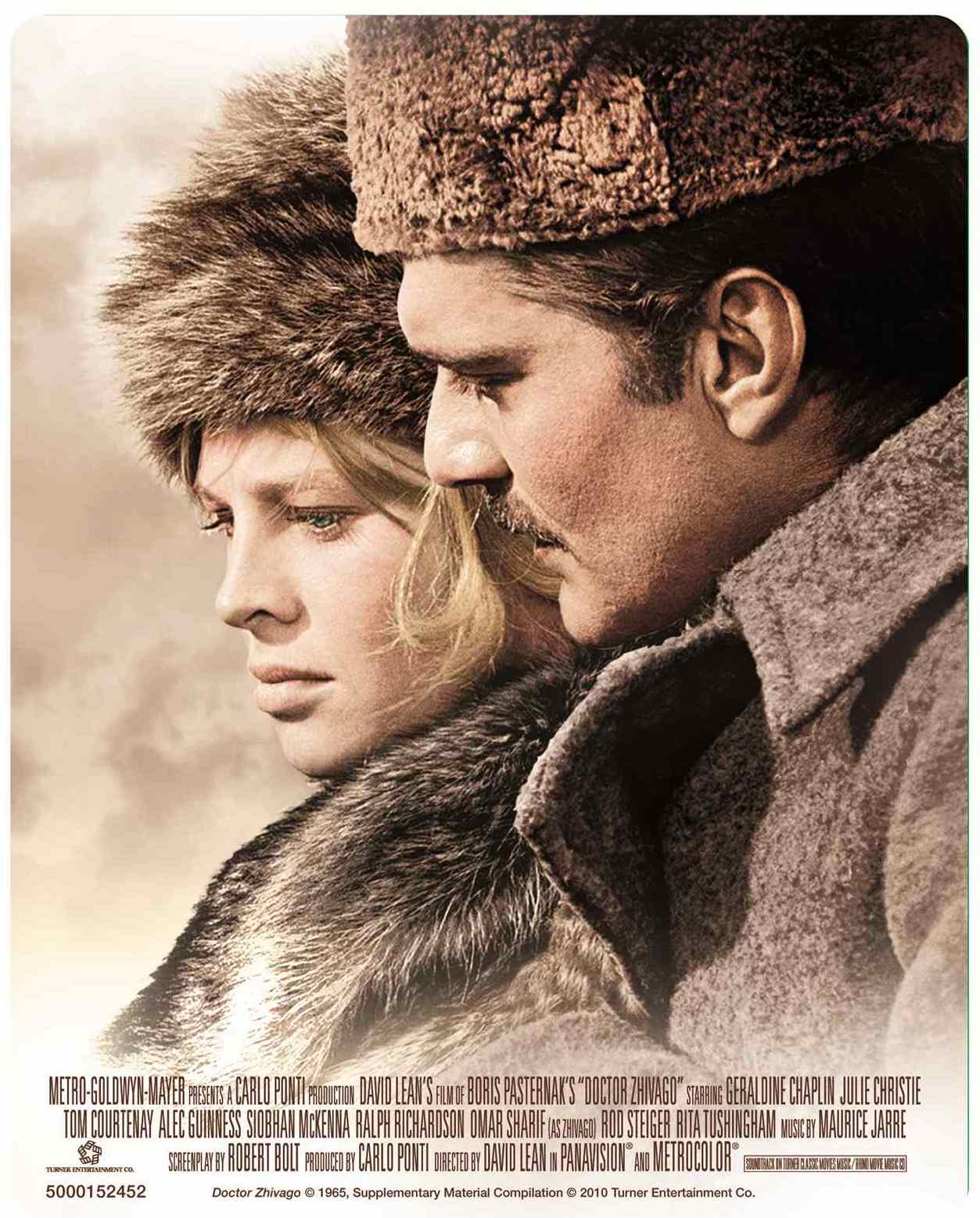
The Furniture: The frozen escape of "Doctor Zhivago"

"The Furniture," by Daniel Walber. (Click on the images for magnified detail)

Ten movies were nominated for Best Production Design at the 1965 Oscars, one of the last years before the Academy retired separate categories for color and black & white. There are some striking examples on the list, from the bloated (The Agony & the Ecstasy, Ship of Fools) to the bizarre (Inside Daisy Clover). But when you come down to it, there’s really no looking past Doctor Zhivago.

This was David Lean’s second consecutive film to win the category, after Lawrence of Arabia three years earlier. While their visual scope is similar, the two films actually have very different preoccupations. Lawrence of Arabia is about a man determined to shape history. Doctor Zhivago is about a man trying to escape it. Understanding the difference helps us understand the design.

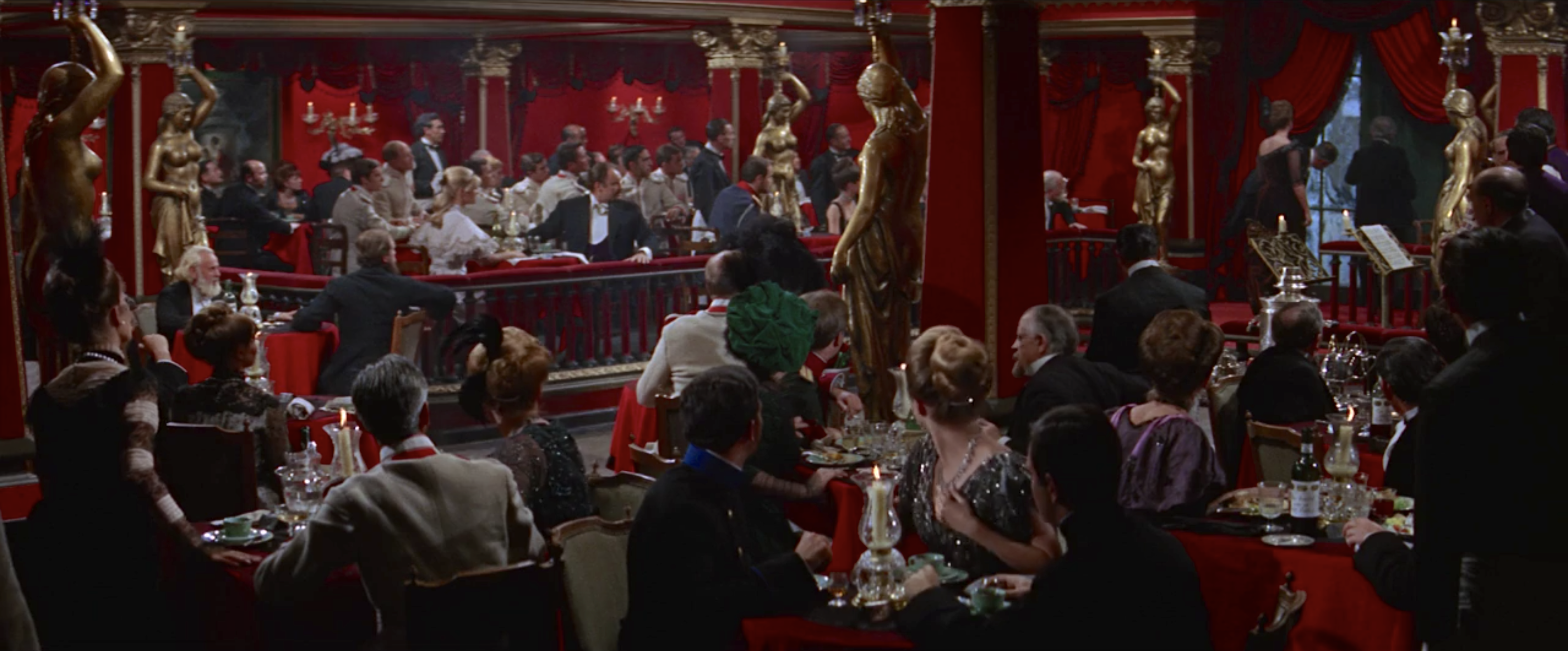
We begin on the eve of the Russian Revolution, a moment of great social contrasts...

Click to read more ...

Wednesday
Sep162020

The Furniture: Framing Perpetual Childhood in The Truth

"The Furniture," by Daniel Walber, is our weekly series on Production Design. You can click on the images to see them in magnified detail.

Towards the end of Hirokazu Kore-eda’s The Truth, legendary actress Fabienne Dangeville (Catherine Deneuve) admits something quite harsh. “I prefer to have been a bad mother, a bad friend and a good actress,” she announces at dinner. Her talent and her single-mindedness have given her a lengthy career, multiple Césars, and the freedom to take liberties with her own story. Her soon-to-be-published memoir is the occasion for which her daughter, Lumir (Juliette Binoche), has come for a visit, bringing her American husband (Ethan Hawke) and their daughter, Charlotte (Clémentine Grenier). And this short trip quickly becomes a long one, once Lumir agrees to step in as her mother’s assistant on the set of a science-fiction film.

Lumir’s presence becomes an opportunity to relive and relitigate family history. It’s not just that Fabienne’s memoir strays from the truth, but that their entire relationship is based on contested memories. Kore-eda suggests that it might be Fabienne’s work that has so deeply wounded her personal relationships. Has the vocation of make-believe crept into the rest of her life, encouraging her to freely reshape her own memories and ignore the truths of those closest to her? Has acting made Fabienne a forever-child?

And how on earth do you express that with production design?

Click to read more ...