Amir here to kick off We Can’t Wait!, a week-long series by Team Experience on our most anticipated films of 2014. The title is pretty much self-explanatory. We voted as a group and, starting tomorrow, each of us will cover one of the films that ended up on our top ten 14 list. Before that, however, let’s take a quick look at some of the films that were placed highly on our individual ballots but failed to make the final list. You may remember that I posted my own personal list of most anticipated films in this space previously. Let’s hear from the rest of the Team…
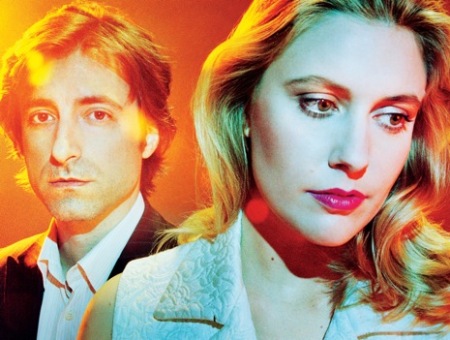
Untitled Public School Project (dir. Baumbach)
Noah Baumbach’s upcoming Untitled Public School Project, starring and co-written with his diligent muse and recurring collaborator Greta Gerwig, sounded to me like Greta-and-Noah’s Up the Down Staircase, a little-remembered 1968 drama in which Sandy Dennis stars as a fresh-faced, first-time teacher pushed out of her element and into the full and frenzied halls of a NYC public high school. This got me thinking that Greta Gerwig could very well be the Second Coming of Sandy Dennis, what with both actresses’ enchanting onscreen blending of quirky neuroticism, inspired mannerisms, and modest, effortless, and intelligent charm, subsequently causing crazy, giddy daydreams of Greta-as-Honey in Who’s Afraid of Virginia Woolf? I think I need to lie down...
Details are somewhat scant on this one, but the intriguingly untitled Frances Ha follow-up doesn’t sound much like what I’d envisioned. Instead, and in a vein seemingly similar to Frances, the film centers on the relationship between another of Greta’s determined New York hopefuls and her worshipful Barnard buddy, played by Lola Kirke, sister of Girls star Jemima. In this New Yorker article from April of last year, Baumbach likens the movie to both The Great Gatsby and Jonathan Demme’s Something Wild, which sounds both mind-boggling and marvellous. Then again, after Frances, I’d probably follow Noah and Greta into an Armageddon remake if it came down to it.
-Matthew Eng
Godzilla (dir. Edwards)
The last time Hollywood tried to make a CGI epic out of Toho’s radioactive lizard, the results were deeply vile. But Gareth Edwards is no Roland Emmerich. And any doubts to the contrary evaporated when the teaser trailer bowed at the end of 2014; its grave tone, gorgeous pop-nihilistic visuals, and suggestive hints of creature design prove that the filmmakers at least know what film they should be making. Whether they’ve actually made it is something we’ll find out in May, but from this distance, it looks to me like the obvious frontrunner for King of the Summer Popcorn Movies.
-Tim Brayton
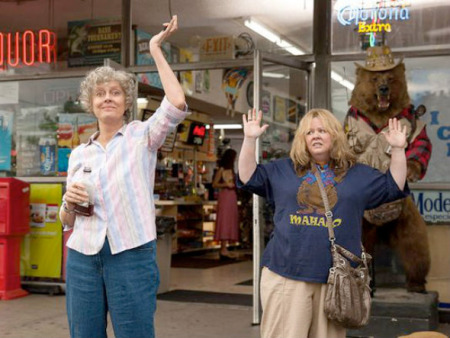
Tammy (dir. Falcone)
The words were "Melissa McCarthy and Susan Sarandon road trip comedy". I was sold instantly. McCarthy's comic talents are supreme when the co-star chemistry works - Sandra Bullock yes, Jason Bateman no, which suggests the laws of cosmic comedy are a mystery. And it's been so long since Sarandon was a movie star that she needs to take this chance to cut loose as a profane, hard-drinking grandmother. McCarthy co-wrote the script with her husband Ben Falcone, who has first time directing duty here. So all in all, a volatile mix of untested and unpredictable - but that can often make for cinematic magic.
-David Upton
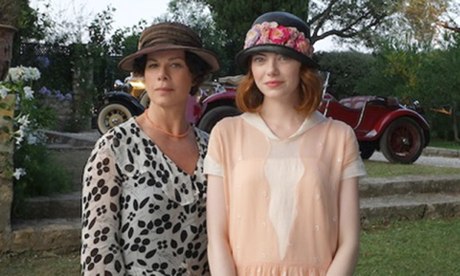
Magic in the Moonlight (dir. Allen)
At the beginning of every new year I know little about what the 12 months will hold for me, but I know one thing for sure: I'll be first in line on opening night for the new Woody Allen movie. As usual, no one knows exactly what this one is about (and bless him for cherishing secrecy in this time and day when we know way too much about every single film before a trailer's out) other than "A-listers get together in new locale to make Allen film". All I can hope for is that the Woodsman will give us the next brilliant Emma Stone performance promised in Easy A and that it will be at least half as good as Blue Jasmine was last year.
-Jose Solis
Interstellar (dir. Nolan)
Whenever Christopher Nolan makes a film, it is a must-see event. They're met with equal levels of anticipation by both fanboys and highbrow cinephiles alike, eager to devour and dissect the worlds he creates. Even if you find yourself admiring the craftsmanship rather than the finished product, he's one of the few directors making adult-oriented, thought-provoking blockbusters. With an Oscar-approved cast (Matthew McConaughey, Anne Hathaway, Jessica Chastain, Ellen Burystn, and Michael Caine, to name a few) playing scientists and explorers that delve into a newly discovered wormhole that allows time travel and journeys to new dimensions, it seems that Nolan is, once again, looking to push cinematic boundaries. And I'll be one of the first in line at the IMAX ready to have both my eyes and mind stimulated.
-Andrew Stewart
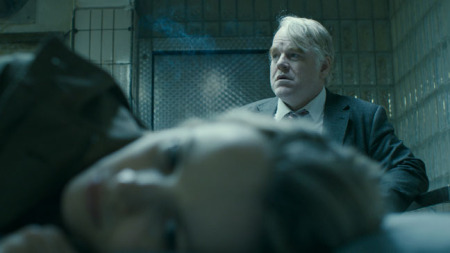
A Man Most Wanted (dir. Corbijn)
John Le Carré novels have made some pretty good films in the past, from the steamy Tailor of Panama to the icy Tinker Tailor Soldier Spy. This one, from the master of the spy novel's recent tome based on the true-life story of Murat Kurnaz, a Chechen Muslim and legal resident of Germany who gets caught up in the war on terror, boasts a stellar cast (Philip Seymour Hoffman, Rachel McAdams, Daniel Bruhl, Robin Wright, and Willem Dafoe) and an inspired choice in the director's chair: Anton Corbijn, who directed The American, the most interesting spy film of the new millennium. And hey, if that doesn't interest you, IMDB says that you might like it if you liked ANY of the revitalized Ms. McAdams's 2013 efforts (Passion, To the Wonder, and About Time)! BONUS: Early word from Sundance is good, which only makes me more excited!
-Daniel Bayer
Far From the Madding Crowd (dir. Vinterberg)
Matthias Schoenaerts stars as a young shepherd and Carey Mulligan as the young woman who becomes the object of his affection for some years in Far from the Madding Crowd. I’m excited but nervous about this adaptation of this Thomas Hardy novel. Literary adaptations too often end up as arid affairs despite any inherent zest and life of their source material. Nailing the weird but charming mix of comedy and tragedy from the text already seems like a difficult task and I can’t help but wish Tony Richardson were still alive to attach his irreverent adaptive skills to it. But the film is excellently cast from Juno Temple as servant Fanny to Michael Sheen as bumbling Boldwood. David Nicholl’s last script (Great Expectations) though occasionally surface-y was a fine condensation of a lengthy novel. And, sure, this 19th century country-romp seems a far cry from Thomas Vinterberg’s recent The Hunt but a director with a strong hand is always the best thing for a literary adaptation so I remain hopeful. Now, let us pray that in translation to the screen Mulligan’s Bathsheba retains her agency and feminist edge.
-Andrew Kendall
Hunger Games: Mockingjay – Part 1 (dir.Lawrence)
Sue me for becoming captivated by a tween movie trend. When a Burning Question asked, "Book or movie first?" I answered book, but Michael C. concluded movie. The first Hunger Games movie was my experiment. I read the book after (and decided Michael C. was wrong). I got hooked on the trilogy, and now I can't get enough of the films. They're imperfect, to be sure. They should dive more deeply into the social commentary, or at least choose between a message and appealing to an audience. But they're juicy fun, and it's easy to anticipate a film when I already know I love the content.
-Deborah Lipp
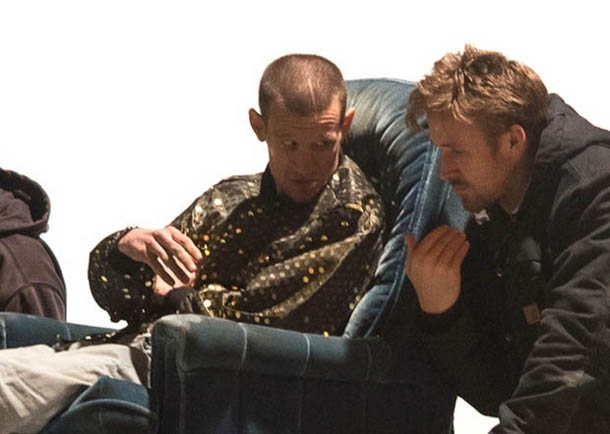
How To Catch a Monster (dir. Gosling)
Have we lost faith in Ryan Gosling or does his desire to quit acting for the time being after Gangster Squad, Only God Forgives and The Place Beyond the Pines -- back-to-back-to-back performances which weren't greeted as warmly as he's accustomed to -- speak well of his own keen instincts about how to manage his career. Will getting behind the camera rejuvenate him? Not all actors can direct but I'm intrigued by his choice of genre (urban fantasy) and especially his casting. Christina Hendricks stars as "Billy" a single mother who gets swept into a dark underworld. Since Hollywood proper seemed dumbfounded as to what to do when she broke on Mad Men, weirdly assuming that January Jones was the only Mad Woman worth pursuing as a movie star, it's a relief that a film star like Gosling gets it. The cast also includes Matt Smith as "Bully", Saorsie Ronan as "Rat" and Eva Mendes as "Cat" and if all those famous names playing weirdly matching character names for a movie star trying to become a writer/director don't make you curious, what could?
-Nathaniel
Are you excited about these nine titles? If so, why?



 Saturday, January 25, 2014 at 9:00AM