Oscar History
Film Bitch History
Welcome

The Film Experience™ was created by Nathaniel R. All material herein is written by our team. (This site is not for profit but for an expression of love for cinema & adjacent artforms.)

Follow TFE on Substackd

Powered by Squarespace
What'cha Looking For?
Subscribe

Entries in Anna Magnani (8)

Thursday
Oct292026

Best Actress at the dawn of the Age of Television: An Alternative Oscar History

by Cláudio Alves

From 1950 to 1955, only one performer won the Best Actress Oscar from an original screenplay rather than a stage-to-screen adaptation. She was Audrey Hepburn, who took the prize for 1953's ROMAN HOLIDAY, at the 26th Academy Awards.

While most of the world was rebuilding from the brink of ruin, the USA, whose territories the war barely touched, transitioned from WWII into a period of booming prosperity. As discussed in my last alternative Oscar history post, this led to a rise in conservatism and the dreaded Blacklist. But as the 50s dawned on Hollywood, another existential threat rose to challenge the big screen. I’m, of course, talking about TV, that essential symbol of midcentury domesticity. If in 1950 the appliance was still a novelty, things changed quickly. Five years later, nearly 60% of American households held court around those all-too-tempting goggle-boxes. For the film industry, this was catastrophic, as it posed unprecedented competition.

People could now get what they used to get from cinemas from the comfort of their own homes. It’s not unlike the crisis caused by the rise of streaming platforms in our day and age. Only, back then, the American movie industry responded through an arms race for new forms of spectacle, technological innovations that the television’s small screen couldn’t hope to replicate. CinemaScope and other versions of widescreen filmmaking became standardized over the square-ish-ness of the Academy ratio. Genres like the Biblical epic surged in popularity, as did other marks of lavish opulence, musicals and the like. But also films that tested the Code’s limits, from Tennessee Williams’ adaptations to the gamine-lite (dis)pleasures of The Moon Is Blue. 

But how did this reflect on the Best Actress race, both that of our actual Oscar History and the one dictated by my personal preference? And what about the rest of the world? Believe it or not, Hollywood isn’t the end-all-be-all of cinema…

Click to read more ...

Monday
Jun142021

1946: Anna Magnani in "Rome, Open City"

Each month before the Supporting Actress Smackdown, Nick Taylor suggests alternatives to the actual Oscar nomination ballot.

by Nick Taylor

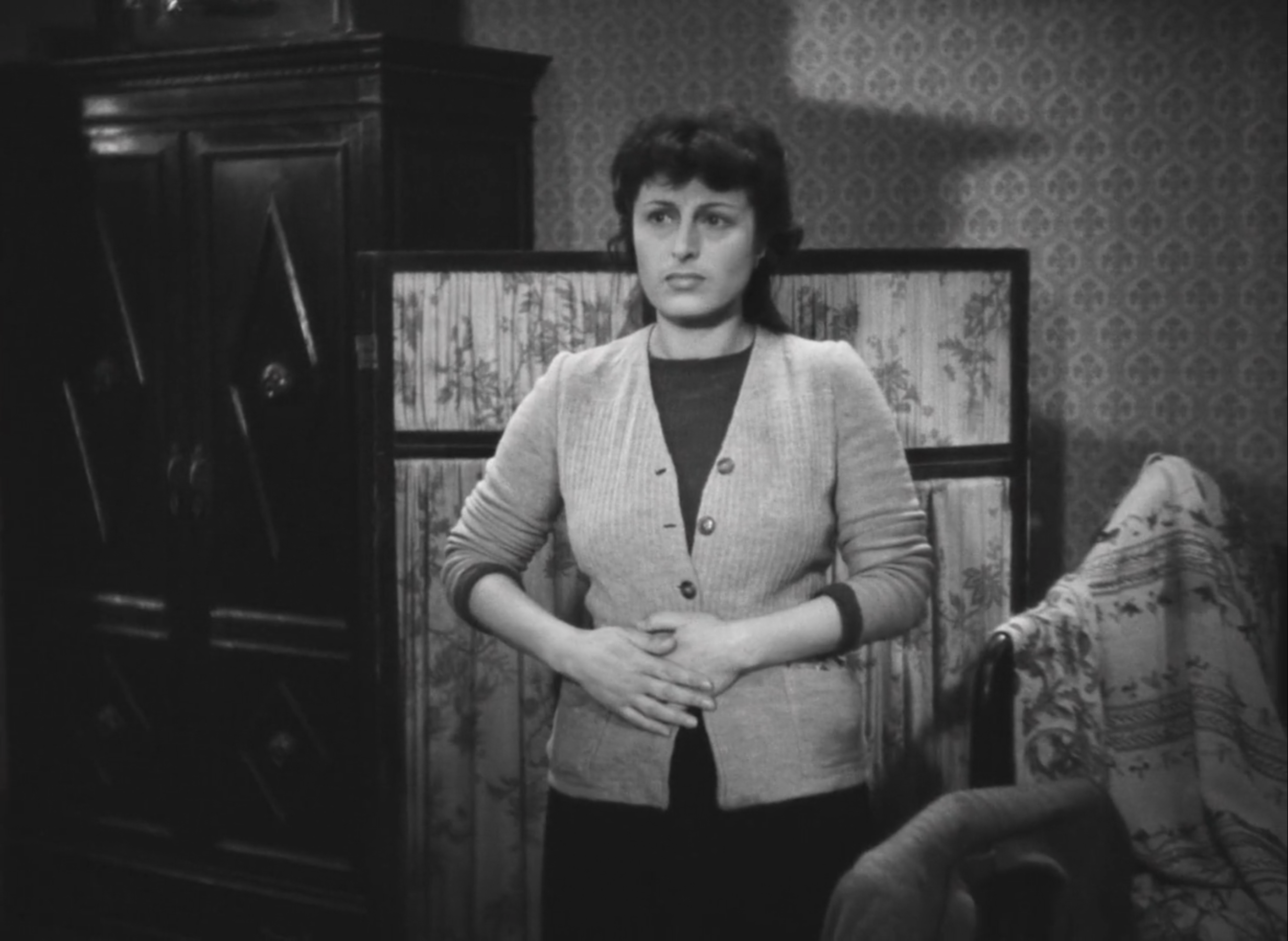
I gather that folks will have different ideas about whether Anna Magnani’s work in Rome, Open City belongs in the leading or supporting category. Magnani holds down the first half of her film similar to the way Janet Leigh leads us into Psycho, appearing as an indomitable central player until a cruel exit halfway through her film. Unlike Leigh, Magnani isn’t the only character driving her film, sharing a comparable amount of narrative focus as Aldo Fabrizi’s priest and Marcello Pagliero’s Resistance fighter, to say nothing of the other characters threaded through the first half who only grow more important as the film continues. Still, her presence is so strong that, like Leigh, you can’t forget about her even after she’s gone. It’s a bit gratifying to learn this question has been hanging around the performance since the film was originally released. Magnani won the second ever National Board of Review award for Best Actress as well as the inaugural Nastros d’Argento Award for Best Supporting Actress back home in Italy. Rome, Open City’s lone Screenplay nomination is certainly significant enough to indicate that American artists noticed the film, as well as the fortuitous relationships Magnani, Rossellini, and Fellini would go on to have with Hollywood, but I’d be fascinated to find any writing about whether she was thought to have a chance at a nomination that year.

So yes, there will be readers who will justifiably argue she shouldn’t be considered as an alternative to the supporting actress lineup that will soon be discussed. I’d be happy to hear those arguments, and would be even happier to start from a place of recognizing her brilliance within this revolutionary film. Magnani’s Pina, the heavily pregnant fiancé of a high-ranking Resistance fighter in occupied Italy, is embodied with such fierce, unvarnished power that she remains the film’s most memorable face among its many tragic figures...

Click to read more ...

Tuesday
Jul072020

Anna Magnani in Hollywood

by Cláudio Alves

In 1957, the Italian actress Anna Magnani received her second and final Oscar nomination. She had won the Best Actress prize two years before thanks to her first Hollywood movie, the adaptation of Tennessee Williams' The Rose Tattoo, in which she gives a volcanic performance that's still considered, by many, as one of the best winners in the category's history. Still, despite such a glorious start, her career in American pictures was short-lived, encompassing only four films made between 1955 and 1969.

On one hand, Hollywood's mistreatment of a great actress is heartbreaking. On the other, Magnani's tenure in the American film industry feels right for her legacy, reflecting how one of a kind she was and how this acting titan resisted any and all attempts of assimilating her into the model of traditional stardom…

Click to read more ...

Thursday
Jan232020

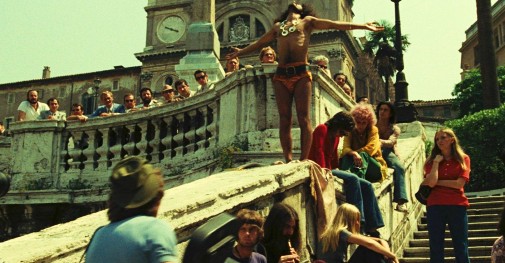
Fellini @ 100: "Roma" (1972)

A few volunteers from Team Experience are revisiting Federico Fellini classics for his centennial. Here's Cláudio Alves...

If Rome is the Eternal City, then Federico Fellini might be the Eternal Filmmaker. His cinema exists outside of time, both ancient and strangely new. A filmography that's a circus of pleasures where the grotesque and the beautiful are hand-in-hand, always dancing to a song of transgression and perversity. The faith of the church and the clown's laughter coexist too, precariously, but assuredly, and the images their communion produce are profane marvels. Like ancient frescos, there's a patina of age to these pictures, but they're bright as if they were freshly painted by master artists.

Perhaps no single film better exemplifies these wonderful contradictions than Fellini's Roma…

Click to read more ...

Thursday
May032018

Months of Meryl: Defending Your Life (1991)

John and Matthew are watching every single live-action film starring Meryl Streep. 


#18 —Julia, a quality human being awaiting her judgment in the afterlife.

JOHN: Defending Your Life, Albert Brooks’ 1991 purgatory comedy, actually contains two movies. One involves Brooks’ Daniel Miller dying in a car accident, arriving in the leisurely Judgment City, and having his entire life reviewed in a trial that will determine whether he is reincarnated as a different person or sent to a higher dimension. The other, shorter film lodged inside Brooks’ painfully vain lark is about the absolute perfection of Meryl Streep. Guess which one is more enjoyable...

Click to read more ...