Oscar History
Film Bitch History
Welcome

The Film Experience™ was created by Nathaniel R. All material herein is written by our team. (This site is not for profit but for an expression of love for cinema & adjacent artforms.)

Follow TFE on Substackd

Powered by Squarespace
DON'T MISS THIS

"The Actor" Awards

One Nomination After Another... 

COMMENTS
What'cha Looking For?
Subscribe

Entries in Hamlet (15)

Thursday
Jun252015

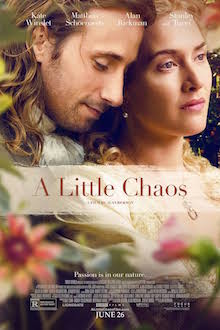
Corset Kate: Winslet's Best Period Piece Performances

With "A Little Chaos" opening tomorrow, abstew looks back at Kate in corsets. - Editor  

Oscar winner Kate Winslet returns to the screen tomorrow in A Little Chaos (in select theaters and available on VOD). It's a fictionalized story of how the elaborately lush gardens at the Palace of Versailles were constructed for King Louis XIV. The film is a reunion for Winslet and Alan Rickman (who stars as Louis and also directed the film), who haven't worked together in 20 years. But more importantly, the film reunites Winslet with the corset, getting laced-up again for the first time since 2004's Finding Neverland. For the first few years of her career, Winslet only appeared in period pieces (it wasn't until 1999's Holy Smoke! that she finally starred in a film set in modern-day) so it's time to look back on three of her best performances in those waist-cinching garments! (For purposes of this list, I decided to not include her 1950s set films - a girdle just isn't the same...)


Sense and Sensibility (1995)
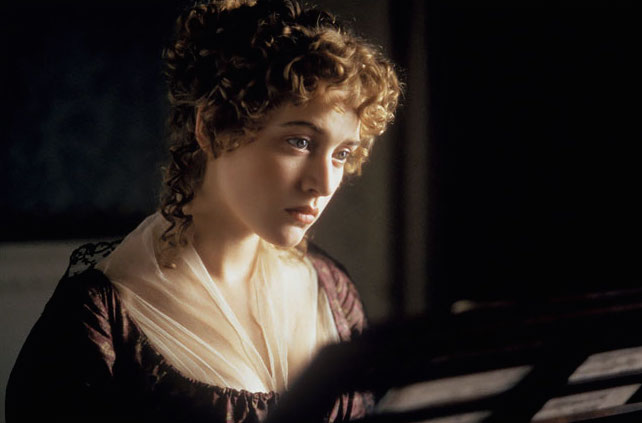
Proving that the period piece was a good fit from the start, Winslet's first Oscar nomination came for her wildly romantic turn as Marianne Dashwood in the Best Picture nominated adaptation of Jane Austen's first published novel, Sense and Sensibility. But director Ang Lee had to be convinced that Winlset was the right actress for the role as he hadn't cared for her film debut in 1994's Heavenly Creatures. And even after casting her in the role, on the first day of filming, he was unimpressed with her work, telling her that she'll have to be better. The criticism must have lit a fire under her because Winslet completely throws herself into the role with determination and gusto. Her Marianne is all bleeding heart that she pins tellingly on her sleeve for the world to see. Incapable of hiding her turbulent emotions, she allows herself to be ruled by love. And Winslet plays her without judgement of her impulsive nature, embracing Marianne's romanticism and temperament. But even the strongest wildfire can't blaze brightly forever. In the most heartbreaking scene of the film, Marianne's passionate ideals are extinguished as she walks across the moors to gaze upon the home of the man that has abandoned her. Influenced by her devotion to poems and romance novels (as preparation, Winslet read and studied works of the period to achieve Marianne's mindset), she is willing to die for her dreams of love. But instead of death, Marianne experiences a rebirth, allowing herself some of her sister's practical reasoning. Able to look at things with a little more understanding. Marianne's transformation could very easily feel like the character has become defeated, but what Winslet does beautifully is bring Marianne a newfound maturity without losing the spark that makes her still believe in the possibility of love. 

Jude (1996)
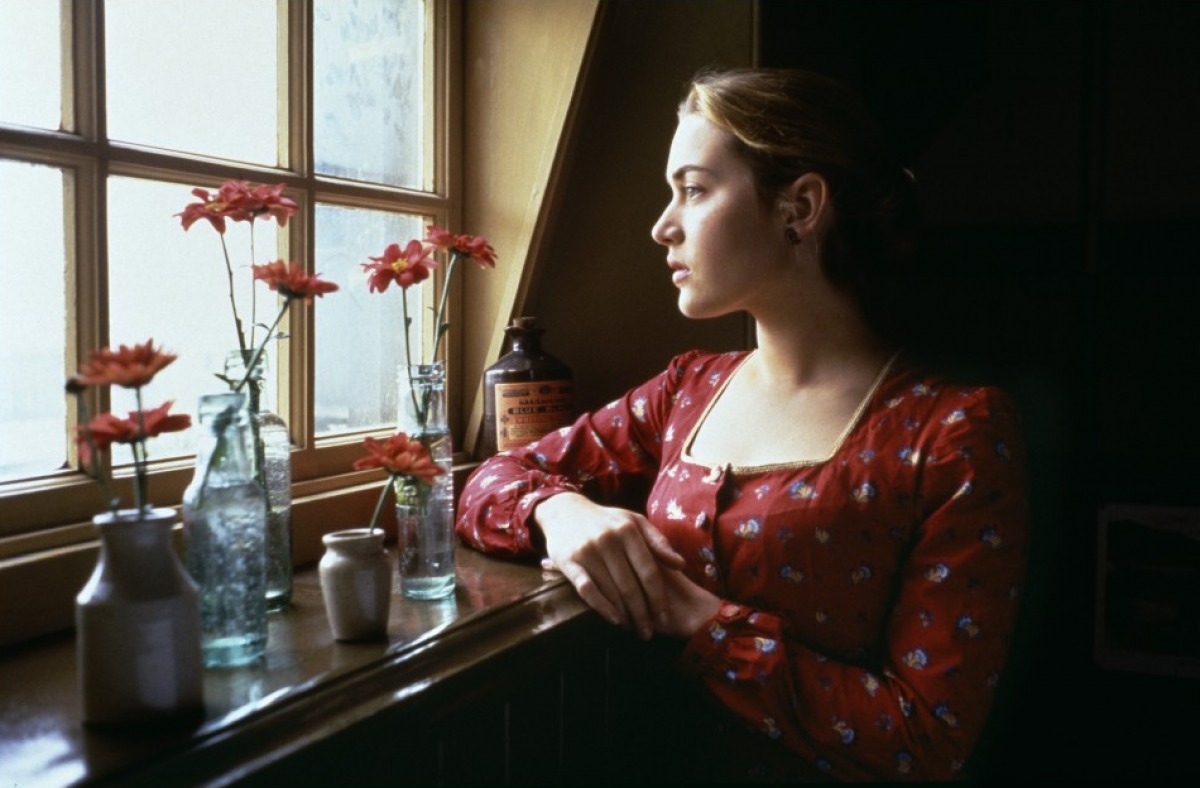
In this little-seen, but devastating film, Winslet gives one her most complex performances as Sue Bridehead, an independent and headstrong woman in late 1800's England. As the tragic events unfold in Michael Winterbottom's adaptation of Thomas Hardy's controversial novel Jude the Obscure, Winslet's magnetic star-turn saves it from becoming a dreary slog. Her early scenes with Christopher Eccelston's Jude, as they begin to get acquainted, have an easy playfulness, especially in a flirty pub scene in which Sue smokes and drinks beer with the bar patrons. It's reminiscent of Winslet's below-deck escapades in Titanic but the scene here plays earthier and sexier, as Winslet seems more relaxed and natural than she ever does as Rose. And the two actors have wonderful chemistry together, willing us to want their characters to eventually get together despite the fact that they are cousins and already married to other people. Unfortunately Sue's constant need to defy convention, her refusal to comform to the standards of Victorian society, becomes their ultimate undoing. No spoilers here, but the tragic incident hits you like a gut-punch. For most of the harrowing scene, Winslet is silent and still, completely numb to pain. It's in the scene directly after that we get our catharsis as she lies facedown on the ground, twisting her body as she lets out animalistic howls of despair. We are no longer watching an actress give a performance, but viscerally feeling the character's bottomless grief. 

Hamlet (1996)

In a part that has been played on film by Jean Simmons, Marianne Faithful, and Helena Bonham Carter, the definitive screen version of Shakespeare's ill-fated heroine Ophelia, has to be Kate Winslet. In Kenneth Branagh's unabridged, 4-hour version featuring such esteemed thespians as Derek Jacobi, Julie Christie, Richard Attenborough, Judi Dench, and John Gielgud, it is Winslet that emerges as the film's most memorable player. And it's all the more impressive because, unlike most British actors, Winslet never trained in the classics. Later she even turned down an offer to appear in Sam Mendes' The Bridge Project, performing in Twelfth Night and Uncle Vanya, because she didn't feel like she could tackle them properly. It's surprising because on film, Winslet is an actress never afraid of a challenge and her Ophelia works precisely because of that fearlessness. This is an Ophelia not afraid of her sexuality, a young woman discovering the harsh realities of men's actions and what it means to give yourself to someone. Winslet endows her with womanly understanding while still maintaining the fragility that leads to her downfall. Ophelia is definitely a showy part with its descent into madness, but instead of being overly theatrical or studied, Winslet plays those scenes manic and unhinged, surprising us with bold execution and raw modernity. Which is not to say she's incapable of delivering Shakespeare's language the way it is intended. It's just that she's not slavishly devoted to it, more concerned with capturing Ophelia's state of mind and allowing the text itself to feed her emotions. In a 400-year-old play, the most often produced of all of Shakespeare's work, Winslet interpretation helps you feel like you're witnessing it for the first time.


Do you agree with these three choices as Kate's best work in a corset? If not, what's your preference?
Wednesday
Jun172015

The Year of the Month is... 1948

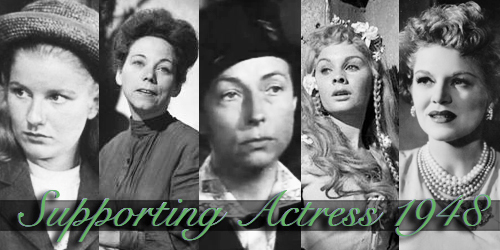
Lest you forget, we have two Smackdowns this month. The first, already published, was for 1979 and for the second half of the month our retrospective love will be devoted to 1948 when these five women were nominated for Best Supporting Actress


  • Barbarba Bell Geddes, I Remember Mama
  • Ellen Corby, I Remember Mama
  • Agnes Moorhead, Johnny Belinda
  • Jean Simmons, Hamlet
  • Claire Trevor, Key Largo [winner]

Readers are the final panelist and your votes count (collectively) so between now and June 25th get your votes in with 1 (ouch) to 5 (total perfection) hearts for each. Please only vote on the performances you've seen (points are proportional so it doesn't affect the widely seen or the underseen).

To give you some context for the year, let's go over some high points of 1948...

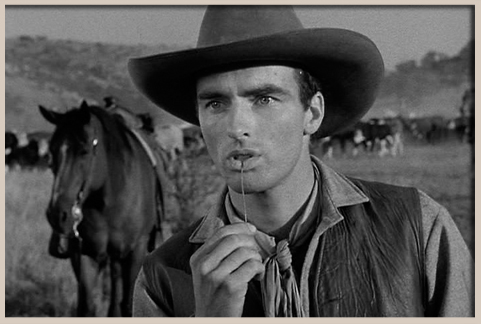
Montgomery Clift becomes a superstar right out of the gate with his first two films: The Search and Red River

Great Big Box Office Hits: 1) The Red Shoes, 2) The Three Musketeers, 3) Red River, 4) The Treasure of the Sierra Madre 5) When My Baby Smiles at Me 6) Easter Parade 7) Johnny Belinda 8) The Snake Pit 9) Ingrid Bergman as Joan of Arc and 10) Erroll Flynn in The Adventures of Don Juan

Oscar's Best Pictures: Johnny Belinda (12 noms / 1 win), Hamlet (7 noms/4 wins), The Snake Pit (6 noms / 1 win), The Red Shoes (5 noms / 2 wins), and The Treasure of the Sierra Madre (4 noms / 3 wins). The Search starring Montgomery Clift probably just missed the cut-off with 4 major nominations, 1 win and a special Juvenile Oscar. Johnny Belinda and Sierra Madre shared the Golden Globe honors while Hamlet won Oscar's top prize

Happenings: Hollywood is still under the thumb of the HUAC hearings and many valuable players have already been blacklisted and/or jailed at this point; Post World War II anti-semitism is a mainstream topic which results in a Best Picture win early in the year for Gentleman's Agreement and then the banning of another film, David Lean's Oliver Twist, due to perceptions of anti-semitism in the character of Fagin (Alec Guiness); The US Supreme Court rules against religious instruction in public schools; Alfred Kinsey publishes "Sexual Behavior in the US Male"; Mahatma Gandhi is assassinated; a subway fare hike in Manhattan kicks it up to a whole dime.

Other Arts: Truman Capote's "Other Voices, Other Rooms" and Norman Mailer's "The Naked and the Dead" are published, Pulitzer winners include James Michenere's "Tales of the South Pacific," Tennessee Williams "A Streetcar Named Desire", and W.H. Auden for "The Age of Anxiety," Ed Sullivan and Milton Berle both begin their historical television superstardom this year with the variety shows "Toast of the Town" and "Texaco Star Theater" both of which will be retitled to reflect their star's name; "Mister Roberts" wins the first Tony Award for Best Play and "Kiss Me Kate" premieres on Broadway and will win the next year's inaugural Best Musical category. 

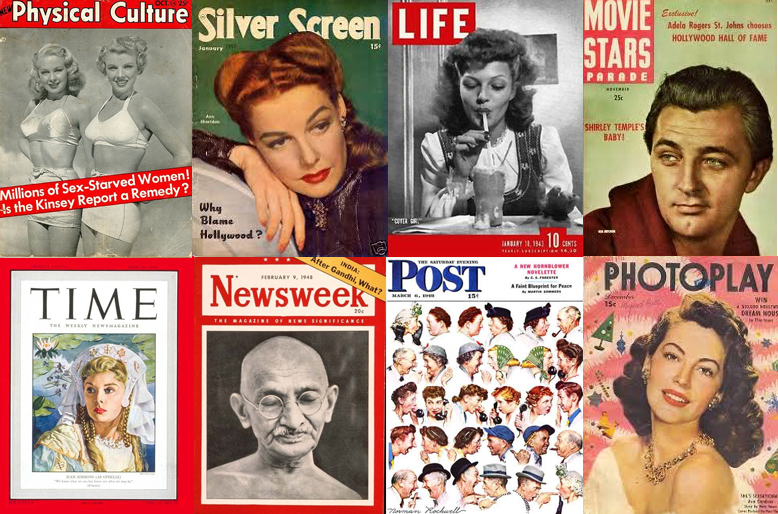
Some Magazine Covers for Context
Various movie queens, a reference to Shirley Temple's baby (her first child was born in January of '48), hot topics like Alfred Kinsey and Mahatma Gandhi, and more... 

Mix Tape (Born in '48)
Olivia Newton-John, Stevie Nicks, Grace Jones, Kenny Loggins, Andrew Lloyd Webber, Donna Summer, Jackson Browe, and Steve Winwood 

Actors We  ♥♥  Hard at TFE that were born in '48
Bernadette Peters, Dianne Wiest, Barbara Hershey, Kathy Bates and Christopher Guest 

Other Key Showbiz Figures From '48's Fine Vintage
Joe Dallesandro, Samuel L Jackson, John Carpenter, Gérard Depardieu, Bonnie Bedelia, Margot Kidder, Bud Cort, Kate Jackson, Mercedes Reuhl, Phylicia Rashad, Linsday Crouse, Mimi Kennedy, Nathalie Baye, Nell Carter, George RR Martin (author), Ben Burtt (sound genius), Colleen Atwood (costume designer), Javier Aguierresarobe (cinematographer), Edward Lachman (cinematographer), Lindy Hemming (costume designer)

Showtune to Go: Nat King Cole's "Nature Boy" is released which will later play a key role in one our mutual favorite films of all time Moulin Rouge! (2001) 

Wednesday
Jun032015

Ten Movies To Watch (To Play Along With Tony Awards At Home)

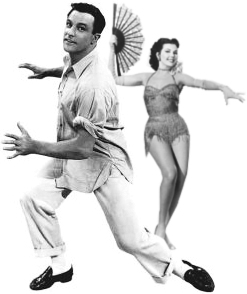
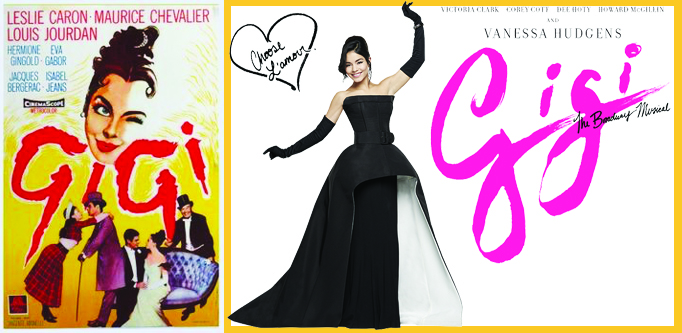
Gene Kelly and Ann Miller are unofficial Tony Players this yearGiven that not everyone can live in or even visit New York regularly and even those of us who do, can't see all the Tony nominees given our budgets, here's a list of ten plus smart movie choices if you'd like to feel tangentially invested in the upcoming Tony Awards (Sunday night! - should we live blog?) without actually having seen any of the shows! If you only have time for one movie make it an Ann Miller, Leslie Caron, or Gene Kelly movie as they're the unofficial mascots of this Tony season each having starred in two of the movies related to current Broadway hits.

TEN MOVIES
If you can't make it to Broadway

Congratulations! You've already won. You don't have to watch the super dull Finding Neverland (2004) again because it's Broadway adaptation didn't earn a single nomination! On a sadder note if you want to play along at home and you love good movies, the Doctor Zhivago (1965) adaptation has already shuttered since the Tony voters shunned it (yeah, it wasn't good) so you don't get to watch that classic again at home ...at least for this project.

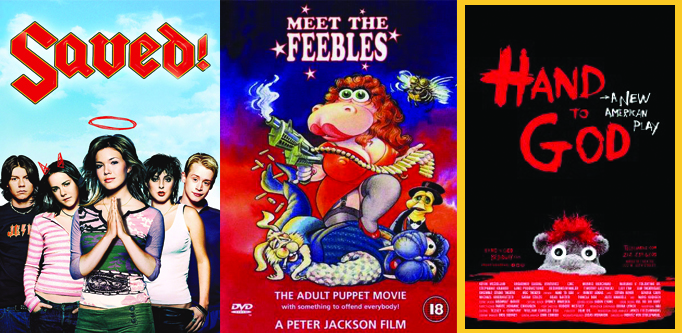
10 Saved! (2004) + Meet the Feebles (1989)
If you can't make it to NYC to see the blasphemous/hilarious Hand To God about a confused young man living with his religious mother who believes his hand puppet is possessed by the devil, try a religious satire and a filthy puppet movie instead. For maximum effect play these movies simultaneously side by side. (You may substitute any preferred religious comedy in place of Saved but dirty puppet movies are hard to come by)

Nine more movies (and Tony thoughts) after the jump...

Click to read more ...

Monday
May132013

Box Office Big Spenders: Tony Stark vs Jay Gatsby

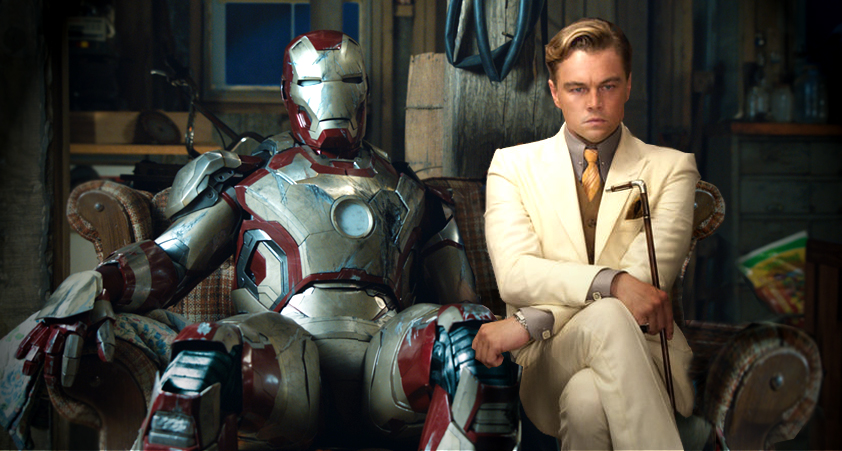
Excess was in this weekend, the second of the summer movie season despite the slight technicality of Spring having just started. Billionaires Tony Stark and Jay Gatsby were flaunting their expensive suits and pining for Pepper & Daisy everywhere you looked.

Iron Gatsby via Nathaniel R

Cheer up boys, you can now afford your second twenty-second home.

BOX OFFICE TOP DOZEN
01 IRON MAN THREE $72.4 (cum. $284.8) Reviewed
02 THE GREAT GATSBY  $51.1 *NEW* Reviewed
03 PAIN & GAIN  $5 (cum. $41.6)
04 PEEPLES  $4.8 *NEW* 
05 42 $4.6 (cum. $84.7)
06 OBLIVION $3.8 (cum. $81.6) Reviewed
07 THE CROODS $3.6 (cum. $173.2)
08 THE BIG WEDDING $2.5 (cum $18.8)
09 MUD $2.3  (cum $8.3)
10 OZ: THE GREAT AND POWERFUL $.8 (cum. $229.9) Reviewed
11 SCARY MOVIE 5 $.7  (cum $30.6)  
10 THE PLACE BEYOND THE PINES $.6 (cum. $19.9) Reviewed

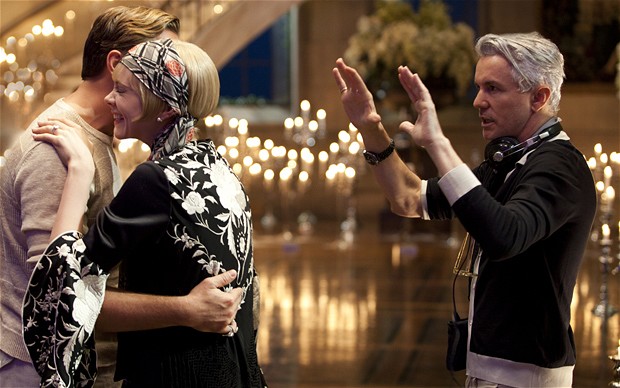
Though I'm nearly always pleased when a non-franchise non-genre drama wins big gold coin, The Great Gatsby's huge gross fills me with dread for our collective future. I  think the movie is admirable in some ways and a failure in others but the movie isn't really the point. I was holding on to Drama as my last refuge from those fucking 3d glasses and you know Hollywood will assume that it was the EXCITING 3-D that drove audiences to purchase tickets to a lengthy romantic drama. Worse still, Baz Luhrmann -- a true original who works so infrequently he probably only has about 3 more movies in him before he dies --  apparently has his heart set on doing Hamlet next... and with DiCaprio, too (meaning DiCaprio would have starred in 50% of his filmography). Annoying Fact: Hamlet has been filmed over 50 times for the screen and is revived somewhere on stage every year.

FOR GOD'S SAKE BAZ... AT LEAST PICK A LESS OVER-WORKED SHAKESPEARE IF YOU GOTTA HAVE THE BARD. THERE ARE DOZENS TO CHOOSE FROM!  AND P.S. YOU'VE ALREADY DONE THE BARD WITH LEO AND YOU'RE NOT GOING TO TOP ROMEO + JULIETFIND NEW TOYS TO PLAY WITH!

What did you see this weekend?  And are you, like me, weeping over the apparent future of Bazmark Productions?

Thursday
Mar172011

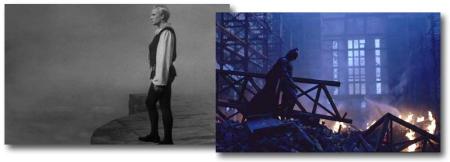
Distant Relatives: Hamlet and The Dark Knight

Robert here, with my series Distant Relatives, where we look at two films, (one classic, one modern) related through a common theme and ask what their similarities and differences can tell us about the evolution of cinema.

The Laughing Fishmonger

Of course I’m not the first person to notice a similarity between Batman and Hamlet. While the Caped Crusader of Gotham officially owes more of his inception to Zorro, the themes of his story, the conflicts that keep us coming back owe much to Hamlet, if not directly than indirectly as a model of the same story of a man driven by the “virtue” of vengeance.

Outside the stories, as cultural institutions, these two tales have much in common. Both have inspired endless versions across multiple media. Both are told over and over and over again (demand for more is considerable). Both provide endless fodder for investigations into the human psyche. These two films are stories of heroes and villains that force us to wonder really: what is a hero?

Cape, cowl, tights, temper

We can start with the superficial similarities: two silver spooned children, dead parents, promises to seek retribution, manic dispositions put upon, villains everywhere, corrupt cops (if you’re so inclined to consider Rosencrantz and Guildenstern). There are similarities to be found everywhere if you wanted to stretch hard enough. You could find an equivalence between Hamlet’s third act travelling players ploy and the Gotham police department’s fake funeral plan. Two “shows” of reality meant to make the bad guy drop his guard.

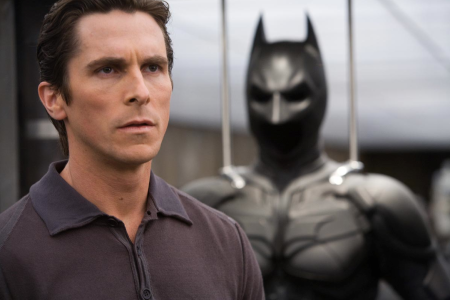
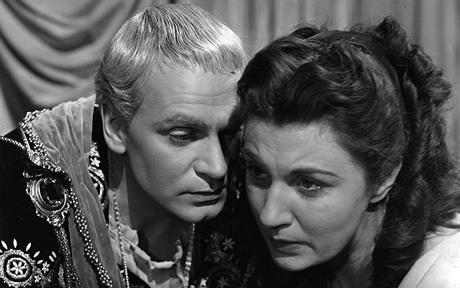
But why the 1948 Laurence Olivier version and the 2008 Christopher Nolan interpretation? Olivier’s pared-down story lacks over-conceptualization or ornateness making it a good starting point, it’s almost the “control group” of Hamlets. More important to the comparison though is The Dark Knight, which kicks into high gear a concept hinted at by Batman Begins. That is to suggest that the super-villainy bubbling up is a direct result of Batman’s existence. Sure, other cinematic adaptations have played a bit with the “you made me” paradox but quickly dismissed it (suggesting The Joker killed young Bruce Wayne’s parents isn’t criminal because it rewrites Batman canon but it does whitewash the complexity of the character and underscore his hero status.) But Nolan is almost primarily interested in the ripple effect of Batman’s quest for justice and how like Hamlet’s vengeance it sends everything spiraling out of control.

"You've changed things... forever. There's no goin' back"

An equal and opposite reaction

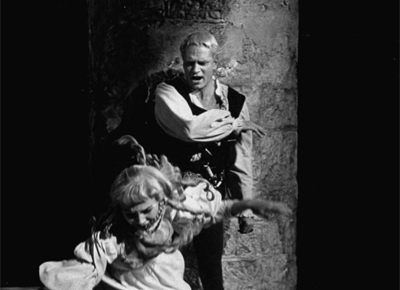
What is the worst result, the highest tragedy of this downward spiral? The death of the innocent, most specifically the love interest of course. Ah, the love interest, Rachel Dawes and Ophelia, pushed away by our hero, caught up in the whirlwind of chaos he has created. The story needs a sacrifice and they’re it. And in both cases, their deaths propel us into another theme that Hamlet and The Dark Knight want to explore. The corrupting influence of grief sends both Harvey Dent and Laertes into the hands of evil just as easily as their tragedies propelled Bruce Wayne and Hamlet toward good... or should we say “good?” since all involved are feeding on their emotional instability to fuel their hunt for those who they consider responsible. The line between good and evil depends entirely on your perception of the big picture (and whether you see something more forgivable about an unjust death in the pursuit of justice than one in the pursuit of power.)

This is probably why the Hamlet and the Batman tales have such staying power. Because these questions have plagued humankind through centuries of the war, terrorism, crime, punishment, and the pursuit of justice. Yet neither of these films intend to give us moralized answers. There are no Gandhi lessons about an eye for an eye leaving the world blind here. Sure, we can see the results for ourselves, but our heroes are still meant to be heroes. What’s the last thing said about Hamlet? He’s called a “noble prince.” The last thing said of Batman? He’s called “the hero Gotham deserves.”

Hamlet would have illegally wire tapped all of Denmark's phones if he'd had the technology

There are, of course, differences between the two as well. Batman has more explosions. Batman has cooler villains more intent on anarchy (although Claudius’ apathy toward the Fortinbras threat isn’t exactly the model for great leadership). What Hamlet has, that Batman does not is doubt, at least according to Olivier who pegs his protagonist's problem as constant waffling declaring upfront that “This is the tragedy of a man who could not make up his mind.” Batman has no such qualms. Perhaps that’s the power that makes him a superhero, his superhuman determination that what he’s doing is unquestionably right. In that sense maybe Hamlet holds the moral high ground. Then again later interpretations of the character, unbound by the Hayes Code were more singular in their bloody thoughts and Hamlet himself is still directly responsible for several deaths while Batman has a code against killing, and so the pendulum swings back the other way.

Perhaps the one thing we can take from the comparison is that the audiences of 2008 just like the audiences of 1948 or 1600 for that matter really are looking for a complex hero, an honest story, and a good fight at the finale.

Page 1 2 3