Oscar History
Film Bitch History
Welcome

The Film Experience™ was created by Nathaniel R. All material herein is written by our team. (This site is not for profit but for an expression of love for cinema & adjacent artforms.)

Follow TFE on Substackd

Powered by Squarespace
What'cha Looking For?
Subscribe

Entries in Old Hollywood (180)

Wednesday
Jun042014

A Year with Kate: The Sea of Grass (1947)

Episode 23 of 52: In which Tracy and Hepburn make a Western because why not?

A lone figure looks out over a vast, unending prairie. A wagon traverses rocky desert trails. Virgin land, a justice-seeking posse, a citified lawyer who brings civilization riding on his pinstriped coat tails. The Western dominated American film for over half a century with images like these. It stands to reason that two American stars and a director on his way to becoming a (controversial) American legend himself would take aim at the genre. The Sea of Grass, the resulting collaboration between Elia Kazan and the Tracy/Hepburn team, is an epic story covering multiple generations in the New Mexico Territory. It’s a Western, but not struck from the same heroic mould that John Ford was making them in Monument Valley. The Sea of Grass is meaner, more melodramatic, and ultimately a maverick mess of a movie.

The Sea of Grass comes so close to being a great film.  Spencer Tracy plays Col. Jim Brewton, a rancher who’s spent his life herding cattle on the millions of acres of untouched prairie that spread across New Mexico. He marries a St. Louis girl named Lutie (Kate Hepburn), who loves him but can’t love his untamed wildlands (not a euphemism). She tries to bring the people to the prairie, or her husband home to bed, but she can’t tame nature or the Colonel. These are familiar archetypes to anyone who’s watched more than two Westerns: the Lone Hero and the Prairie Wife. He is the champion of the settlers, she is his pure-hearted moral compass. Right? Well sure, up until the part where Jim causes the death of a few farmers, and Lutie runs away to sleep with the Judge (Melvyn Douglas) and bear his illegitimate son. And that’s just in the first hour. Suffice it to say, John Ford would not approve.

Cowboys and cynics after the jump...

Click to read more ...

Wednesday
May282014

A Year with Kate: Undercurrent (1946)

Episode 22 of 52 of Anne Marie's chronological look at Katharine Hepburn's career.

In which Katharine Hepburn’s terrible fashion sense almost kills her.

I'll admit my bias up front: this movie is a sore spot for me. For probably understandable reasons, I'm not big on movies about tomboys named Ann who are accused of being frumpy. Undercurrent is a noir-esque melodrama directed by Vincente Minnelli, a director best known for the Technicolor musicals starring his sometime wife Judy Garland and/or Gene Kelly. Minnelli did spread out in genre on occasion, with great films The Bad And The Beautiful and not-so-great films, like Undercurrent. Our heroine in Undercurrent is a plain woman named Ann (Kate) who is unexpectedly wooed by a tall dark and handsome scientist (Robert Taylor). After a whirlwind romance ending in marriage, Ann begins searching into her husband’s troubled past. She uncovers an empty house, a paranoid ex-lover, and a brother (Robert Mitchum) who should dead--and who may end up being her soul mate.

But before Ann is drawn into the mystery, she spends the first act of the movie stomping around her father's laboratory wearing this:

HIDEOUS. I know. I can almost hear the fashion bloggers crying for justice and tearing at their vintage blouses in despair. Honestly, it's not a terrible look. It's very Kate. Really the only things I take issue with are the socks with sandals (fortunately spared in this publicity photo), but that's because it’s an Embarrassing Dad-level fashion faux pas. (That's Marjorie Main with her, by the way, in a criminally small role.) Anyway, while this ensemble is not the worst thing Kate’s worn, it is nonetheless a Big Problem, or so the film tells us. It isn't until Kate, as Ann, gets swept into the mysterious, glamorous life of her husband that she is shamed into dressing the part of a worldly, wealthy wife and a beautiful MGM star.
Click to read more ...

Wednesday
May282014

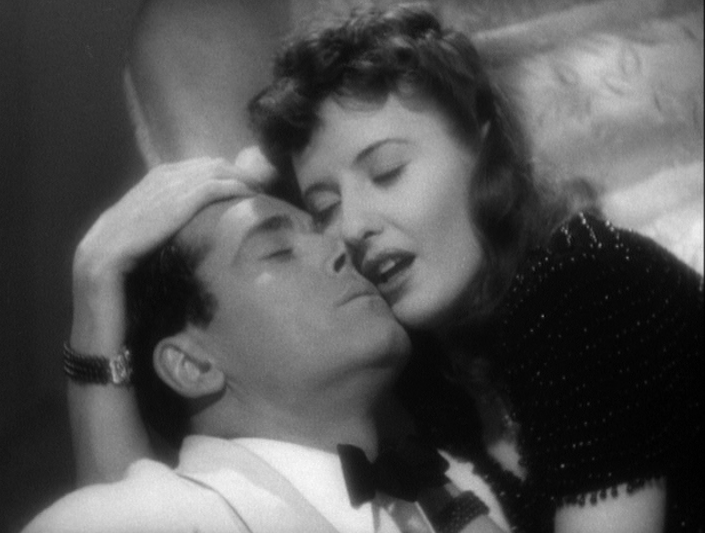
Barbara Stanwyck: The Real Best Actress of 1941

It's unofficially 1941 Week. Here's Abstew on the year's greatest actress...

See anything you like?

Purrs Barbara Stanwyck's con artist Jean Harrington to Henry Fonda's smitten ale-heir-turned-Ophiologist Charles Pike in Preston Sturges' 1941 screwball classic, The Lady Eve. The question is asked as the contents of her wardrobe are on display (and the sultry delivery let's us know that Jean is hardly talking about the fuzzy slippers), but Stanwyck might have easily been asking movie-goers the same thing regarding her stellar body of work that year. In a quartet of successful films (The Lady Eve, Meet John Doe, You Belong to Me, and Ball of Fire), Stanwyck earned her second Oscar nomination, starred in a film Time magazine named one of the 100 greatest movies of all-time, and became one of the highest paid actresses in Hollywood. Unquestionably, 1941 would prove to be a peak Stanwyck year. 

Click to read more ...

Wednesday
May212014

A Year with Kate: Without Love (1945)

Episode 21 of 52 of Anne Marie's chronological look at Katharine Hepburn's career.

When a star’s career is as long-lasting and iconic as Katharine Hepburn’s was, there are going to be dramatic highs and lows in terms of quality. Mapped out on a timeline, it would resemble a mountain range. The glittering Mount Holiday would stand tall on the horizon, dwarfed on either side by Bringing Up Baby Peak and The Philadelphia Story Summit. Behind it would be the dark valleys and caves of RKO. However, the most treacherous topographical feature on our Atlas Hepburnica would be the Seven Year Desert, stretching seemingly endlessly from Woman of the Year Peak to Adam’s Rib Ridge. The Seven Year Desert is a vast sea of grass that barrages a traveler with its unending, monotonous mediocrity. Woe to the weary wanderer who gives up, rather than trudge through another undistinguished Hepburn vehicle.

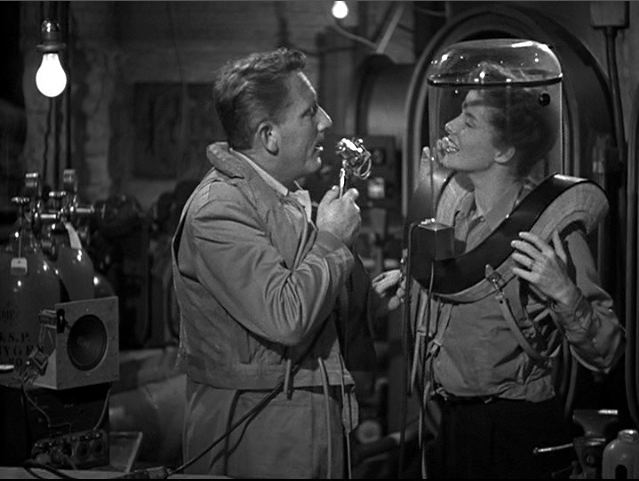
Faithful readers, you and I are currently in the middle of the Seven Year Desert, so forgive my heavy-handed metaphors as I attempt to mine our next few movies for something, anything to talk about. Currently, we’re stuck in Without Love, a serviceable comedy reteaming Kate with Spencer Tracy. Tracy plays an engineer designing a new helmet for the US Air Force. Kate is a widowed heiress who volunteers to be his assistant. They marry out of convenience with the agreement that they absolutely will not fall in love. Three guesses how that turns out. Your first two don’t count.

Click to read more ...

Friday
May162014

Cannes Diary Day 2: Or, How I'm Still Grappling With 'Grace of Monaco'

Diana Drumm is reporting for The Film Experience from Cannes

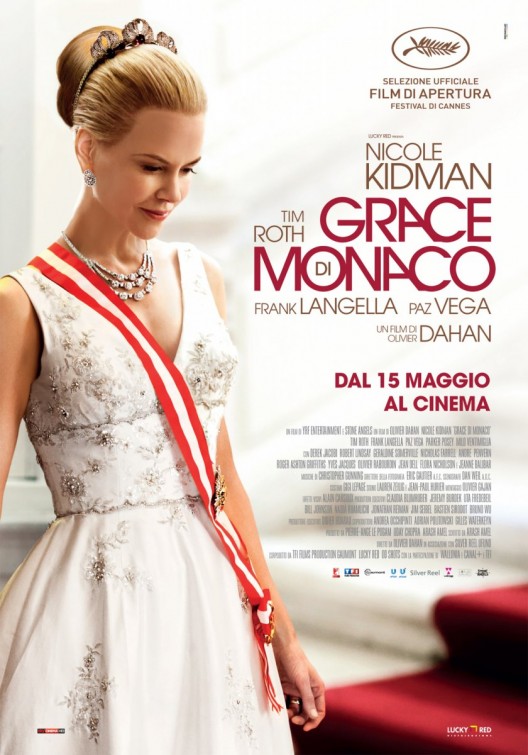
As you should know by now, thanks to mid-screening tweets, prompt reviews and Nathaniel being awesome as always, Grace of Monaco is bad. So bad that Cannes critics are being divided into indifference, dislike and rollicking hate. I, for one, fall into a fourth category, that of the now-jaded hopeful still grappling with how it all could have gone so horribly wrong. It’s from the director behind La Vie En Rose and... NICOLE KIDMAN. And I do mean grappling, I’ve barely eaten since that lovely sandwich or slept since nodding off on the Nice-Cannes commuter and my attempts at writing an actual review have gone the way of nonsensical jibberish with many ‘rather’s, ‘while’s and ‘thereby’s. Plus I’ve missed multiple opportunities to stow-away on champagne and celebrity-laden yachts. (Well, maybe not, but you get the gist – me, bedraggled by disappointment.) It could be the jet lag typing, but I wish I could go back to the before time, before I knew for certain that Grace of Monaco was a bad film. 

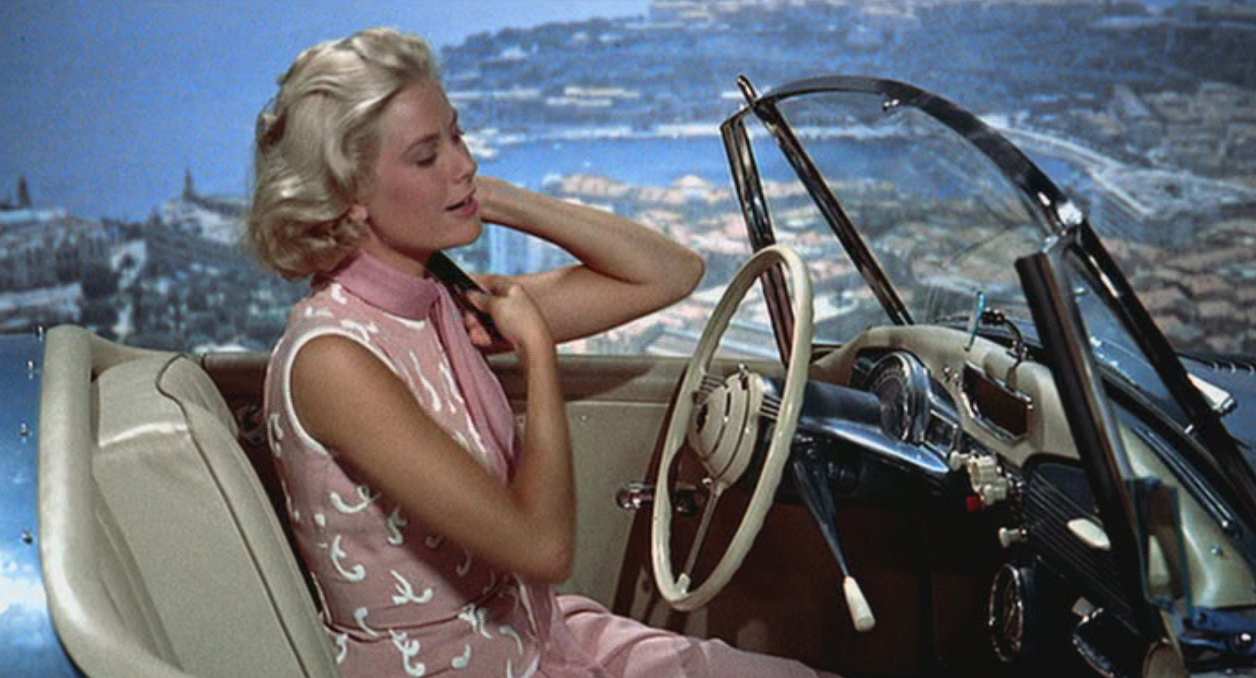
For weeks, I’ve been hushing naysayers, lah-lah-lahing the latest Weinstein cut rumors and ignoring the strawberry blonde Nicole Kidman as Grace press photos. With its synopsis reading like My Week with Marilyn meeting Evita for cucumber sandwiches to discuss an upcoming charity event and swap stories about who was handsier, Ari Onassis or Alfred Hitchcock, I kept telling myself that whether Grace was good or bad, it would be nice to see Grace Kelly’s story onscreen. I was wrong, so wrong. This isn’t to say that the film’s downright awful, or even amongst Cannes’ worst (Splitting Heirs, anyone?), but as someone with only love in her heart would say, it’s not that I’m angry, it’s that I’m hurt and disappointed. 

Princess Grace and Old Hollywood fairy tales after the jump...

Click to read more ...