Oscar History
Film Bitch History
Welcome

The Film Experience™ was created by Nathaniel R. All material herein is written by our team. (This site is not for profit but for an expression of love for cinema & adjacent artforms.)

Follow TFE on Substackd

Powered by Squarespace
What'cha Looking For?
Subscribe

Entries in Judy Garland (119)

Tuesday
Sep082026

Best Actress in WWII: An Alternative History

by Cláudio Alves

Greer Garson earned herself five consecutive Oscar nominations during WWII. For BLOSSMONS IN THE DUST (1941), MRS. MINIVER (1942), MADAME CURIE (1944), MRS. PARKINGTON (1944), and THE VALLEY OF DECISION (1945). She won the Best Actress trophy in 1942 for William Wyler's first Best Picture champion.

TIFF is almost upon us, so my Alternative Oscar History series will have to take a break. In the meantime, in this last post for a while, let’s look at the period between 1940 and 1945, the war Oscars and the actressing they should’ve honored.

After all, these are my picks, not the Academy’s, so don’t expect an avalanche of Greer Garson in the incoming ballots. The English star found an American home at MGM in the late 30s, just as WWII was breaking out in Europe with Hitler’s invasion of Poland, and was AMPAS’ most beloved star with five nominations and a victory to her name. In this, she edged out Bette Davis’ four nods in the same time span. Then again, though it’s impossible to talk about Hollywood in WWII without acknowledging Davis’ work in initiatives like the Hollywood Canteen, her relationship with the Academy was a rocky one. Famously, she became its first female president in January 1941, before resigning in March. I promise I won’t hold that against her in my votes. It might actually help her case, considering how little I tend to agree with Oscar’s choices…


Click to read more ...

Tuesday
Nov052024

Almost There: Judy Garland in "The Wizard of Oz"

by Cláudio Alves

On a stressful day such as this, cinema can be a comfort. The movies are often prized for their escapist properties, so why not escape into their celluloid dreams once one's civil duty's done? I propose a trip to Oz before the first Wicked movie redefines what future generations will picture when they think of that magical land with emerald cities and yellow brick roads. But we're not here to talk fairytale architecture, good or bad witches. Instead, our focus shall be on the little girl who adventures into that world, swept by a Kansas tornado, from sepia-toned monochrome into three-strip Technicolor. It's time to talk about Judy Garland's Dorothy, a performance on the cusp of an Oscar nomination once upon a time. She was almost there…

Click to read more ...

Monday
Jun132022

Tribeca 2022: David Lynch is The Man Behind the Curtain in "Lynch / Oz"

by Jason Adams

Like many of you I have deeply embedded childhood memories of watching The Wizard of Oz on television as a child. And probably also like many of you the film was presented to me as a generational hand-off, a passing of the cinematic baton. My mom was a lifelong fan, and now twas my turn to become the latest Friend of Dorothy (if she only knew). That yellow brick road stretches in one ear and out the other across eighty entire years of movie-lovers, mother to son to son to daughter and on to every Auntie Em adjacent, with something in there for everybody. I can trace my love of Horror Movies right to it – how many nightmares have those short-jacketed cater-waiter flying monkeys stormed through? Others, probably you, can trace your love of the Movie Musical from sepia-toned Kansas where Judy first regaled us of rainbows...

Click to read more ...

Friday
Jun102022

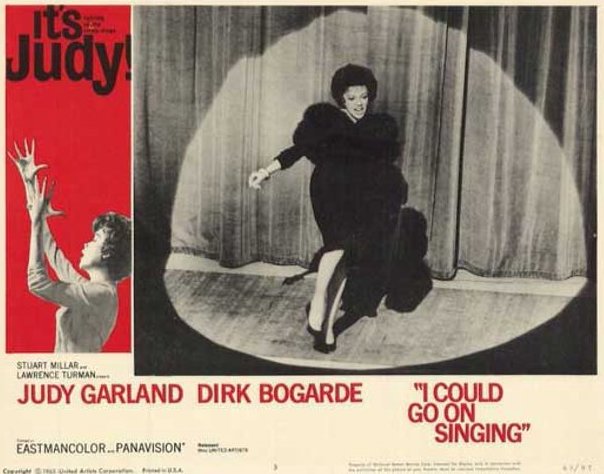
Judy Garland @ 100: "I Could Go On Singing"

Team Experience revisited nine Judy Garland movies for her Centennial. Here's Nick Taylor on her final film.


Judy’s last film was always going to be an event. Released six years before her death to positive reviews but poor box office, I Could Go On Singing plays like a morbid echo of her final months. But for all the film’s metatextual readings into Garland’s life and career, this isn’t a self-conscious reckoning or farewell from a beloved star to her audience. Her regular talk of staging yet another comeback, even after her brief and very publically heralded casting in Valley of the Dolls before being canned by the studio, gives I Could Go On Singing an aura of lost time and unrealized potential heavier than the film’s bittersweet ending implies. I Could Go On Singing leaves Garland as alone as she’s ever been but still singing with all her heart, and it’s a shame she never got to strut it for the camera again...

Click to read more ...

Thursday
Jun092022

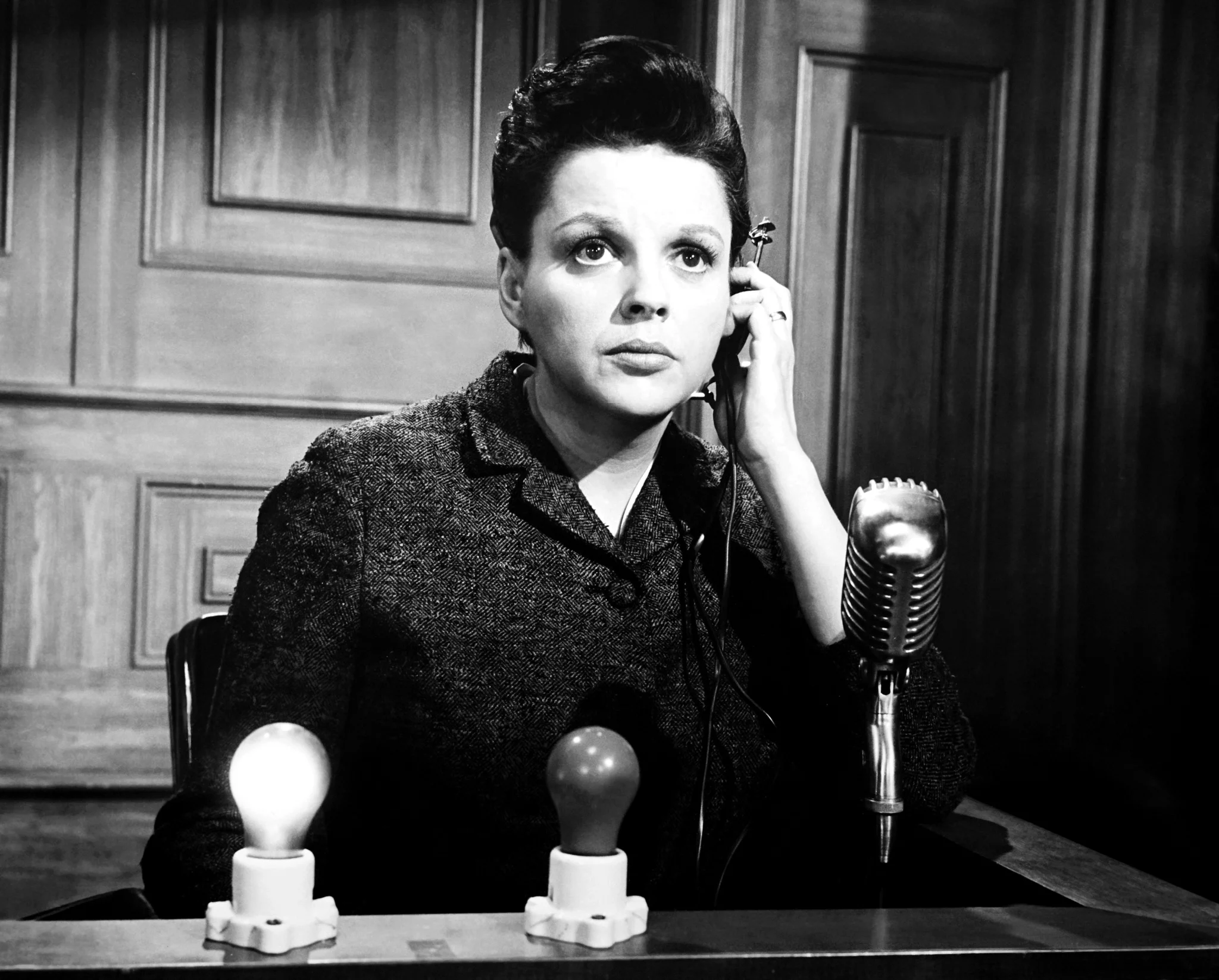
Judy Garland @ 100: "Judgment at Nuremberg"

Team Experience is revisiting nine Judy Garland movies for her Centennial. Here's Christopher James on the star's second Oscar nomination.

Judy Garland received a Supporting Actress nomination in 1961 for her three scene performance in "Judgment at Nuremberg."

With a career that spanned over three decades, there were many points in which Judy Garland had to reinvent her image, intentionally or unintentionally. The other articles in this centennial celebration have examined Judy as the child star, the musical superstar and the complicated movie star. In conjunction with Claudio’s piece on A Star is Born, this later period of Garland’s career sought to deflect from her personal life through focusing on her powerful dramatic chops. Stanley Kramer’s Judgment in Nuremberg cast Garland in a new light… a supporting actress. However, her role as Irene Hoffman, a woman imprisoned as a teen for violating “racial pollution” law, is not short on fireworks. Garland delivers an impressive and affecting performance in just three short scenes. It's hard to argue against that year's winner (Rita Moreno for West Side Story), but Garland more than earns her Oscar nomination, the second and final of her career...

Click to read more ...