Oscar History
Film Bitch History
Welcome

The Film Experience™ was created by Nathaniel R. All material herein is written by our team. (This site is not for profit but for an expression of love for cinema & adjacent artforms.)

Follow TFE on Substackd

Powered by Squarespace
What'cha Looking For?
Subscribe

Entries in NYFF (264)

Wednesday
Oct022013

NYFF Must-See: "The Square"

TFE's 51st New York Film Festival (Sep 27-Oct 14) continues with Jose discussing The Square.
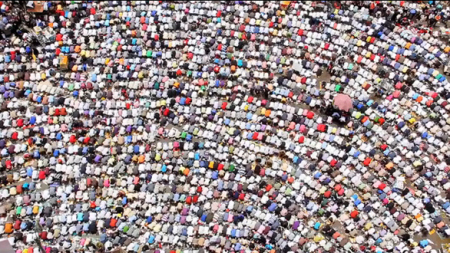
 

Jehane Noujaim's The Square is one of those rare movies that provoke physical reactions in their audiences. Watching it in a pretty much packed room, it was strange to listen to gasps, "ohmygod"s and clenching teeth in the darkness. All of these reactions were caused by brutal images of torture and violence in which we see regular people being deprived of their freedom, their dignity and even their lives. Noujaim's documentary is a chronicle of the occupation of Tahrir Square in Cairo as seen through the eyes of key players of the revolution including a young idealist, a member of the controversial Muslim Brotherhood, a folk singer and actor Khalid Abdalla (The Kite Runner, United 93).

The filmmaker takes us through the most significant moments of the uprising and we see how with the people's sheer will and persistence three regimes are overthrown within less than a year. Noujaim cleverly structures the film so that more than being a journalistic piece, it also works as a seamless drama. "As long as there's a camera the revolution will continue" says one of the main character and we see some of the characters change political positions, suffer horribly at the hands of the military and even become enemies of sorts once they discover what might be the film's most shattering revelation: that in the end it's always the people fighting each other.
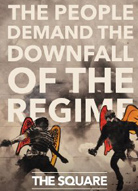
Having grown up in one of the few countries in the American continent where coups still occur, The Square hit perhaps a little too close to home; where I ought to have been inspired, I was sadly reminded that democratic changes often take decades to finalize. The film as such is a rousing call to action that ought to intimidate totalitarian regimes by simply reminding them that people will fight for what they believe in.  For me personally, it was a bittersweet experience that lifted my spirit, brought it back down and then sent me home complete pissed off. This is what political cinema should be about, right?

The Square won the Audience Awards at the Sundance and Toronto Film Festivals. It plays exclusively on 10/03 and it's a true must-see.  
Tuesday
Oct012013

NYFF: World on Fire in The Czech Republic's Oscar Submission

TFE's 51st New York Film Festival continues with Jose on Burning Bush

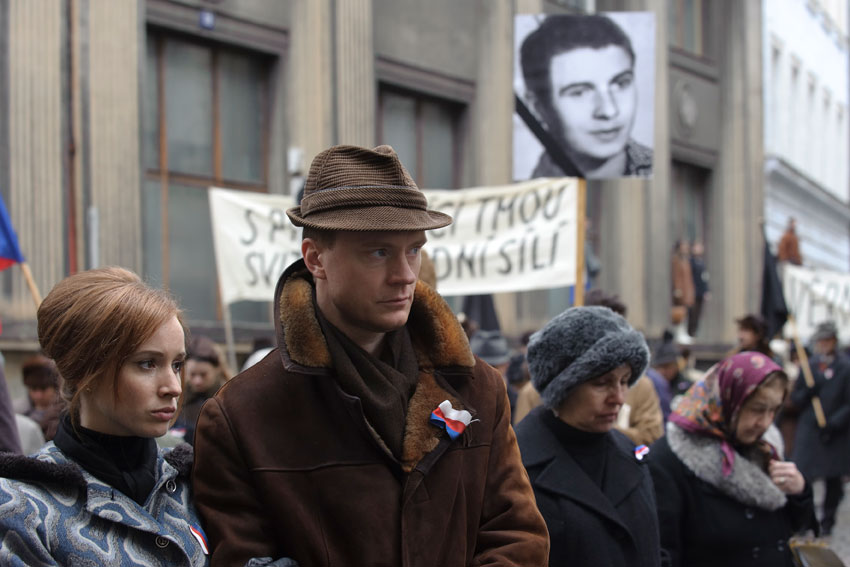
The morning of January 16, 1969 seemed like it would be a regular Thursday in Prague, that is if there was anything "regular" about living in a country that had been occupied by the Soviet Union. On that day, 21 year old student Jan Palach decided it was time to remind his countrymen that they were being demoralized by the occupying forces, his mean of protesting was to set himself on fire in the middle of busy Wenceslas Square. Palach's self immolation was part of a collective protest, which warned the government that more young men would repeat his actions until the Soviets left Poland. 

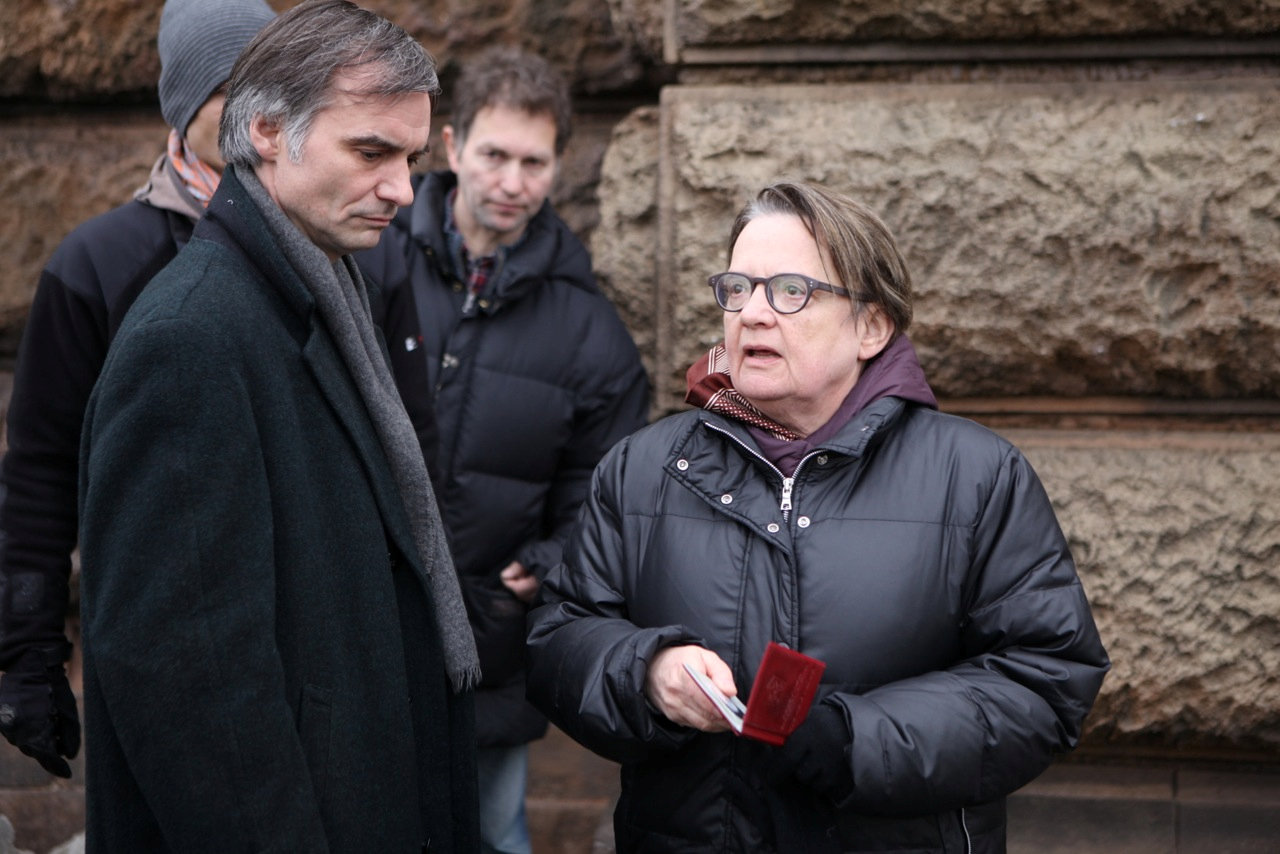
Renowned filmmaker Agnieszka Holland was a college student around the time and the event left such an impression on her that she chose to make it the starting point to build the epic Burning Bush. The four hour long film (it was broadcast as a miniseries in Europe) is one of the most impressive chronicles of modern history captured on film and it was rightfully chosen as the Czech submission for the Best Foreign Language Film Oscar. Holland talked about the making of the film during a press conference at the New York Film Festival. 


Click to read more ...

Tuesday
Oct012013

NYFF: Charm Offensive

TFE's coverage of the 51st New York Film Festival (Sep 27-Oct 14) continues with JA discussing About Time.

Charm is a hell of a drug. Be it in real life or up on a movie screen, it can intoxicate a person right out of their senses, making the charmer in question immune from all kinds of quibbles - major or minor, animal vegetable or mineral. If that certain somebody or somebodies are lighting off sparks, we the charmed, defenseless and weak, are willing to overlook a lot whilst under their spell. Put those fireworks front and center in a romantic comedy and you're pretty well good to go...

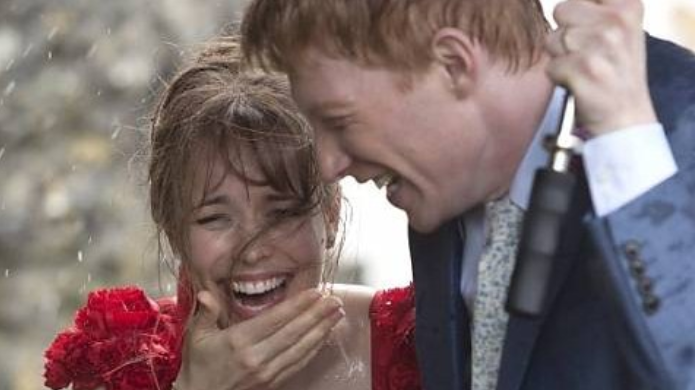
And so it goes with Richard Curtis' new flick About Time. There's actually a sequence in this movie where the beloveds at center stage (played by Domhnall Gleeson and Rachel McAdams) are falling for each other and we're given a montage of time passing involving wacky outfit changes and god save us all subway buskers, and yet instead of reaching into my brain through my ear canal and lobotomizing myself right then and there I only rolled my eyes a little - not even a lot! That's a feat, one I must lay down in awe at the feet of our charm-riddled lovebirds. ("It's the H1N1 of romantic comedies!" = my poster blurb.) I almost always find McAdams worth watching when she tries (at last year's fest I positively luxuriated in the sight of her campily swanning around in lingerie in Brian DePalma's Passion) and here she's at her most homespun loveable, fringe and all - she knows her way around and back again with a sly knowing smirk.

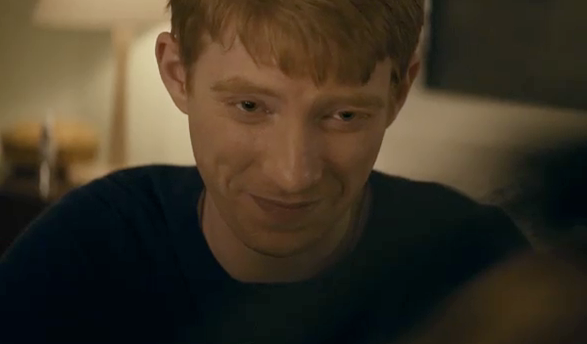
But I'd be lying if I said it my scales (and the movie's, it must be said) weren't tilted ever so slightly in the favor of Gleeson - indeed I came out of this movie thinking I'd just been introduced to the world's skinniest gingeriest movie star since Julia Roberts squealed "Well color me happy there's a sofa in here for two," in thigh high pleather boots and a Carol Channing wig. Domhnall's been building up a memorable resume with everything I've seen him in, from Never Let Me Go to Anna Karenina, but here, to borrow a turn of phrase from Mama Grape, he shimmers and he glows. Total charm offensive.

He's so captivating that not only can I overlook mad-cap subway musician antics, I can very nearly tip-toe right past all kinds of questionable moral quandaries that his time-travel antics cough up, like gosh there's nothing at all creepy about relationships built on excessive one-sided manipulations (they're not really lie lies), and gosh, women don't so much need personal agency, do they, as long as somebody parrots their girly likes back at them. (A fixation on Kate Moss is a really strange fixation for a person to have though. Really very.)

Indeed the movie manages to swerve around these sorts of questions by pushing the third act's beating heart, where our expectations are set for the standard relationship implosion-to-reconciliation arc, into the body of a father-son picture instead (Bill Nighy's basically just playing Bill Nighy, or the Bill Nighy we all imagine Bill Nighy is, but I still like Bill Nighy, so I was okay with it); there's life in the fact that the movie manages to side-step our well-trod expectations, to be sure, but the movie actually kind of forgets about McAdams once she's good and won and churning out the babies. I hoped there'd be some curiosity bestowed upon her character regarding her amour's constant shuffling off into cupboards, at least? But that wasn't to be - she's set on the shelf while the film unearths its true colors, as a tear-jerking fantasy about family and memory and the passage of time, and also ping pong. Most meaningful ping pong!

Honestly though, truth be told, I was so high off what Domnhall was giving me it was only once the film was over and my love hangover set in that I began picking our personal love affair apart. And even then notsomuch. Subway buskers come and go, but Domhnall's grin is forever.

You should all make time (groan) for About Time when it plays at the festival tonight, 10/2, or 10/6. Then come tell me whether I was blinded by ginger or not.

Monday
Sep302013

Interview: Actress Dánae Reynaud on "Club Sandwich"

Dánae ReynaudThe 51st New York Film Festival continues with Jose's interview with Dánae Reynaud, co-star of Club Sandwich

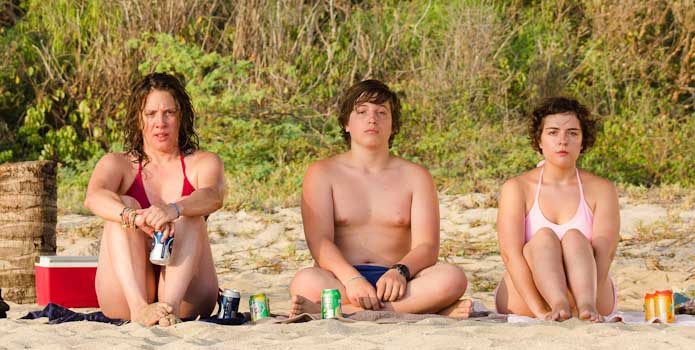
In a relatively short time, the young director Fernando Eimbcke has become one of the most original voices in Latin American cinema. With a mere three movies to his name, he's one of the few auteurs working outside the standard subjects of drug trafficking, crime and magical realism. His movies tend to focus on young people living ordinary lives and coming to terms with impending adulthood. To call them coming-of-age films wouldn't do justice to the larger truths they carry. His latest, Club Sandwich, is no exception; it deals with a single mother (María Renée Prudencio) who takes her son Hector (Lucio Giménez Cacho) to a resort during the low season.

The first part of the movie finds them bonding over sunscreen application, discussing Prince's sexiness and ordering the title meal. Things change when more guests arrive to the hotel, one of them being Jazmín (Dánae Reynaud), a sixteen year old who catches Hector's eye. Suddenly he doesn't want to be with his mom for long, he starts noticing he's growing a tiny mustache and secretly washes his underwear so that his mother won't notice the accidents he's been having at night. The film is a delight made even more special by the naturalistic performances of the three lead actors. Reynaud in particular brings a sense of mischief to a character that could've been villainized by a lesser actress. I asked the charming Dánae about working with Eimbcke and when she realized she wanted to act. You'll relate to her profound love of movies (after the jump). 

Click to read more ...

Friday
Sep272013

NYFF: A Queer Revelation

TFE's coverage of the 51st New York Film Festival (Sep 27-Oct 14) continues with Jose discussing What Now? Remind Me and Stranger by the Lake.

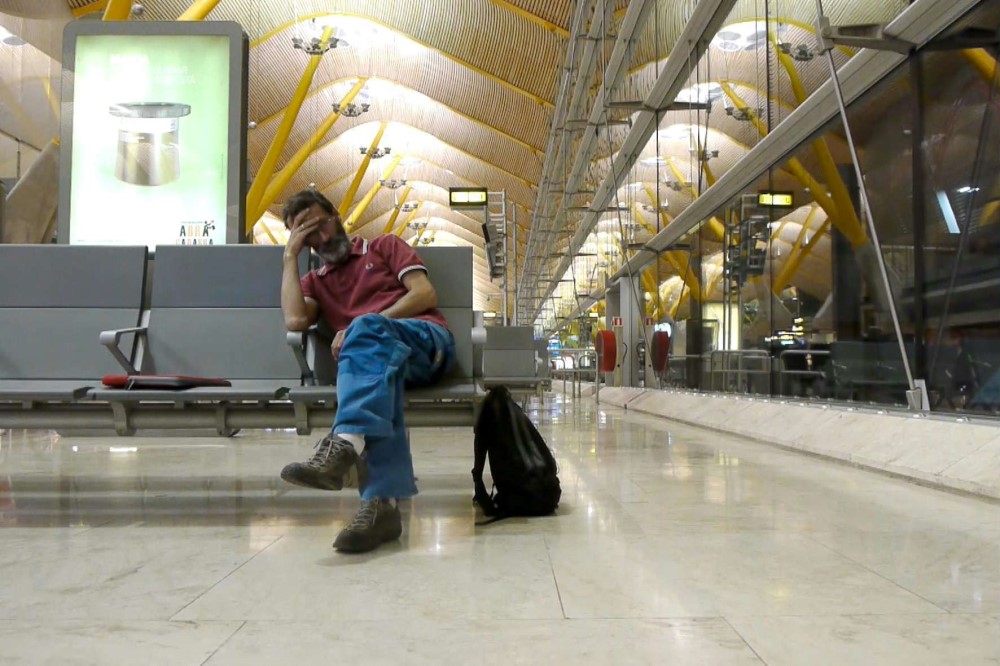
At one point during Joaquim Pinto’s What Now? Remind Me his confessional style got so raw and introspective that all I wanted to do was look the other way. His story is one that I felt I should’ve been more receptive to since he is a gay filmmaker with a deep passion for the arts and culture. Listening to him talk about an ancient book he saw in Spain, how badly he wanted to inspect it, reminded me of the way I feel about certain artworks. Watching him farm with his husband Nuno (who I felt was so my type) and their dogs, inspired in me a sense of domestic bliss I sometimes crave. What made me want to look away then? The way in which Pinto tells us about his harrowing battle with HIV.

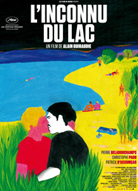
Even if we live in a world of information, where everything we might want to know is a click away, the movies - and media in general - have done so little to discuss HIV that I’m ashamed to admit sometimes I react to it the same way conservative audiences react with onscreen sex: it makes me uncomfortable. I had this very thought during the screening and was instantly reminded of the movie I’d seen the day before, Alain Guiraudie’s Stranger by the Lake.

Click to read more ...