Oscar History
Film Bitch History
Welcome

The Film Experience™ was created by Nathaniel R. All material herein is written by our team. (This site is not for profit but for an expression of love for cinema & adjacent artforms.)

Follow TFE on Substackd

Powered by Squarespace
What'cha Looking For?
Subscribe

Entries in screwball comedy (17)

Thursday
Sep032026

Best Actress and the end of the Great Depression: An Alternative Oscar History

by Cláudio Alves

Miriam Hopkins in BECKY SHARP (1935), Janet Gaynor in A STAR IS BORN (1937), and Vivien Leigh in GONE WITH THE WIND (1939) were the first 3 Best Actress nominees from full-color movies.

The woes of the Great Depression demanded escapism from Hollywood. Such spectacle came in a myriad of forms, including some technical advancements.

By 1935, the three-strip Technicolor process was ready for features, blessing the silver screen with hues that called themselves natural while shining bright like something out of a dream. New genres came into being, too, sometimes as an echo of the dark times – think gangster pictures and their basis in social realism turned pulp or the rise of horror at Universal – and sometimes as an antidote. The screwball comedy was a child of the Great Depression, alright, with some of its greatest hits holding a blissfully distorted mirror to off-screen miseries, distracting from them and offering some magical impossibility as succor for the soul. In other areas, movies kept getting bigger, upping the ante in ways that recalled the great epics of silent cinema, those endeavors that moved armies and mountains for the camera’s gaze and the audience’s pleasure.

Obviously, this all reverberated through the Oscars, including and especially the Best Actress race. But will my personal ballots reflect it in the same fashion? Well…

Click to read more ...

Wednesday
Aug142024

Almost There: Cary Grant in "The Awful Truth"

by Cláudio Alves

Since last month, the Criterion Channel has hosted a curated collection of screwball comedies, spanning the subgenre's pre-Code genesis to its postwar decline. Among the many screwy delights, you'll find The Awful Truth, Leo McCarey's 1937 classic, and a Best Director Oscar winner to boot. Indeed, the movie was most beloved by the Academy, scoring five additional nominations, including for Picture, Actress, and Supporting Actor. According to contemporary publications, that last honor was a relative surprise, especially since the movie's leading man was left off the ballot altogether.

You would think a major star associated with such an awards juggernaut would have an easy time nabbing themselves a coattails nomination, but Cary Grant was out of luck in 1937. Well, when it comes to the AMPAS, he was often unfortunate, only ever getting their seal of approval in the early 40s with a couple of dips into melodrama-land. Though much of the star's legacy relies on comedies, Old Hollywood voters seemed perpetually unimpressed by Grant's funny business. In that regard, The Awful Truth stands out as his most egregious snub…

Click to read more ...

Saturday
Jul152023

Barbie Prep: Letterboxd, Watchlists, Oh My!

by Cláudio Alves

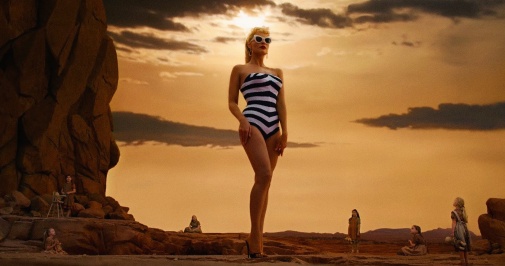
We're in the home stretch, less than a week until Barbie arrives in theaters like a shock-pink supernova. The promotion has been near manic in intensity, with the cast showing off their best Mattel cosplay worldwide and Warner Bros. pulling no punches. However, it's not all red-carpet glamour and real-life dream houses, with writer-director Greta Gerwig doing much to excite the global cinephilia by hinting at her Barbie's debt to great cinema of yore. She's been very vocal about the cast and crew watch parties, studying the hyper-artifice of studio classics, and even getting on the phone with Peter Weir to get some tips relating to The Truman Show.

In a recent Letterboxd interview, Gerwig went into a personal watchlist she curated, starting with 29 titles that eventually expanded to 33 during the conversation. It's a vast collection of titles, from 1930s screwball to modern Almodóvar…

Click to read more ...

Wednesday
Mar012023

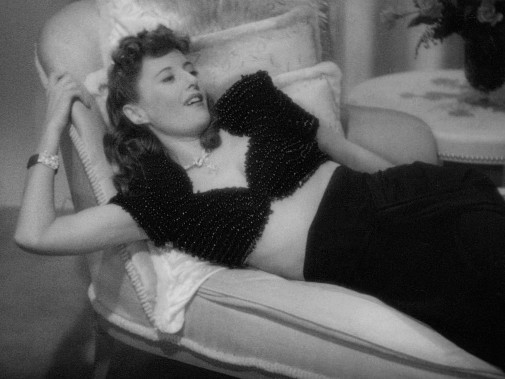
Almost There: Barbara Stanwyck in "The Lady Eve"

by Cláudio Alves

Since its inception, the Academy has shown a certain reluctance to awarding great acting within the comedy genre. It often feels that the sillier the role, the less likely it is to win plaudits for the performer who fleshes it out on screen. That's not to say that comedy is wholly absent from the acting races – it's just rarer, more prone to reductive judgment and dismissal. Considering all this, the recent SAG results feel even more miraculous. They point us toward a scenario where a wild genre riff might win over half of the acting prizes. So with that mind, a comedic episode of "Almost There".

Let's reflect upon an achievement that might be justly named the pinnacle of screen comedy – Barbara Stanwyck's stunning turn in 1941's The Lady Eve

Click to read more ...

Saturday
Nov122022

Veronica Lake @ 100: "I Married a Witch"

by Cláudio Alves

"I Married a Witch" | © United Artists

Silky blonde tresses fall over one eye, a face masked by spun gold accented with spidery lashes and a slash of scarlet lipstick. When struggling to promote Veronica Lake's first movies as a full-on movie star, that's the image distributors found, depurating her commercial value into a flat facsimile of her beauty. Whether it was Paramount's poster for Sullivan's Travels or the main art for United Artist's I Married a Witch, it seemed as if Lake was a head of hair first, an actress second. Legend says that once, during the filming of 1941's I Wanted Wings, the young woman kept struggling with a lock of hair falling over her right eye. For the wannabee starlet, it was an irritation. For the studio execs lusting over the teenager, it was the look of a silver screen goddess, instant movie magic. The rest, as they say, is history…

Click to read more ...