Oscar History
Film Bitch History
Welcome

The Film Experience™ was created by Nathaniel R. All material herein is written by our team. (This site is not for profit but for an expression of love for cinema & adjacent artforms.)

Follow TFE on Substackd

Powered by Squarespace
DON'T MISS THIS
COMMENTS
What'cha Looking For?
Subscribe
Friday
Sep052014

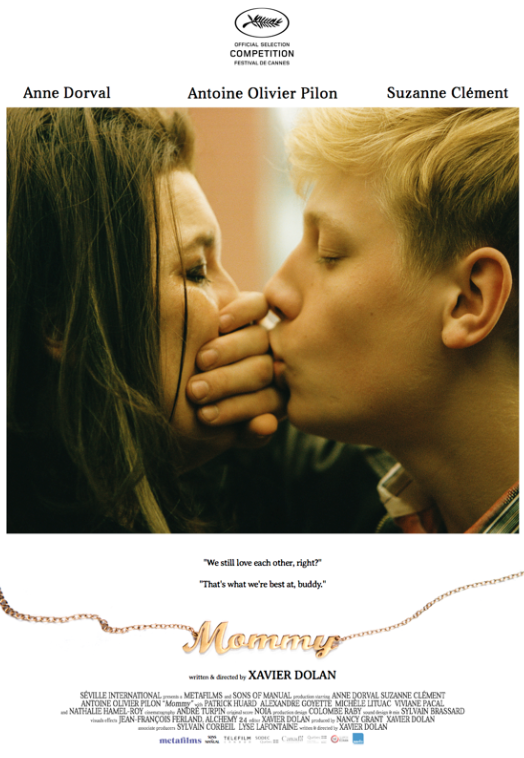
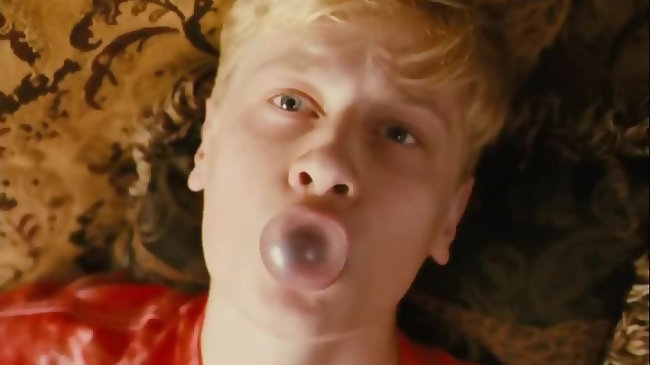
TIFF: Mommy = Xavier Dolan's Best

Nathaniel's adventures at TIFF. Day 1

Technically speaking day 2 has just ended and it was an incredible day with consistently great films and memorable offscreen moments. But one day at a time. Day 1's highlight was the Cannes holdover Mommy from Xavier Dolan.

It's attention-grabbing from its first frames with an unusual aspect ratio. Technically speaking it's a 1:1 but if that means nothing to you (I'm not an aspect ratio geek either) know that it's square. Since square is not our beloved and horizontally familiar widescreen, the image feels alarming vertical, more akin to a cel phone shape. This description helps convey the movie's undeniable modernity but it doesn't convey it's lush beauty. (I've heard Mommy knocked as 'the first instagram movie' but, hey, Emmanuel Lubeszki is on instagram so let's not knock it as a Beauty Delivery System.) 

Technical film geekery aside, know this: the screen can barely contain the movie's explosive feelings. Hell, the aspect ratio can't even contain this movie's explosive feelings in one of its own best and most atypically tender jokes. 

MORE...

Click to read more ...

Friday
Sep052014

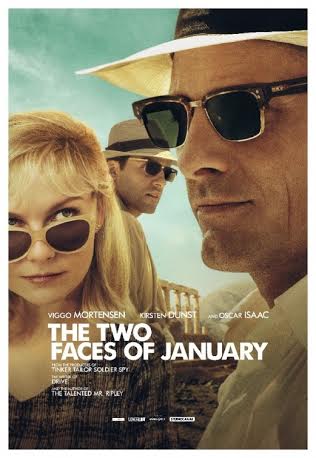
Review: The Two Faces of January

Michael Cusumano here to review the latest stylistic throwback based on the writing of Patricia Highsmith.

When people gripe “They don’t make ‘em like they used to” films like Hossein Amini’s The Two Faces of January are the kind of movie they mean. It’s adapted from the work of an acclaimed novelist whose books were the source of such beloved films as The Talented Mr. Ripley and Strangers on a Train. It features big stars in sumptuous foreign locales. It is made with a careful attention to detail. It doesn’t dumb things down or clutter the plot up with needless action. It is fair to say I was primed to love this movie, yet it never quite jolts to life. At some point my investment in the story passed from suspense to impatience. It never went so far as indifference, but I was pretty far from the edge of my seat. Rather, I was leaned back in my chair, head in my hand, thinking what a classy job everyone involved was doing and admiring the sumptuous visuals and thinking how this was going to end up being one of those reviews that used the word “sumptuous” a lot.

The key problem is that foreign intrigue of the Hitchcock variety requires storytelling that stays a few steps ahead of the audience, and it's easy to keep leaping ahead of January’s characters. Far too much time is spent with characters sitting in cafés, smoking, drinking, and eyeing each other suspiciously, when they should be trying to have sex with or murder one another, preferably both. [More...]

Click to read more ...

Friday
Sep052014

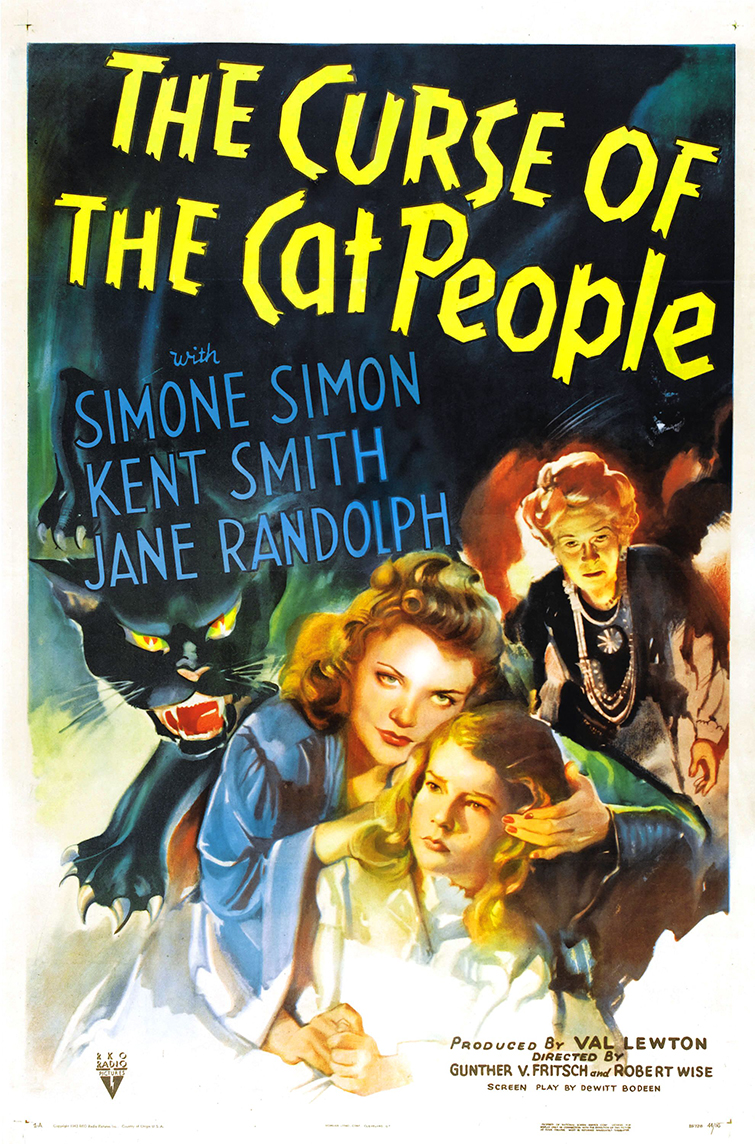
Robert Wise Centenary: The Curse of the Cat People (1944)

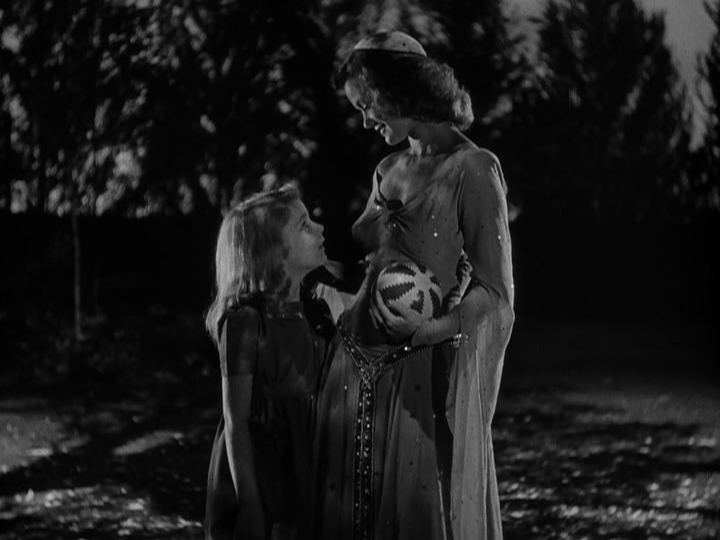
It's Tim. September marks the centennial of famed director Robert Wise, winner of Oscars for the musicals West Side Story and The Sound of Music among several other classic films, and the members of Team Experience are going to spend the next several days revisiting work from the entire range of his career. And what better place to start than at the very beginning: 1944's The Curse of the Cat People, which was Wise's directorial debut, taking over from Gunther V. Fritsch, when the project fell behind schedule. It's part of the legendary run of movies produced by Val Lewton's horror-oriented B-unit at RKO, a studio where Wise had already logged time as an editor (cutting both Citizen Kane and The Magnificent Ambersons, no less). But it's not, itself, a horror movie, despite being the sequel to Cat People, one of the canonically great horror films in history. And despite Wise having a terrific hand for horror, as he'd first prove with his third feature, the Lewton-produced The Body Snatcher.

The Curse of the Cat People is, rather, a sort of psychologically realist fairy tale, taking its title (which RKO forced upon Lewton, though giving him the freedom to make any plot he wanted to under that name) to the most symbolic, abstract extreme possible. It involves Oliver Reed (Kent Smith) and his wife Alice (Jane Randolph), the heroes of the earlier film, moved to the New York suburbs with their six-year-old daughter Amy (Ann Carter), who's having a problem separating fantasy from reality lately. And the audience is forced into having much the same problem, when Amy wishes for a friend and gets one in the form of Irena (Simone Simon), whom devotees of Cat People might recall was Oliver's first wife. The one who transformed into a panther when she got sexually aroused, and is dead now.

Click to read more ...

Friday
Sep052014

170 Days until Oscars: Brody & Dreyfuss

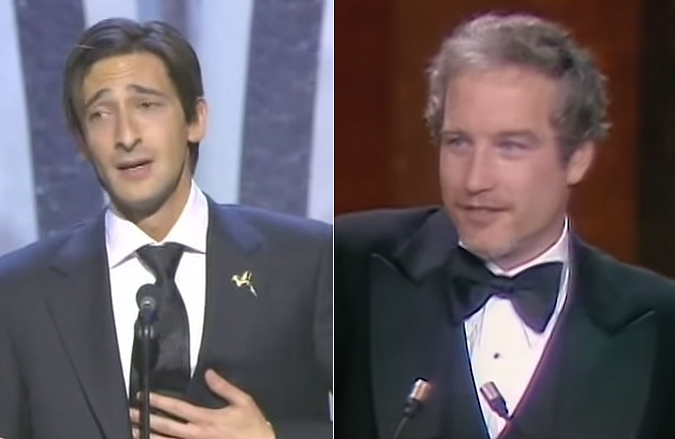
170 is the amount of days by which Adrien Brody (The Pianist) narrowly defeated Richard Dreyfuss (The Goodbye Girl) to become the Youngest Best Actor winner ever. Do you think both of them deserved their wins?

Adrien Brody (29) and Richard Dreyfus (30) are the 2 youngest Lead Actor winners

1977 Best Actor 2002 Best Actor
Woody Allen, Annie Hall Adrien Brody, The Pianist
Richard Burton, Equus Nicolas Cage, Adaptation
Richard Dreyfus, The Goodbye Girl Michael Caine, The Quiet American
Marcelo Mastroianni, A Special Day Daniel Day Lewis, Gangs of New York
John Travolta, Saturday Night Fever Jack Nicholson, About Schmidt


The most hilarious thing about this statistic is that Adrien Brody is both the youngest Best Actor winner at 29 AND the only twentysomething winner. Meanwhile "29" is actually the most common age to win Best Actress. These eight women all accomplished it and none of them were anywhere close to making a "youngest" list. 

Ginger Rogers, Kitty Foyle (1940)
Ingrid Bergman, Gaslight (1944) 
Judy Holliday, Born Yesterday (1950)
Elizabeth Taylor, BUtterfield 8 (1960)
Julie Andrew, Mary Poppins (1964)
Jodie Foster, Silence of the Lambs (1991) 
Reese Witherspoon, Walk the Line (2005)
Natalie Portman, Black Swan (2010) 

A record book ode to double standards! This can't possibly bode well for Jack O'Connell (Unbroken) who just turned 24 last month... but what an impressive season he's likely to have anyway with two acclaimed leading man performances already jostling about for attention (Starred Up, '71) and one more as Christmas present (Unbroken).

current best actor chart  (i'll update all the charts once I'm back from Toronto on the 14th)

Friday
Sep052014

TIFF: Charlie's Country

Nathaniel's Adventures at TIFF. Day 1

There's nothing like the fresh smell of na movies in the morning. Or the coffee while watching the movies. I love starting the day with a movie. Always have. It's easy to do that at TIFF where things start rolling at 8:30 AM. So I popped out of bed and hit the theater. At my second movie at 11 AM, two filmmakers in the seats next to me joked that the fairly robust attendance on the first morning of press & industry screenings was because late night boozing hadn't begun yet. "Not so," I interjected, having been to a pre-TIFF party the night before and spotting some familiar faces. "I know for a fact that someone here has a hangover." They laughed and I realized, too late, that it probably sounded like a confession. T'was not, I swear! I left that pre-TIFF party sober and l-o-n-g before I hear it wound down. 
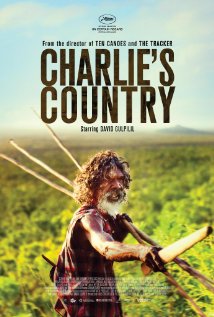
CHARLIE'S COUNTRY [Australia]
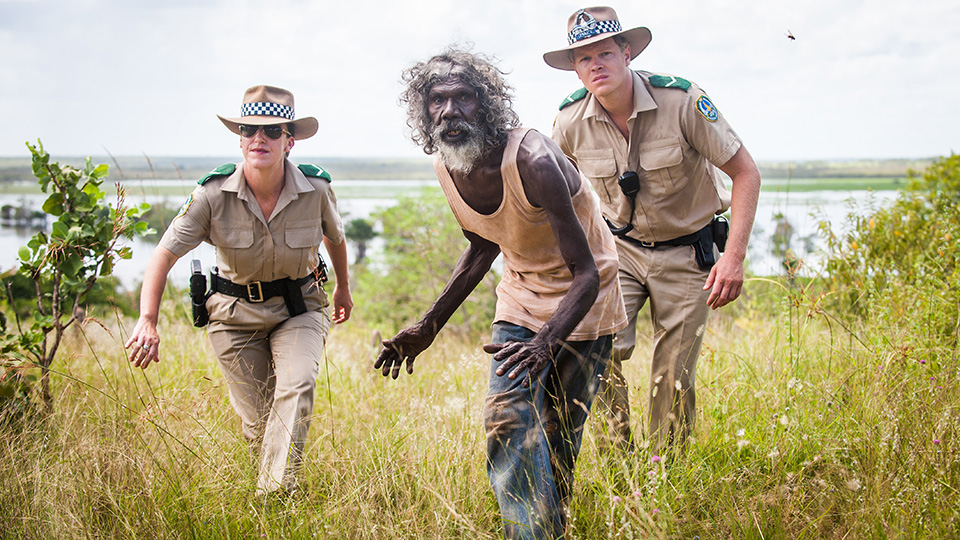
Time has been good to aboriginal actor David Gulipil's face. His first starring role was in Walkabout way back in 1971, but four decades later when you see him on screen in historical films like Ten Canoes (2006) or epics like Australia (2008) his shock of tangled grey and white hair and those visible years on his skin have granted his memorable face even more big screen potency. It's a great face to spend time with and the Dutch-Australian director Rolf de Heer knows it, often just leaving the camera on him for long stretches when not much is actually happening. His latest collaboration with Gulpilil (they co-wrote the film) is a character drama about an old man named Charlie who longs for the "old ways" and resents white Australia and all the policies of "The Intervention".

I know absolutely nothing about Australian politics that I didn't learn from the movies. No two ethnically and morally fraught political situations are exactly comparable -- I don't mean to be reductive --  but what we see in Charlie's Country (and every politically or historically minded Australian film before it), reminded me so strongly of America's own often shameful history and treatment of Native Americans that it was easy to be quickly engrossed without actually understanding details. Much of Charlie's struggles and personal setbacks are a complicated result of a mixture of that politically stacked deck, hopeless self-sabotage, and his respect for "the old ways" that feels both completely genuine and goosed up for whenever he wants feel righteously offended. Charlie longs to track and hunt but isn't allowed to have weapons, he hates fast food but that's all his community has easy access too. The film's best moments are when Charlie's natural sense of humor and feisty spirit busts through the sad political reality: Charlie pretending to be a better tracker than he is; the joy of cooking in nature's "supermarket"; Charlie's friendly antagonistic relationship with both the local cops (they greet each other with "white bastard / black bastard" bickering) and his own community. 
I'd like to heartily recommend Charlie's Country but the truth is it aggravated me as often as it moved me. The pacing is strangely glacial and some of its most superb moments are ruined by goosing them too far. Take for instance a tough scene in a hospital where a doctor asks Charlie if he can just call him that because "foreign names are hard for me to pronounce." If you're paying any attention at all the moment arrives like a cold hard slap. It's enough to enrage you on Charlie's behalf but he underlines it himself with a muttered "so now I'm a foreigner?" He rubs the sting away with his own vocalized indignation, no longer requiring yours. Worse yet is the repetitive (if thankfully sparse) musical score that sounds exactly like a Clint Eastwood parody. Eastwood shouldn't even score his own movies, let alone other people's! There's a wonderful moment late in the film in which Charlie remembers a dance performance from his youth and you hear, all too briefy, the thrilling indigenous didgeridoo. Why not use that for scoring since the movie's heart, like Charlie's, longs for the old country. B-/C+

Also at TIFFA Little ChaosWildThe Gate, Cub, The Farewell Party, BehaviorThe Theory of Everything, Imitation GameFoxcatcher, Song of the Sea1001 Grams, Labyrinth of Lies, Sand DollarsThe Last Five YearsWild Tales, A Pigeon Sat on a Branch Reflecting on ExistenceForce Majeure, Life in a Fishbowl, Out of NatureThe Kingdom of Dreams and Madness, and Mommy