Oscar History
Film Bitch History
Welcome

The Film Experience™ was created by Nathaniel R. All material herein is written by our team. (This site is not for profit but for an expression of love for cinema & adjacent artforms.)

Follow TFE on Substackd

Powered by Squarespace
DON'T MISS THIS
COMMENTS
What'cha Looking For?
Subscribe
Thursday
Sep262013

These Tweets Touched Me In Places That Made Me Feel Uncomfortable

These two tweets were next to each other on Twitter as I scrolled through my feed....


unretouched from my twitter feed. no cropping!

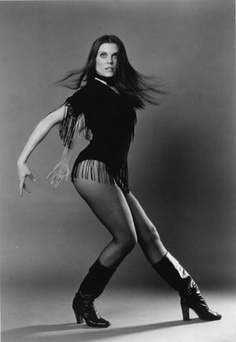
I find this juxtaposition totally uncalled for and HIGHLY upsetting. I will never be able to look at Superman's crotch again without seeing Annabelle *shudder*. Can I sue Warner Blu-Ray for emotional distress? 

Thursday
Sep262013

NYFF: Nobody's Daughter Haewon

TFE's coverage of the 51st New York Film Festival (Sep 27-Oct 14) is picking up pace. Here is Jose discussing Nobody's Daughter Haewon.

Hong Sang-soo seems intent in preserving the cinematic style the French specialized in during the early 1960’s. His movies often combine two of the topics most favored by New Wave filmmakers: the blurry line between fantasy and reality and the movies. In Nobody’s Daughter Haewon, the director delivers one of his most enjoyable films to date in telling the story of Haewon (Jeung Eun-chae), a bubbly young woman trying to succeed as an actress while having a tormentous affair with her married professor (Lee Sunkyun).

Hong captures his heroine in an assortment of intimate moments, mostly involving her hopelessly romantic takes on life. When she meets a visiting scholar who confesses he’s looking for a wife just like her, she immediately announces to her friends that she might be getting married soon and she assumes a guy is “the one”, because she ran into him more than once on the same day.

Even if the film never tries to dig deep into the characters, the director leaves enough clues for us to try and decipher why this woman turned out the way she is. One of the very first scenes shows her mother coldly say goodbye to her before moving to Canada, among her final pieces of advice is the suggestion that Haewon try to become Miss Korea since she can’t act. Through moments of quirk and “is it a dream?” confusion, we are led to believe that this woman is simply trying to stay away from real life as possible, she’s also developing a slight drinking problem which makes for some of the film’s funniest moments.

With endless mentions of pretending, setting up faux chance meetings, inner jokes that turn into insults, endless moments where a secret truth becomes public and an unexplainable Jane Birkin cameo that also references Charlotte Gainsbourg, Nobody’s Daughter Haewon, resembles a farce written by Moliere himself, if he too had been obsessed with the children of Marx and Coca Cola.  

Nobody’s Daughter Haewon plays during the festival on 09/29 and 09/30. Go see it and come back here to help us figure out what Birkin was doing in the movie.

Wednesday
Sep252013

Seven Notes on "Agents of S.H.I.E.L.D."

It wasn't long into the pilot episode of Agents of SHIELD last night that I realized something unflattering about myself: loving Joss Whedon was so much more fun and pride-inducing when it was a subculture and not the culture. If you loved Buffy The Vampire Slayer AS IT WAS AIRING you were, in point of fact, a very awesome person. Everyone loves Buffy now so loving it is expected and the only reasonable thing to do. Yelling "first", which is stupid trolling when it happens virtually on the internet, is actually deeply pleasurable when rooted in real life. So writing about SHIELD now feels a bit lame since I know everyone will be doing the same. "It doesn't need your opinion!" you try to reason with yourself to prevent the babbling, knowing that talking about something that literally everyone is talking about is roughly the same ROI as talking about something that literally no one is talking about. In both scenarios no one notices in the din/silence. (But then you end up having one (opinion!) anyway because you always do. And it's Joss Whedon and you can't help yourself.)

Seven notes on the pilot after the jump...

Click to read more ...

Wednesday
Sep252013

NYFF: Like Father, Like Son, Like Excellent

TFE's coverage of the 51st New York Film Festival (Sep 27-Oct 14) is picking up pace. Here is Glenn discussing Like Father, Like Son

That foreign language category at the Oscars just continues to be a lightning rod for controversy (or "controversy" drummed up by eager beavers wanting get extra attention for their movies). Nathaniel already discussed some of the issues of that category as pertaining to the French non-selection of Blue is the Warmest Colour. Even curiouser than that, however, was the selection of Japan. Let's face it, a three-hour lesbian drama was always going to be a stretch for a nomination even if it did qualify and even if France did select it. Japan, however, appeared to have a slam dunk in the form of Kore-eda Hirokazu's Like Father, Like Son.

Even if we ignore the fact that it also won a big award at Cannes (the Jury Prize) from Steven Spielberg's jury and that the man himself has snapped up the rights for a remake. Even if we ignore that it's issues of frought father and son relationships put it in line with many other winners from the category. Even if we ignore that it's more refined palate, less scrappy and hip, is the sort of thing voters in this category tend to err towards. Even if we ignore all of that, the fact remains (for my two cents, at least) that the film is just really very good.

I, nor many other western audiences it would seem, have seen Japan's selection. The Great Passage. It may not only be a great film and I'm sure an Oscar nomination would make its producers double proud given the stink that has been raised by the American distributor of Kore-eda's film (the same company that is releasing Blue is the Warmest Colour - double ouch!). Still, it’s curious that Japan didn’t choose the Kore-eda when it seems to perfectly made for the ghetto category. I know it sounds entirely selfish and commerce-inclined, but I enjoyed Like Father, Like Son so much that it would have been nice to see it vying for the statue. It’s such a quality production that surely audiences, spurred by a nomination, could have turned it into a mild hit. Its likely February release now looks rather foolish and presumptuous, but it’s easy to see why the distributor thought they had a winner on their hands.

Like Father, Like Son is a wonderfully effective film about two families from vastly different socio-economic backgrounds who discover their babies were swapped at birth six years earlier. It sounds kind of silly and ripe for turgid melodrama, but it’s handled sublimely by the Kore-eda. He doesn't settle for simple sentimentality, but instead allows his characters to stumble, make bad choices, attempt to redeem themselves, and try to do what's right. The difference in their class background (one family is affluent, the other working class), their differing philosophies on raising a child (one fosters independence, the other family), the myth of motherly bonds, and their own individual sense of right and wrong are challenged by the sudden familial discovery.

Their world is very identifiable and it’s no wonder Spielberg wants to remake it. There are likely tears to be shed, but it earns them through the strength of the performances, especially by Ono Machiko and Yôko Maki as the wives, and the emotion wrung out of the complicated central story. It's also rare to see modern day Japan presented with such visual panache with its juxtaposition of cityscapes and rustic "authentic" locales. Whatever happens to the film now that it's out of foreign language competition, I just hope audiences get to discover it. Spielberg's future remake can only help audiences discover this affecting gem of a film. 

Wednesday
Sep252013

Introducing... Five Nominees From 1980

I've always been interested in the way characters / stars are introduced within their films. Sometimes you can feel the filmmaking underlining the moment: look here, you will love this character! Other times intros are nonchalant and the character sneaks up on you.

The Supporting Actress Nominees of 1980 ~ The Introductions

Last month I ranked the 1952 nominees by the quality of their entrances in preparation for their month-end "Smackdown". This month for the 1980 theme, to mix it up, let's just view them in order of when they show up in their movies. When moviegoers were first seeing these movies back in 1980, what did these characters promise them when they walked into the plot, already in progress?

Cathy Moriarty as "Vicki" in Raging Bull
[17 minutes until 'who's that girl'?]

Jake: Who's that girl you were just talking to.
Joey: The friend of mine I was just talking to? The blonde? Vicki.
Jake: Where's she from?
Joey: She's from the neighborhood. She's a neighbor.
Jake: What's her last name?
Joey: Vicki that's all I know. 

 We see a series of fetching closeup glimpses of Cathy Moriarty from Jake's point of view but she gets no dialogue of her own in this debut scene within her film debut. She's just an object of desire for now. She looks pleased with herself in the series of closeups Scorsese lavishes on her face and body by the pool as the dialogue from two sets of men is all about her or taking out the other men who want her. She's only 15 (Moriarty was 20) but Jake asks what her last name is, a fitting detail since he'll soon her give his own and since he's already married.

The promise here is trouble and Raging Bull has plenty of that.

Mary Steenburgen as "Lynda Dummar" in Melvin & Howard
[20 minutes in...]

Our first images of Linda are blocked by her husband Melvin who is arriving to bed late (or early since it's morning) after the film's lengthy prologue in which he meets Howard Hughes (Jason Robards in an Oscar nominated cameo) but soon he's asleep and she's waking up (on the opposite side of the bed... some nookie offscreen obviously). Noises outside have woken her and serve as another reminder of their poverty.

Oh no. Repossessed again."

She packs her bags in a rush to leave her bad luck husband. This character intro promises a sensual woman with an unlikely combination of flighty and sensible impulses and that's just the kind of memorable character we get. Of course she doesn't stay away too long since she is the film's Supporting Actress Nominee. 

Eileen Brennan as "Capt. Doreen Lewis " in Private Benjamin
[23 minutes... on the dot] 

Private Benjamin knows what it's got in Eileen Brennan's deliciously bitchy and funny Army captain and makes sure you know it too, introducing her in military style. Her entrance is shouted, saluted, and she's even blocked from view theatrically until the introducing officer steps aside to reveal her, the frown on her face mysteriously reading as a self satisfied smirk before she's even started mocking her new recruits. Which she does the first chance she gets two beats later when she sees one of them crying. 

What's the madduhr? Are yoo a widdle cwybaby?"

This entrance promises combative comedy to come and Brennan delivers. 

Eva Le Gallienne as "Grandma Pearl" in Resurrection
[23 ½ minutes]

Let me have a look at you, child!"

The legendary stage actress first appears in longshot racing out of her home to greet her granddaughter Edna (Best Actress nominee Ellen Burstyn), now disabled, who is returning to the family home to heal... in more ways than one. This first scene is as modest as the home, and tells you little about "Grams" other than that she's glad to see Edna. They then look at an old scrapbook together. Eva's voice is a marvel though, instantly betraying her stage origins, full of warmth, feeling and memory. (That's all I know for now. I'm still in the process of watching this which I have to say has been painful. Not, I hasten to add, because the movie is bad but because it's so very hard to find a good copy of it. The versions on YouTube are blurry and blown out and no other downloads seem to function well. Such a pity how Hollywood ignores its own history and lets it go unrestored, even when it's in the history books as an Oscar nominated film.)

Diana Scarwid as "Louise" in Inside Moves
[38 minutes late to the party]

Where are my four beers?"

Diana's waitress "Louise" is introduced so casually, in medium shot and profile before quickly whisking by the camera and vanishing again, that if you didn't know who Diana Scarwid is, you'd think nothing of it. The film's lasting claim to fame just wandered into frame and the movie didn't notice. Inside Moves, a strangely executed film about disabled men who form tight bonds at a local bar until one of them leaves to become a professional athlete (don't ask), doesn't even bother to introduce us. We only infer she's the new waitress from the casual concern in the bosses voice "you doin' ok?" Slowly she becomes more prominent in the narrative and eventually begins to slip out of longshots and into her own closeups. It mirrors the way that loved ones start out as strangers, sure, but it's also kind of anti-dramatic and it's a long wait to get to the Scarwid Goods.

Have you seen any of these films? There is still time to vote. We include reader votes in the Smackdown totals so send in your ballot, rating only the performances you've seen, with or without commentary, on a scale of 1 to 5 (best) hearts.  The Smackdown will take place on Monday, September 30th