Oscar History
Film Bitch History
Welcome

The Film Experience™ was created by Nathaniel R. All material herein is written by our team. (This site is not for profit but for an expression of love for cinema & adjacent artforms.)

Follow TFE on Substackd

Powered by Squarespace
COMMENTS


What'cha Looking For?
Subscribe

Entries in foreign films (733)

Thursday
Mar082012

Distant Relatives: The Bicycle Thief and Wendy and Lucy

Robert here w/ Distant Relatives, exploring the connections between one classic and one contemporary film. This week the first in a three part series on how one classic film can have many children.

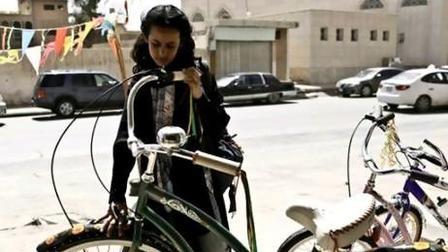
After a year that celebrated films about redemption and sentimentality, it's difficult to look at movies about poverty and struggle and not feel like a downer. But there's a reason why a film like The Bicycle Thief, or its neo-realist brethren is considered among the best of all time. Similarly, there's a reason why enough young filmmakers today are inspired to take on that same topic of hardship to make up a small movement that's frequently labeled "neo-neo-realism" (if you're into things being labeled), including Wendy and Lucy. And it has nothing to do with presenting a vision of a world devoid of hope or happiness.
 
The old joke phrase, "I'm not a pessimist, I'm a realist" doesn't apply here. The purpose of these films isn't to convince you that the world is impossibly sad. So instead, replace the word "realist" in that phrase with "humanist" and consider that the success of these films is based on the fact that their creators truly care for their subjects. How many Hollywood blockbusters that present use with canned happy endings, have no real interest in the actual humanity of their characters?
 
The Bicycle Thief and Wendy and Lucy present humanist portraits of two troubled souls on a quest to improve their lives and keep their families together. It makes no difference that in one case "family" is traditionally defined and in another it's a girl and her dog. Companionship is companionship as is unconditional love. And in both cases, this singular quest gets sidetracked with familial consequences.

The plot of The Bicycle Thief is well known for both its simplicity and effectiveness. Impoverished Antonio, having just secured a new job that requires a bicycle, has his bicycle stolen out from under him. He wanders through the streets of his village accompanied by his young son, hopelessly attempting to catch the thief and retrieve his bike. Of course, additional things happen, but this is all the viewer needs to know. We may not have all felt this level of desperate, but we can all understand desperation. Similarly Wendy and Lucy can be summarized to easily evoke emotions. A poor young woman, Wendy and her constant companion, her dog Lucy, are on their way to a better life in Alaska. When Wendy is detained by the police, Lucy disappears and she'll spend the rest of the film trying to find her.
 
The humanism in these films lies in the fact that we care for these characters vicariously through the eyes of their directors, and in doing so understand that there are those who similarly care for and empathize with us in our moments of need. We root for both of these characters even as their missions seem to be leading them toward the same inescapable conclusion.
 
It's a conclusion as inescapable as their poverty, and it's that understanding that further connects the two films. Why is it so difficult to ascend financially in the world? Because even a small disaster can derail a life. A stolen bicycle, a broken car, a lost dog, can bring an immediate end to a hopeful journey. For the wealthy, minor nuisances are just that - minor, forgettable, easily overcome.

 
In addition to their own diminishing success in life, Antonio and Wendy have to contend with the fraying bonds of their family, another theme familiar to us all. There is a moment where you realize that your relationship to someone close has been eternally altered and can never go back, and both of these films present these tragic moments as yet another consequence of their noble but unachievable goals.
 
The Bicycle Thief
and Wendy and Lucy succeed by compelling us so easily to root for Antonio and Wendy. We feel their frustrations and successes so completely. To do so both directors utilize a style of simplicity and obtrusiveness. Obviously this is where the "realism" part of their respective movements comes from. But it's unfair to dismiss the obvious, since it contributes so much to these films' brilliance. By intimately placing us next to the action in the role of the all-seeing camera, these films make us a part of the story and give us no choice but to be surrounded by their reality, feeling all of its humanity, and depositing us on the opposite side of tragedy, and in doing so making us feel perhaps the slightest glimmer of hope once again.

Tuesday
Feb282012

Tues Top Ten Pt 1: Takeaways from the 84th Oscars

We love to do top tens on Tuesdays and more of them will be coming your way soon. Today's top ten is not strictly ascending, some of these moments I loved and some I decidedly did not but they're ten things that I'm thinking about today and that I imagine will always come up when I think of the 84th Oscars.

TOP TEN TAKEAWAYS
Things to remember, for better and for worse, from the 84th Oscars

10 Direction is Everything With Dance
When I first heard they were doing a Cirque Du Soleil number at the Oscars, I groaned. Not that I don't enjoy the odd acrobatic but why at the Oscars? If you want it to be a variety show, stop being so inexcusably high and mighty about the Original Song category (that music branch and those rules. sigh) and start nominating 5 songs each year like in every other category. There are several songs this year that might have made for great ceremony moments. But when it began with that graceful, hypnotic liftoff via North by Northwest, my spirit lifted off with the twinned Cary Grants And then crashed back down to earth when I realized that the guy in the control booth had ADD and felt it necessary to show me closeups during big elaborately choreographed acrobats, which made for entirely confusing moments. Sometimes you couldn't even tell what film clips they were dancing to.

There's a certain cross-section of film critics that have been so cynical and mean spirited about our Best Picture, The Artist, that you'd think it was directed by Ed Wood, Alan Smithee or Michael Bay. They've been so weirdly hyperbolic about their hatred that it's been hard to actually hear an argument within the bile. But the Cirque Du Soleil number only served to illustrate how wise Michel Hazanavicius was with the physicality of The Artist, especially in its last glorious continuous take moments where you could see (wait for it) ENTIRE BODIES DANCING. This is quite possibly the simplest visual performance concept of all, that to understand / absorb / fully enjoy a dance, you have to see the body. It's such a simple concept that 96% of the (modern) time, directors screw it up. Well done Hazanavicius. Should the Oscars choose to ever have musical numbers again, please hire a control booth with less panicy "ohmygodthey'llgetbored" insecurities. It's hardly ever boring to watch great dancing / acrobatics / performances. It's only boring when you can't see them and are forced again and again to look at one particular detail at the expense of the whole.

09 David Fincher's Oscar Stride
With Kirk Baxter and Angus Wall's semi-surprise win in film editing for The Girl With the Dragon Tattoo (I predicted it as the "spoiler" should there be one and now of course I wish I'd just gone for it fully) they achieved an Oscar miracle: it's the first back-to-back editing Oscar since 1935/1936 when Ralph Dawson took home prizes for A Midsummer Night's Dream and Anthony Adverse. Baxter and Wall won last year for The Social Network and though they really are superb editors, what this most definitely illustrates (along with the great guild showing for Dragon Tattoo) is that David Fincher has really hit his stride with the Academy. It took them a long time to get there but now that they're there expect every one of his films to win nominations in some category or another. It was hard not to view the clip selection for Rooney Mara as the Academy own cheeky response to Fincher's preemptory quipping about his movie's AMPAS fate.


There's too much anal rape in this movie to get nominated."


08 Leggy Angelina
Angelina has always felt a bit like a cartoon version of a movie star, so overripe, so perfectly visual. The best part is that she knows it. Her strut to standing hip swung leg out pose was so deliciously diva that it must be celebrated (and mocked by the next Oscar winner) immediately thereafter.

07 Movie Stars Talking About Movies Is Love.
King Kong Morgan Freeman talking King Kong. Brad's amusing description of The Gargantuans. Adam Sandler talking James Bond and Sean Connery's chest hair and saying "can i please do that?" (um which part?) And most of all Gabby Sidibe marveling over "My Left Foot" (who knew?) we love this sort of thing.

"Nader & Simin" watching Farhadi accept the Oscar

06 Art is Global. Art is Political. Art is Good For the World.
Asghar Farhadi and cast were present and Iran won its first Oscar for Best Foreign Language Film. Farhadi got political in his speech and we're glad he did. Though some of the sentiment was lost in his English, we appreciate any reminder that respectful discourse and rich cultural exchange is possible and admirable, especially in the face of so much lowest common denominator politics. So many politicians these days play on people's worst instincts toward hostility and resentment for all, never thinking through the effects of war mongering rhetoric.

But back to the movies. We hope that A Separation marks a turning point and the category that used to give us the Bergmans and the Fellinis of the world will return to its roots and start giving statues to the masterpieces again. What a great start.

FIVE MORE TO GO - from Jessica to Emma Stone.
But what's your take on these five topics?

Wednesday
Feb222012

The Foreign Language Sweet Spot

Robert here, making no claims to predicting this year's Foreign Language Film category, or making any judgments based on quality. In the life of the mid-west movie lover, we're still waiting for all of these films to show up in our area. But I wanted to make on observation on what is supposed to be one of the more solidly predictable categories this year.


Einstein supposedly said "insanity is doing the same thing over and over again and expecting a different result." So you say you find yourself pretty certain that A Separation has its Oscar locked up based on critical praise and a slew of other awards this season. Tell that logic to The White Ribbon, Waltz With Bashir, Pan's Labyrinth, Paradise Now and Amelie; all foreign language front-runners that had it all come Oscar night, except an Oscar. Whether A Separation meets this same fate is not for me to say.

But consider not what the critics think, nor that Nathaniel is hardly the sole voice to name it the best... in any language. Don't even consider the huge stack of awards its won this season. Instead wonder if it hits the foreign language "sweet spot" that seems to have developed in the past few years. We all know that in the Foreign Language category, voters must watch every entry. This may work against popular films like Amelie and Pan's Labyrinth that are whimsical or fantastical, making them look too slight to voters in the shadow of lesser known but more complex, socially conscious fare. But not too complex, please. The Academy is still The Academy and films with the structural or moral ambiguity of Paradise Now, The White Ribbon and Waltz With Bashir are less commonly embraced than movies with clear messages.

A few frontrunners in the past decade have managed to go the distance, and good as some of them have been, they've all met the requirements of the sweet spot: serious but not ambiguous, complex but not too challenging. Come Sunday we'll know into which crowd A Separation falls. Until then, if I were a betting man, I could think of a dozen other categories I'd rather push my chips into.

Saturday
Feb182012

Leigh, Farhadi, Jake & Jury Name Berlinale Winners

Remember a couple of days ago when we shared the video of Jake Gyllenhaal handing Meryl Streep her Honoary Golden Bear in Berlin for a stellar career? Apparently he's making a habit of handing over Best Actress prizes. Here he is at the closing night ceremony with Best Actress winner Rachel Mwanza.

This 14 year old Congolese actress played a child soldier in a brutal sounding movie called War Witch.

MAIN PRIZES
The jury this year was headed by the brilliant Mike Leigh. The jury included Jake Gyllenhaal, Anton Corbijn, Charlotte Gainsbourg, François Ozon, Boualem Sansal, Barbara Sukowa and last year's Golden Bear recipient Asghar Farhadi (A Separation) who will now presumably have to jump on a Berlin to Los Angeles flight to prepare for the Oscars.

Prizes, Gay Films and a Possible Danish Oscar Submissions after the jump

Click to read more ...

Wednesday
Feb152012

Bullhead.

Jose on one of this year's Foreign Film nominees...

The steaks in Bullhead are so red that you can practically taste the blood coming out of them. The intensity of their color is such that you can’t look away whenever a piece of meat is onscreen. They look both enticing and completely disgusting which makes sense given that meat is this film's currency of choice. Director Michael R. Roskam’s debut is a dark, complex thriller that breathes new life into the coming-of-age story and the gangster drama by setting it in the unexplored world of cattle farming.

Jacky Vanmarsenille (Matthias Schoenaerts) is a young cattle farmer who is dragged unwillingly into the underworld of hormone trafficking after getting involved with a corrupt beef trader. A mysterious murder brings Jacky’s childhood friend, Diederik (Jeroen Perceval), back into his life and threatens to reveal a secret he’s been hiding for over two decades.

Roskam weaves a deceptively simple tale about the loss of innocence that works because he subverts the notions of the genre, giving us a movie that questions if the events in our past can fully determine our future. Anchored by Schoenaert’s masterful committed performance (he gained over 60 pounds of muscle for the part) the film also works as a fascinating character study. Jacky is addicted to hormones and has become a minotaur of sorts, a man who suppresses his humanity at will to let out his inner animal. Schoenaert could’ve easily relied on his character’s past to build a performance filled with quirks. Instead he interiorizes all the pain only to release it through a shattering series of confused glances. He always looks as if he’s a werewolf about to transform.

The film transforms into something more than an effective thriller. At the center of Bullhead is something else altogether, a surprising brilliant study of sexual identity. What makes someone a “man”. While other movies have explored this question through metaphors, Roskam goes to the core of the situation creating a perfect companion piece to Pedro Almodóvar’s The Skin I Live In. Bullhead could’ve been merely sensationalist but is instead chilling. The director not only points out that the cruelty of violence is often unseen, but he also reveals sexism embedded in the way we speak. Children often hear their parents say they will “become men” someday but rarely understand what this truly means. Is manhood a meritocracy? Should a piece of meat really define you?

Oscar analysis: Bullhead is a surprising inclusion among this year’s Best Foreign Language Film nominees because of its disturbing plot and violence. It feels like one of those  “special” movies chosen by the executive committee and as such joins the ranks of Gotz Spielmann’s Revanche  and Yorgos Lanthimos’ Dogtooth in terms of 'the nomination is enough of an honor given its unlikelihood to have happened in the first place'. Though Bullhead probably has no chance of winning its combination of genre awesomeness and impressive central performance make it an exemplary work of art. It will undoubtedly be remade in English in a few years.