Oscar History
Film Bitch History
Welcome

The Film Experience™ was created by Nathaniel R. All material herein is written by our team. (This site is not for profit but for an expression of love for cinema & adjacent artforms.)

Follow TFE on Substackd

Powered by Squarespace
DON'T MISS THIS

Oscar Volleys - one week until the big night!  


COMMENTS


What'cha Looking For?
Subscribe

Entries in interview (279)

Tuesday
Dec292015

Interview: Carol's Production Design Judy Becker 

Judy Becker. Photo © Tom Uhlman at New York TimesThis won't have escaped you but we're a little bit obsessed with Todd Haynes's Carol. We tried to devote a week to it but the love can't be contained by calendars. The romantic drama about a glamorous society wife and a young shopgirl is rolling out slowly -- agonizingly slowly -- to more cities each week. It leads the Golden Globe nominations and though the Academy's decisions about the year's "best" are yet to come, there's reason to be hopeful that they'll embrace the filmmaker's triumphant return to the silver screen.

The Oscar-nominated production designer Judy Becker (American Hustle), is responsible for most everything you see onscreen in Carol from Therese's humble apartment to Frankenberg's Department Store, the Aird estate, and much more. "The props, there are close-ups on them, so I don’t know how you can say, that’s not important," she says passionately, underlining the fact that everything we see is part of 'the look'. She describes herself as a very hands-on designer and is sure this drives new members of her staff crazy but she has high praise for her frequent set decorator Heather Loeffler. "She never gets upset if I veto something but, at the same time, she brings a lot to the table and surprises me all the time with great stuff."

Though Becker is best known for her frequent collaborations with  David O. Russell this is not her first Todd Haynes film, having also designed his abstract Bob Dylan biopic I'm Not There (2007). We began our chat marvelling at his genius. Though I'm Not There was a larger scale task, essentially designing multiple worlds, Carol wasn't much easier for different reasons. "Every film has its challenges," she explains. And films as gorgeously realized as Carol don't happen without a lot of planning, work, and inspiration. 

Our interview is after the jump...

Click to read more ...

Monday
Dec282015

"The best kind of music comes from experimentation and messing up" - on Scoring 'Steve Jobs'

Daniel PembertonAs we move towards the Oscars each year the public tendency is to look back and reassess the most interesting contributions to cinema in a given year. From this impulse, a good one we'd argue, top ten lists, "best ofs" and awards traction are born. Though the legendary names of film scoring all seemed to be quite active this year -- even recently absent giants like Morricone and Williams -- some of the most innovative and exciting work was being done by the relative newcomers.

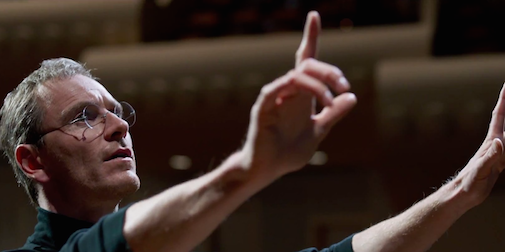
One of the buzziest among them is the 38 year old composer Daniel Pemberton. He made an award-winning name for himself in British television but his feature film work only began in force just a few years ago with highly praised work on the supernatural period drama The Awakening (2011). It's safe to say that 2015 will be regarded as his breakout year. He did stylish rethink work on The Man From U.N.C.L.E. and in just a few weeks he'll presumably be at the Golden Globes where he's nominated for his innovative triple-scoring of Steve Jobs

Will an Oscar nomination follow? It's tough to say given the temperament of Oscar's notoriously insular music branch but it would not be undeserved. He recently spoke with The Film Experience about innovation, 80s synthesizers, and how he'll keep it fresh moving forward.

NATHANIEL R: So I'll be up front with you. I find music, particularly scoring, completely mysterious. I can read music and play piano a bit but it feels like a foreign language. How does a film composer even discover their talent for it? 

DANIEL PEMBERTON: I basically started messing around with on the piano when I was very young, and I just started writing music just for fun. And then one day I saved up enough money to buy myself a synthesizer and a tape recorder, and I started making music. Pretty much from that is how I got to here!

NATHANIEL R" But there are so many different careers in music. Did you imagine yourself as this type of composer or did you want to be a rock star when you were young? [More...]

Click to read more ...

Saturday
Dec262015

Interview: The Discipline and Humanity of "Bridge of Spies" Costume Design

Mark Rylance and Spielberg on the set of "Bridge of Spies"Costume Designers are among the great unsung heroes of the cinema, regularly helping actors to define their characters and directors to create those images audiences get lost in. The latter achievement comes in tandem with the other creatives most connected to the mise-en-scène, the cinematographers and the production designers. It's perhaps not surprising that when you sit down with the behind-the-scenes professional they are often disarmingly modest, used to serving and enhancing the vision of the director. General moviegoers might not know their names but cinephiles, critics, and industry professionals are wise to learn and love them for the unique contributions they make to fine movies. 

I recently had the opportunity to speak with the Polish designer Kasia Walicka-Maimone, who designed two high profile projects this year: Scott Cooper's gangster drama Black Mass and Steven Spielberg's cold war drama Bridge of Spies. The latter was her first collaboration with Spielberg but the designer is no stranger to auteurs. She's worked with Wes Anderson (Moonrise Kingdom) and Mira Nair (Amelia) and is best known for her work with Oscar fixture Bennett Miller having costumed all three of his narrative features (Capote, Moneyball, Foxcatcher).

It's perhaps unsurprising, given the temperament of Miller's filmography, to find her disarmingly modest and low key and not all that excited about the more glamorous aspects of costume design. At one point she even gave your host, a self-confessed costume nut, a coronary with a casually dropped "I don't care about the costumes" though she quickly revived me with an interesting explanation of what she really meant.

See for yourself in our interview after the jump...

Click to read more ...

Saturday
Dec192015

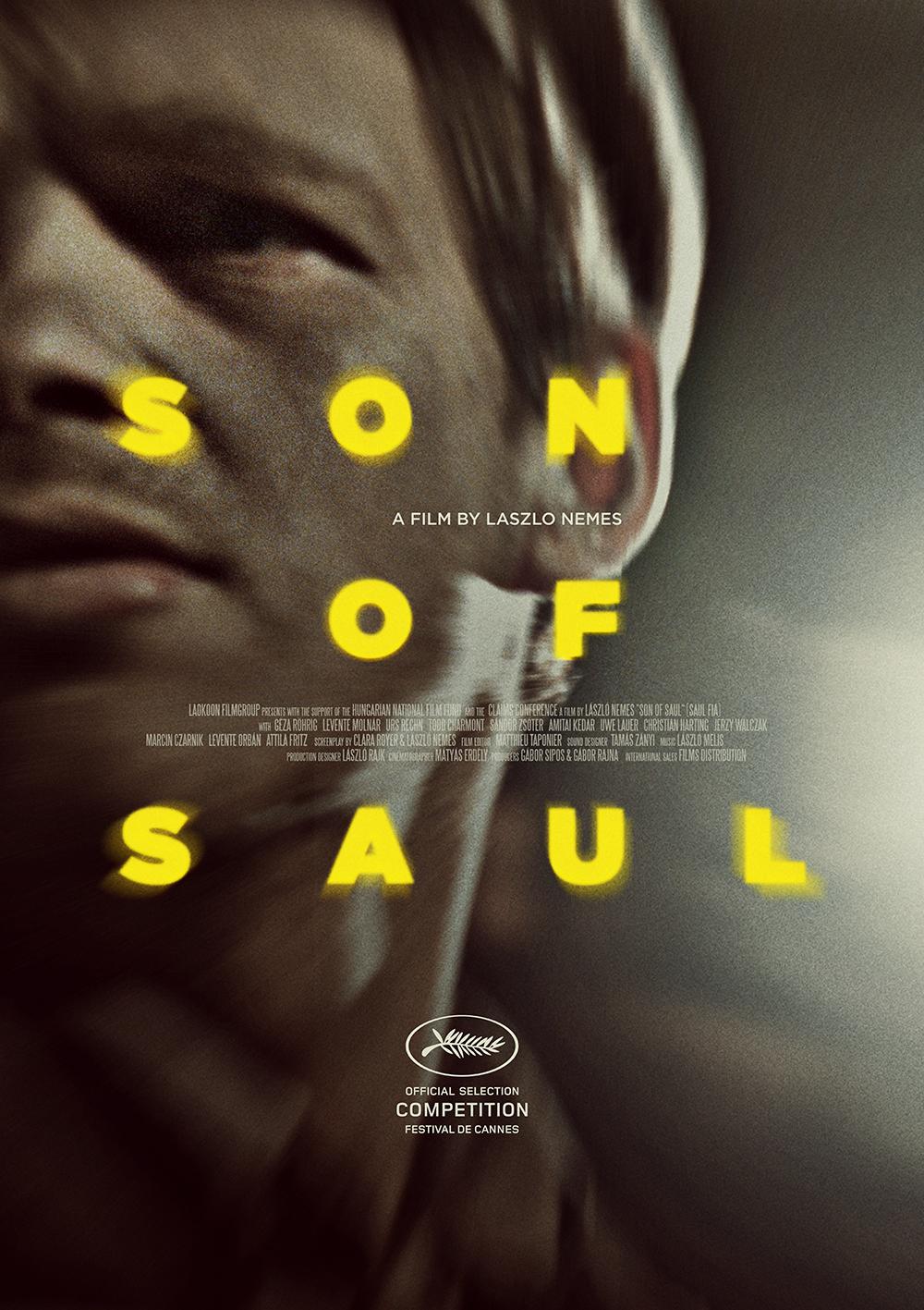
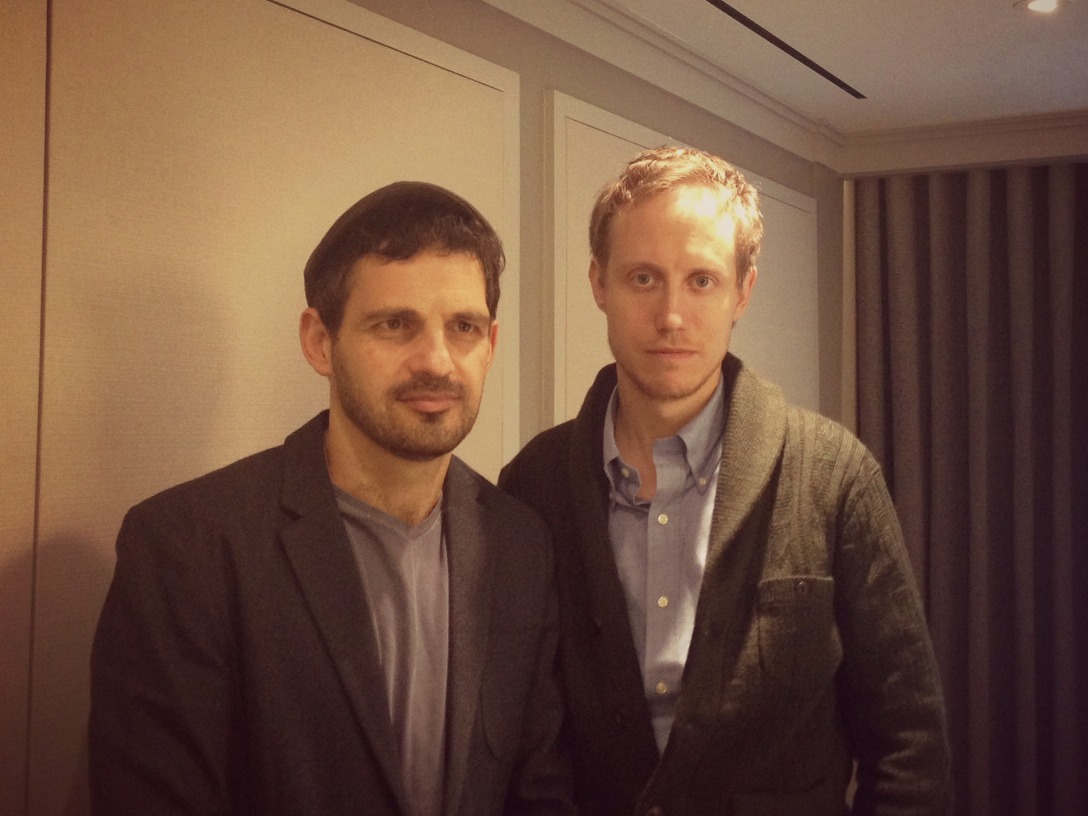
Interview: Director and Star of 'Son of Saul' on Making Art in a Politically Correct World

Jose here. The evils of the Nazi regime have been documented in myriad ways, and in practically every medium possible. Film in particular, has created a subgenre that consists of harrowing stories about concentration camps, the diabolical genocide of the Jews, and other events that put all the human race under a shameful light. However, perhaps because of Hollywood’s tendency to overpraise the human spirit, and its relentless need to “inspire”, Holocaust films have become a “niche” meant to help actors and directors win awards. Holocaust films in a nutshell always go for the emotional and rarely, if ever, attempt to touch the intellectual.

Enter first time director László Nemes, who caught Cannes by surprise with his unique Son of Saul, which has just opened in US theaters, a film that dispenses of each and every cliché you’ve seen played in every other Holocaust movie. There are no string-filled overwrought scores, no movie stars losing weight, gaining accents or donning beards, and most surprisingly, there are no attempts at oversimplifying the Holocaust as anything other than a series of personal infernos lived in a collective reality. The inner hell in this case, is that of Auschwitz prisoner Saul (Géza Röhrig), a Sonderkommando member, who one day makes a gruesome discovery that drives him to make a decision that might have deadly results.

The interview after the jump...

Click to read more ...

Friday
Dec182015

Interview: Wim Wenders on Every Thing Will Be Fine, 3D and Guilt

Director Wim WendersThis interview was conducted by guest contributor Amir Ganjavie, during the 2015 Toronto International Film Festival. Every Thing Will Be Fine was released in theatres last week.

Four years after his success with 3D in the dance film Pina, Wim Wenders is using the technology in the realm of fiction filmmaking in Every Thing Will Be Fine. One of the German auteur’s most accessible films, this psychological thriller is about the traumatic experiences of Tomas (James Franco), a writer who is dealing with the consequences of a brutal car accident. The effects of this tragedy on him and on Kate (Charlotte Gainsbourg), who has lost someone close, shape the story of the film. 3D cinematography has rarely been used for such a character-driven story with so few action scenes. Wenders is testing the limits of storytelling possibility with the technology.

AMIR: How was the experience of using 3D for such a character-driven, psychological film?

WIM WENDERS: Trauma is internalized. Something happens externally in your life and from then on it creates this thing in your mind and you have to live with it. It’s impossible to make it un-happen. It’s a pain in your life, there is guilt involved, and other people are involved with whom you have suddenly connected without wanting to, but the trauma is inside. The cinema has hitherto had to invent situations that externalize the trauma to make it visible. With 3D I felt that for the first time we had cameras that could look inside of a person and see into the soul because these cameras are almost like x-rays; they see more accurately and you cannot hide anything from them. You look at a person and you know who that person is. This might surprise a lot of people because the 3D films we have seen so far don’t prove that; actually, they have done the opposite. [More...]

Click to read more ...