Oscar History
Film Bitch History
Welcome

The Film Experience™ was created by Nathaniel R. All material herein is written by our team. (This site is not for profit but for an expression of love for cinema & adjacent artforms.)

Follow TFE on Substackd

Powered by Squarespace
DON'T MISS THIS
COMMENTS


What'cha Looking For?
Subscribe

Entries in Adaptations (377)

Friday
Nov042011

Pip Pip Hooray For Helena

JA from MNPP here. I consider myself fairly well read, and yet lately the news has seemed stuffed with exceptions where I have to admit that oh, somehow that book that I'm supposed to have read slipped by me. Yesterday I felt that way with the news that Steve Buscemi is planning on adapting William S. Burroughs' book Queer (with the fantastic trio of Guy Pearce, Ben Foster, and Kelly MacDonald) causing me to realize and shamefully acknowledge the fact that I haven't read any Burroughs at all.

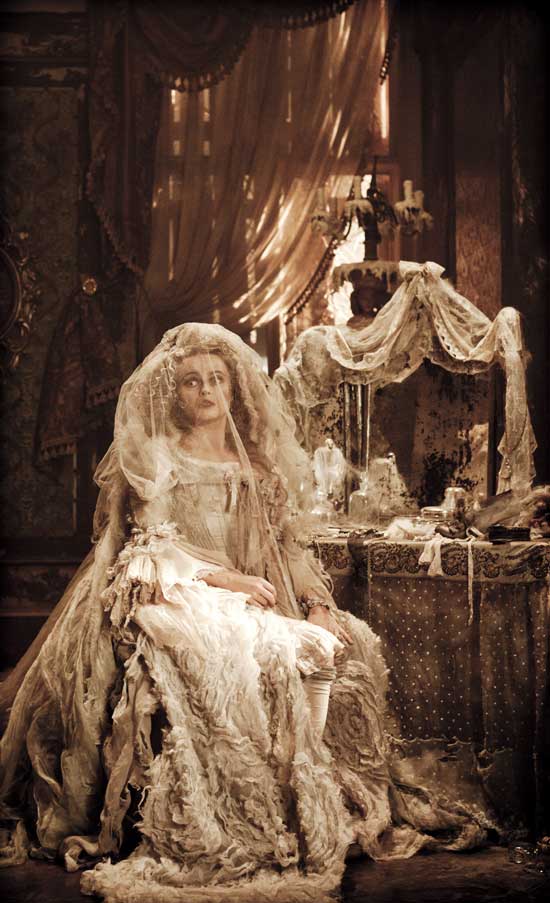
And today we have the first images from Mike Newell's adaptation of Charles Dickens classic Great Expectations, and as I considered writing a post on these pictures a thought occurred to me - I've never read this book either! My education was a farce. And, while according to Wikipedia the book's been adapted for various mediums dozens of times, the only version I have ever seen is Alfonso Cuarón's loose adaptation in 1998 with Ethan Hawke and Gwyneth Paltrow and Anne Bancroft camping it up as "Ms. Dinsmoor," their take on book's infamously wackadoo jilted bride Miss Havisham.

Which brings us to this, the reason we're here:

Exclamation points!!! Love it. That's Helena Bonham Carter as Miss Havisham in Mike Newell's film-to-be, and it's an extraordinary enough thing to look at that I decided my knowledge of the source material or lack thereof be damned, this must be gawked at. Just the other day Nat was talking about how often Kirsten Dunst plays destroyed brides - looks like HBC's giving her a run for the money in that department. Bride wars, part two!

You can see one more picture over at Deadline, where the picture originated. The film's not out until next Fall; it also stars Sally Hawkins and Jason Flemyng and as head-boy Pip we've got War Horse's Jeremy Irvine. What do we think?

Friday
Oct282011

Distant Relatives: Lawrence of Arabia and The Lord of the Rings

Robert here w/ Distant Relatives, exploring the connections between one classic and one contemporary film.
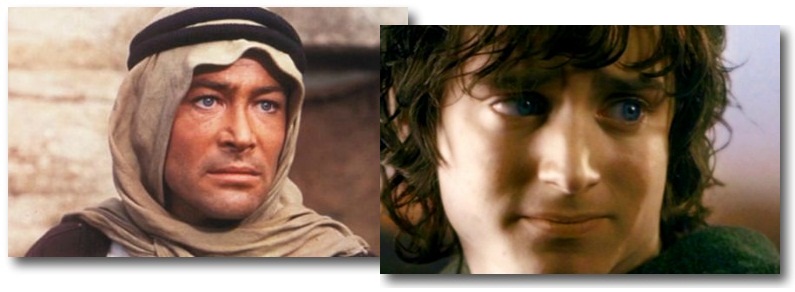
Heroes, Real and Imagined

"The Lord of the Rings" was originally published in 1954, eight years before the release of the film Lawrence of Arabia. Technically it came first. Then again T.E. Lawrence rode through Arabia in 1916 besting J.R.R. Tolkien's adventure by 38 years. Really, if you wanted to continue down this path you'd have to go back invention of the epic hero tale itself. This is why these films make for a fascinating fit. They are, arguably, the greatest cinematic epic based in realty and the greatest cinematic epic based in fantasy. They have similarities as a direct reflection of their status as epic hero storytelling, and similarities so specific they transcend that label. Then there are the differences. You won't see me use the term "reluctant hero" here because Lawrence, though he may get there eventually, starts off expecting his adventures to be "fun." Frodo not so much. And it's safe to say without a spoiler warning, that you're aware that Lawrence didn't do anything in Arabia that saved the world, even on a small scale, yet that's just the mission that Frodo is tasked with. Lawrence's mission is a little more vague, creating chaos, trotting from one quickly conceived battle to another, eventually perhaps uniting the Arabs. Quite a ways from Frodo's to destroy the ring of power, save the world. But both are attempting to bring some sort of perceived restoration to a land and both are at the whim of a towering ancient history, of which they will soon become a part.
 
Both stories start off similarly enough with a singular character chosen for their je ne sais quoi and sent off to a far away place. Although that je ne sais quoi may be some combination of strength, resolve, and perhaps to their detriment, innocence. In other words, they both understand, or will understand that the trick to standing the fire is "Not minding that it hurts." Immediately there is danger, harsh foreign landscape and people, separated by clan or by race, defined by differences; the Bedouin, the Howeitat, the Dwarfs, the Elves forced to work together, united for the purpose of our hero. Following this is the hardship of travel, the escalation of war, battles by name (Aqaba, Helm's Deep, Damascus, Gondor), and an inhuman enemy, actual non-human Uruk-hai for Frodo, and for Lawrence, the Turks represented only briefly by the Bey of Daara who tortures, though not much more than we've seen of some of our heroes. Sometimes the pure evil of fantasy is less unsettling than the complexity of reality. Finally there is a resolution, an ending, or a semi-ending. But I'd argue that in both cases the resolution is only partially relevant.
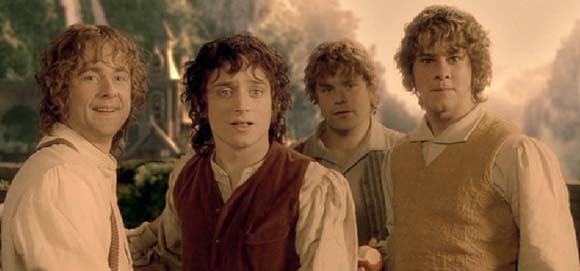
Into the Darkness

We already know that Frodo will achieve much and Lawrence will achieve little. Their journeys foresee those ends quite quickly. What's more important is how those journeys will alter them, and not for the better. The term "epic hero tale" conjures up images of bravery and glory, but Frodo and Lawrence experience a whirlwind of darkness, fear, and corruption. Of course, the one ring is a symbol of power and with great power comes great corruptibility. Frodo falls deeper and deeper into darkness until he's won over by Gollum. Lawrence too lets his building grandeur fill his own head. But there's an even greater darkness at play. Early in the film, after Lawrence kills a man he laments, not that he may have to do it again, but that he enjoyed it. In so many ways, these men are the keepers of life and death. Victories slowly come filled less with jubilation and more with relief that the end is one step closer. Meanwhile the old men who run the world sit at tables and make declarations and have no idea just how little power they have, and how much belongs to one little person.

Epic hero tales that give us everyman protagonists, exotic locales, and thickening drama are a staple of storytelling. Here, even at opposite ends of the fantasy/reality spectrum we find two films that meet all the criteria for a quality epic. Did T.E. Lawrence's story make for a great film because it naturally met all the criteria of the genre? Because it seemed to be scripted? Is The Lord of the Rings such a beloved tale because despite the fantasy, the emotions, the personalities and the conflicts are so close to what we see in reality? These films cross over each other and back again and still are only bookends for cinema's rich collection of epics whether fantasy or reality.
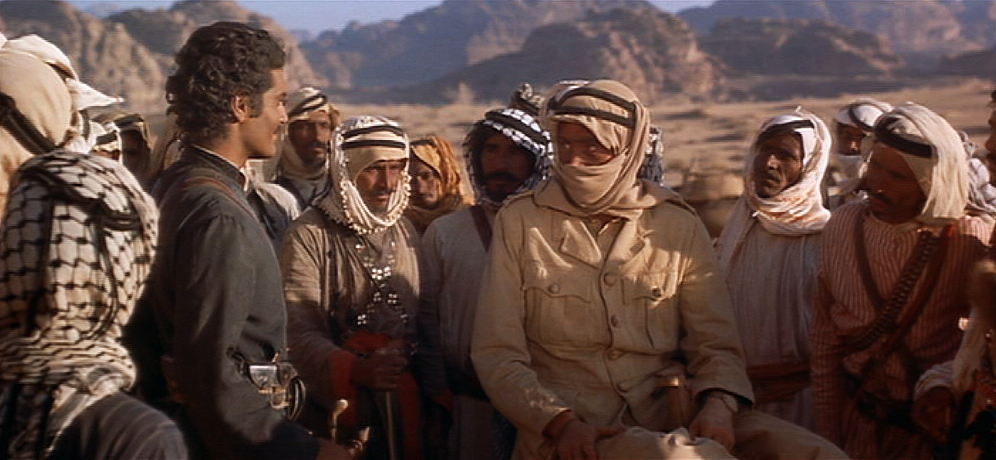
Other Cinematic Relatives: Star Wars (1977-1983), Princess Mononoke (1997), Ben-Hur (1959), and The Harry Potter Series 

Wednesday
Oct262011

Oscar Horrors: Roman Polanski's Chalky Undertaste

In the Oscar Horrors series we're celebrating Oscar nominated or Oscar winning achievements of or related to the Horror genre. Daily through Halloween!

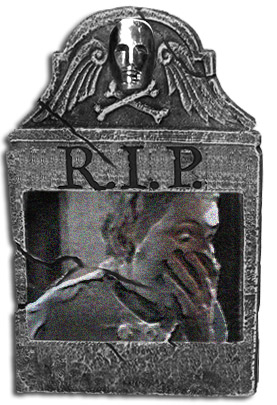
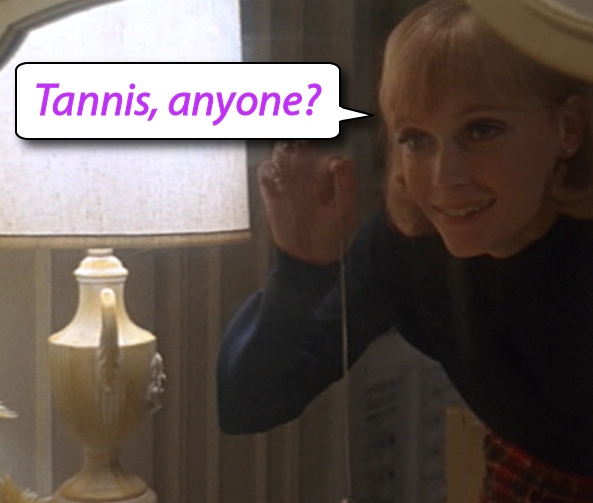
HERE LIES… Roman Polanski’s screenplay for Rosemary’s Baby, which he adapted from Ira Levin’s bestseller. It lost the statue for Best Adapted Screenplay to a tale of a very different plot – “There are plots against people, aren’t there?” in The Lion in Winter.

JA from MNPP here. When people ask me what my favorite movie is I tell them it’s a tie between Rosemary’s Baby and Alfred Hitchcock’s Rear Window. (I’ve always wished I could fall madly in love with another movie that starts with “R” just so I could make some lame comment about how I bide by “The 3 R’s” but it hasn’t happened yet. Yes I am a nerd.) Point being, since seeing Rosemary for the first time twenty years ago or so, I’ve managed to watch it at least once a year, sometimes more, so it’s one of those movies I know by heart.

One of my first activities upon signing up with a Twitter account was, much to my Twitter follower’s understandable exhaustion, a live tweeting of the film – I find exuberance in pretty much every line of dialogue, whether it be something small like the way Minnie (Ruth Gordon) gags out the words “THE CCCCAAARRRPPPETTT” as Roman (Sidney Blackmer) spills the vodka blush, or something big like Guy (John Cassavetes) telling Rosemary (Mia Farrow) that “ it was kinda fun, in a necrophile sorta way.” I consider the script a perfect thing, and a week (hell, a day) doesn’t go by where I don’t quote something from it.

“The name is an anagram.”

“Pain be gone, I will have no more of thee.”

“He has his father’s eyes.”

“It has a chalky undertaste.”

More on the brilliant screenplay and one of cinema's most iconic shots after the jump...

Click to read more ...

Monday
Oct242011

Next To No Ado About Something... Whedon's Shakespeare?

I woke to some potentially thrilling news this morning. It seems that somewhere before during and/or after The Avengers production Joss Whedon brushed up on his Shakespeare. He's completed principle photography on a movie no one even knew was coming.

Here's the announcement in pictorial form.


I can't make out which actor that is in the photo given the black and white and the goggles and the snorkel but the cast is like manna from Whedonverse heaven.

From Buffy The Vampire Slayer / Angel : Tom Lenk, Alexis Denisof, Amy Acker and Riki Lindhome (well she was only in one episode of Buffy but still...); From Serenity / Firefly: Sean Maher and Captain Tight Pants himself Nathan Fillion (Love); From Dollhouse : Reed Diamond (YES!) and Ashley Johnson ; From The Avengers : Clark Gregg ; From The Cabin in the Woods : Fran Kranz ; And the newbies: Spencer Treat Clark (little Lucius from Gladiator all grown up), Brian McElhaney, Nick Kocher, Emma Bates, Romy Rosemont (from Glee), Paul M Meston, Joshua Zar and Jillian Morgese

"Hey nonny nonny"The ad rather cheekily ends with "based on a play" LOL. If it's the play than Joss has gone and made his own modern Shakespeare, following in the footsteps of... well everybody. But Kenneth Branagh in particular.

The last time Much Ado About Nothing hit the silver screen the year was 1993. The movie opened with a particularly ripe Emma Thompson eating grapes and dreamily reciting "hey nonny" before the film erupted into an uproarious everybody-get-naked! bathing credit sequence because Kenneth Branagh was directing on uppers. We're guessing. That movie is so fun. How will Joss's compare? Good luck to whoever has to follow in Emma's lighter than air but somehow still earthy footsteps (I'm guessing its Amy Acker and Alexis Denisof as Beatrice and Benedick given their placement on the advertisement). If you ask me Much Ado is Emma's second best big screen performance ever. Given the consistent quality of her work, you'll understand that that's extraordinarily high praise.

But what this really means is that 2012 is shaping up to be the year in which Joss Whedon basically takes over the entire world: The Avengers, which he wrote and directed, hopes to dominate the summer box office; the long delayed 3D horror flick Cabin in the Woods, which he wrote, will finally arrive; he's announced plans to return to the web with an (unrelated) followup to Dr. Horrible; and now this surprise film!

Sigh no more, lady! I've learned to live with the constant regurgitation of Shakespeare but I can't say I wouldn't be blissed out if artists everywhere decided as one great collective mass that they wanted to give the old Bard a rest for a decade whilst they investigated the collected works of Tennessee Williams or Anton Chekhov instead.

Friday
Sep302011

NYFF: "Carnage" 

Though critics screenings have been well under way for some time, tonight is the official opening night of the New York Film Festival. The kick off film is Roman Polanski's Carnage, about which we should undoubtedly say a few words. And then scream them, as we lose our composure.

Moviegoers who have seen Yasmina Reza's hit play "God of Carnage" in any of its many stage productions, had just cause to fear a film version; it's very much a work of the stage. What if they cast the two young boys whose stick-wielding playground tussle prompts all the (psychological) carnage between their parents, who meet to discuss the fight? What if the movie leaves the apartment where the entire play takes place? What if the actors can't handle the tricky satirical tone that has to be rooted in internal drama but stylized enough to extract external laughs?

The first two fears involve the dread "open it up" problem that hover like dark storm clouds over so many stage-to-screen adaptations. If you don't "open it up" you run the risk of your movie feeling weirdly hemmed in and even cheap. If you do "open it up" you run the risk of arbitrary and awkward resizing that feels more like nervous approval-seeking then an attempt to serve the material. With Roman Polanski, an expert at claustrophic storytelling, guiding the tight-quarters squabbling perhaps we shouldn't have worried.

The trouble-making sons of Penelope and Michael Longstreet (Jodie Foster and John C Reilly) and Nancy and Allen Cowan (Kate Winslet and Christoph Waltz) do appear in the film but in a wonderfully smart and ambiguously played framing device. This change from the play stays magically true to the spirit of the source material but is also entirely new and right for the change in medium (which is EXACTLY what adaptations should strive for). So the first thing Roman Polanski does right is that even though we do technically leave the confines of a realistically sized New York apartment (i.e. small) both visually and physically (the apartment building's hallway), we never once feel as though we've escaped the crowded private hell of two married couples. For a smartly succinct 80 minutes (it happens in real time) you are trapped with the parental quartet and their justifiable concern: what to do about a violent encounter between their children. The comedy and drama of the play-turned-movie are the ways in which said real and justifiable but basic-sized problem morphs, twists, pivots, wiggles, shrinks and expands -- it just can't hold its shape -- until it's a series of problems both microcosmically petty (home cooking, name calling, cel phones) and gargantuan unsolvable (Genocide! Corporate Greed! Marriage!).   

For the most part the actors all do solid work. Christoph Waltz, in the film's best and most nimble performance, ably suggests that Alan is a bit of a sadist and the only one who is actually enjoying all the squabbling and suffering (until he isn't). John C Reilly has the biggest about face, appearing to be the most accomodating character (and the dullest actor) until alcohol and aggravating phone calls from his mother loosen him up. Kate Winslet and Jodie Foster, two of the screen's most formidable actresses are both good. Kate is best with Nancy's comedic outbursts  (her weak stomach and quick inebriation, just as in the play, provides some of the most memorable moments) but one wishes for more character detail in the inbetween when she isn't the focus of the scene. Foster has the most difficult role. Penelope is an extremely uptight and self-righteous Africa-obsessed mother and she's the one character that's simultaneously the worst at keeping it together and the one most concerned with keeping it together. Though Foster has fine moments her comedy is the wobbliest; one ends up pitying Penelope more than laughing with or at her which is a strange place to end up inside of a viciously dark comedy. Still, there's a certain go-for-broke original bravura in Foster's vein-popping despair (hers is the performance least like the original play's), that one has to admire it even while one mentally recasts. 

As Carnage winds down... Stop. Winds down? Yes, though Polanski often comes up with clever angles by which to watch the four characters interact, the film does run into some trouble with momentum which the play didn't have. The hallway scenes offer new and funny ways of thinking about the fact that the couples can't seem to end their evening even while their hatred for each other grows, but they strain credulity as well. If you're that close to leaving... There are strange lulls just as things are reaching fever pitch, and the ending itself is one of those and weirdly sedate.

Despite Polanski's very smart and controlled approach to the material, one almost wishes he'd taken a page from Jodie's book and just gone jugular. He employs so many different techniques to keep you visually stimulated: depth of focus, variety of shot lengths, staging, camera stability (things get a bit shakier in time with the copious alcohol) that one almost wants to scream at him to commit to one of them, embrace it feverishly and "DO IT UP REAL BIG LIKE!!!" Take your cues from Winslet's ugly vomiting, Foster's whiny-screaming or Christoph Waltz's man-pouting and let your hair down a little. Lose your composure. Risk bloodying yourself up but good.

Carnage (2011) is maybe the best film version one could hope for given the absolute stageyness of the source material but it's good enough that it leaves you wanting one that you didn't dare hope for. B/B-*

Previously on NYFF
Miss Bala wins the "must-see crown" from judge Michael.
Tahrir drops Michael right down in the titular Square.
A Dangerous Method excites Kurt... not in that way, perv!
The Loneliest Planet brushes against Nathaniel's skin.
Melancholia shows Michael the end of von Trier's world. 

* Carnage is unique enough that the grade probably doesn't suggest how "see worthy!" it actually is. It's also the kind of property one might conceivably feel differently about on a second pass. For those of you wondering Carnage's best bet Oscar-wise is an Adapted Screenplay nomination. Since no consensus seems to have formed about "best in show" acting traction will be hard to come by for a shared movie.