Oscar History
Film Bitch History
Welcome

The Film Experience™ was created by Nathaniel R. All material herein is written by our team. (This site is not for profit but for an expression of love for cinema & adjacent artforms.)

Follow TFE on Substackd

Powered by Squarespace
What'cha Looking For?
Subscribe

Entries in NYFF (264)

Saturday
Oct082011

10 Word Reviews: The Ides of Miss Pina Bala's March of Shame

I think you'll agree that we've had our best festival coverage ever with our NYFF write-ups (thanks to Kurt & Michael for their continued input) but even with the speedy pace of full reviews that we've been hitting, it's all too easy to fall behind. So here are super short notes on films seen recently during the festival and outside of it since we can't get to full reviews yet (or ever probably in some cases). After the ten word reviews I'm adding Oscar Thoughts since all four of these films have golden dreams.

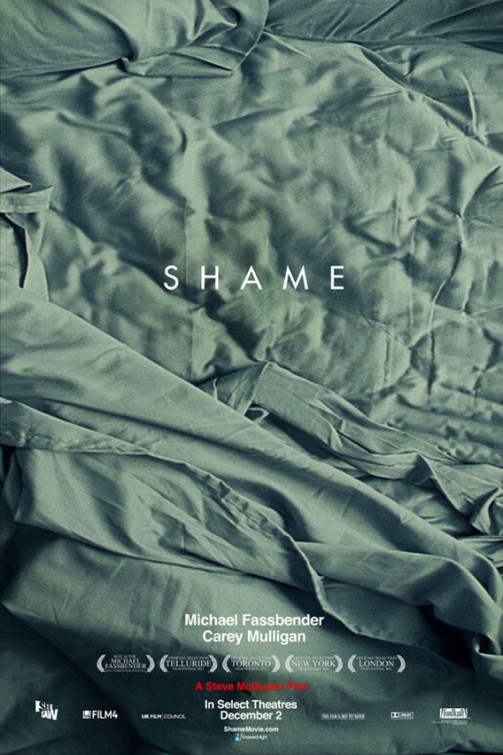
Shame (Steve McQueen)
Fucked up siblings Michael Fassbender & Carey Mulligan self-destruct in New York through sex & despair.
10 WR: Brilliant sense of ghostly city, personal demons. But too obvious. B+ (B?)
Oscar?: Frighteningly committed acting but will voters see it? It'll surely be NC-17

Miss Bala (Gerardo Naranjo)
A beauty pageant contestant falls prey to drug cartel in escalating war.
10 WR: Easy indulgent nihilism elevated by smart construction and thematic visualizations. B-
Oscar?: The things it does very well are easy to see/love (or overpraise depending on how you see it). Will almost certainly make the pre-nomination finals in Best Foreign Language Film.
P.S. Michael reviewed this one and liked it much more than I did it. 

Pina (Wim Wenders)
A performed documentary on Pina Bausch, the late legendary German choreographer.
10 WR: 3D amplifies choreography's spatial genius. Bit noncommittal: Performance? Doc? Decide! B
Oscar?: Unless you count Waltz With Bashir, Oscar's foreign committee has never nominated a documentary. But this one is very very easy to enjoy (the dancing is like heaven) and could be a novelty exception to "rule". 

Ides of March (George Clooney)
Clooney adapts the stage play about dirty politics and betrayals of spirit, body, and ideals
10 WR: Involving and handsome but few great scenes. Weird "scene-change" pacing. B
Oscar?: Seems very likely on several fronts but particularly Supporting Actor (Clooney, Giamatti or Hoffman, though?) and score (Desplat's work gets a lot of "air time" if you will.) Though Evan Rachel Wood (major role) and Marisa Tomei (minor role) are both marvelous, Supporting Actress seems less likely for a wide variety of reasons.

Quick takes. Finis! In short it's been a good run of super enjoyable or at least interesting movies lately. Other than that Abduction fluke. Your turn in the comments.


Saturday
Oct082011

NYFF: "Martha Marcy May Marlene"

Her name is Martha (Elizabeth Olsen) but we first know her as Marcy when she slips quietly out of a crowded farmhouse where women much like her sleep in huddles, like a happy litter of puppies. Her absence is quickly noted by one of the men on the farm named Watts (Brady Corbett) and Marcy hides in the forest while her once slumbering sisters and their men search for her, continually calling out "Marcy May." Once Marcy has reached a neighboring town, she makes a trembling entirely inarticulate phone call. An unidentified woman answers:

Martha, is that you?" 

Marcy Doesn't Live Here Anymore

We know instinctively that she is, though we know little else in these first few minutes of writer/director Sean Durkin's feature debut Martha Marcy May Marlene. 

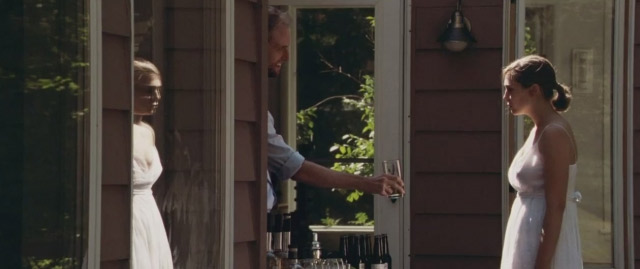
The woman on the phone is Martha's estranged sister Lucy (Sarah Paulson) who whisks the young woman away from the mountains to the even more idyllic river side landscape surrounding the far less crowded summer home Lucy shares with her husband Ted (Hugh Dancy). What's comforting to us in their recognizable domesticity, is obviously alien to Martha. The narrative is all friction between the past (Marcy) and present (Martha) and shifts between them sometimes imperceptibly and other times forcefully. The past scenes become in essence an unlocking of the puzzle of Martha's life on the farm with the father/husband figure and shepherd (John Hawkes, Winter's Bone) and his free love flock (to the movie's credit the word "cult" is never uttered). These revelations about Martha's previous life have the pesky tendency to lead the moviegoer to yet more disturbing questions which will probably not have answers.

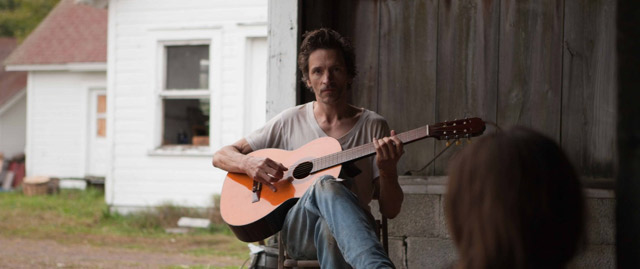
Patrick sings an entranced Marcy a song he wrote for her.

Martha... possibly hits a few of its scariest notes too obviously, but mostly it's a model of restraint and cool control. That's particularly true of Elizabeth Olsen's interiority as the title character. She's trusting that her blurry contradictory identity -- an uncomfortable mix of rigid thinking, moral confusion, and open physicality -- will be enough to sell this lost woman. The fine ensemble cast is also a boon: Hawkes brings his Winter's Bone friction of menacing stranger and filial protector and Corbett and the other cult members are a believable mix of old phantom selves fading into shadows of Patrick. In the present tense scenes, which could almost read as a satire of stories about obnovious in-laws if it had anything like a sense of humor, Paulson and Dancy sketch in a realistic background marriage that's challenged by the needy relative in the foreground. But it's the writer/director that's the movie's true star. Durkin's screenplay's rich subtext that neither Martha nor Marcy are anything like their own woman, no matter the surroundings, shines. He also makes several smart choices in the filmmaking, often eschewing the comfort of close-ups and traditional scoring, to build a quiet cumulative menace. The cinematography in particular by Jody Lee Lipes is just right with its diffuse earthy warmth as seductive blanketing for a story that's anything but.

Elizabeth Olsen and Sarah Paulson in "Martha Marcy May Marlene""What's in a name?" the doomed Juliet once asked, trying to argue their meaning of Romeo's away. But her efforts were in vain. None of us initially choose the names we're given but as we move through life, plenty of us make small adjustments, concessions, and shifts along the way to shore up our increasing ownership of self.

Before seeing Martha Marcy May Marlene, I liked its "name" a lot. Having now seen the film it's representing, the title vaults over into a thing of pure genius. Film titling is an undersung artform. You could theoretically call this movie about a somewhat nondescript girl haunted by her former life in a cult in New York's Catskills Mountains just about anything. But "Martha Marcy May Marlene" is the perfect, yet far from obvious, choice. It's a riddle, an incantation, a theme. What other name but a series of them could so accurately capture the mystery, simplicity, and loss of self, that's the haunted vacuum center of this stunning debut? A-


Previously on NYFF
The Kid With a Bike races into Kurt's hearts.
George Harrison: Living in the Material World is music to Michael's ears.
A Separation floors Nathaniel. A frontrunner for the Oscar?
The Student makes Nathaniel cram for quizzes that never come.
Carnage raises its voice at Nathaniel but doesn't quite scream.
Miss Bala wins the "must-see crown" from judge Michael.
Tahrir drops Michael right down in the titular Square.
A Dangerous Method excites Kurt... not in that way, perv!
The Loneliest Planet brushes against Nathaniel's skin.
Melancholia shows Michael the end of von Trier's world. 

Friday
Oct072011

NYFF: 'The Kid with a Bike'

Kurt here. In The Kid with a Bike, the near-immaculate latest from the Brothers Dardenne, 11-year-old Cyril (Thomas Doret) is constantly on the move, chasing any possible shred of the father (Jérémie Renier) who recently dumped him in a Belgian orphanage and sold the family's belongings (including Cyril's precious bicycle) to pursue his culinary goals. It doesn't take long for Cyril to reclaim the bike, as it makes its way back to him thanks to the efforts of Samantha (Cécile de France) a kindly stranger Cyril literally latches onto during one of many attempts to escape his current guardians. Getting his father back, however, proves much less feasible, and Cyril's aching, at-all-costs need for paternal love and acceptance is what makes this sublime movie hurt so good.

Cyril's fervent drive also provides the film with a surprisingly brisk pace, ultimately aided further by a concise running time of 87 minutes. Even when he starts spending relatively quiet weekends with Samantha (who, without any explanation other than de France's actions and expressions, eagerly steps into a motherly role), the boy is never without telling, tireless propulsion. He and Samantha eventually find his father, and after a tedious attempt to get themselves noticed at the estranged man's workplace (a fortress-like eatery and the setting for a grating game of so-close-yet-so-far-away), Cyril gets a few moments with him that just kill you. Astutely filmed in one uninterrupted take, there's a kitchen scene that sees Cyril insist upon giving his dad a pass for every wrongdoing, and insist even more upon connecting with him in any possible way. He practically forces his dad to jot down a cellphone number, then squeezes in to help stir sauce while the father wants nothing but to get Cyril out of his way.

As they have surely been known to do, Jean-Pierre and Luc Dardenne exhibit an extraordinary grasp of youthful mindsets and sensations, from the thrill of popping a wheelie to the willful romanticizing of adults. The extent of the realism with which they are able to express Cyril's feelings is such that, at one very alarming point, I was brought directly back to a darker stage of my adolescence, specifically a Friday night when I knocked my father halfway down the stairs so I could leave the house. The confused rage of a child is not something easily articulated, but the Dardennes make it look easy. They also bring a youthful, crayon-box palette to the look of the film, effortlessly joining blue walls and yellow hallways and brightly-colored buses and parks with costume design that's defined by single-hued T-shirts (Cyril's red top is practically the movie's emblem). In the subtlest of ways, it's the cinematic equivalent of color-blocking, and it's just effective enough to be thematically supportive without force or pretense.

Amid being repeatedly shunned by his father, and systematically let down by another male authority figure – a local gang leader – whose surrogate approval he blindly seeks to the point of criminal acts, Cyril clings to his bicycle, a symbol of his parental and familial ideals that he must repeatedly retrieve from thieves (yes, Bicycle Thieves is evoked, but surely not for reasons so literal). Much of the story's emotional truth is made to work because of the stellar central performance from first-time actor Doret, who, along with Brad Pitt, Michael Shannon and Michael Fassbender, will likely make my personal Best Actor shortlist. With young skin and old eyes, this ridiculously naturalistic kid puts forth the ideal blend of the unexperienced and the weary, and he shows about as much consciousness of the camera's gaze as Cyril's father does of his son's existence. I won't tell you that The Kid with a Bike rides to a place of improvised-family acceptance, as that would grossly undersell it as something run of the mill. Instead, I'll say it ends on a note as perfect as Cyril could hope for, with an almost magical reassurance that the love he stumbled upon, and not the love he hopelessly pursued, is indeed his salvation.

Tuesday
Oct042011

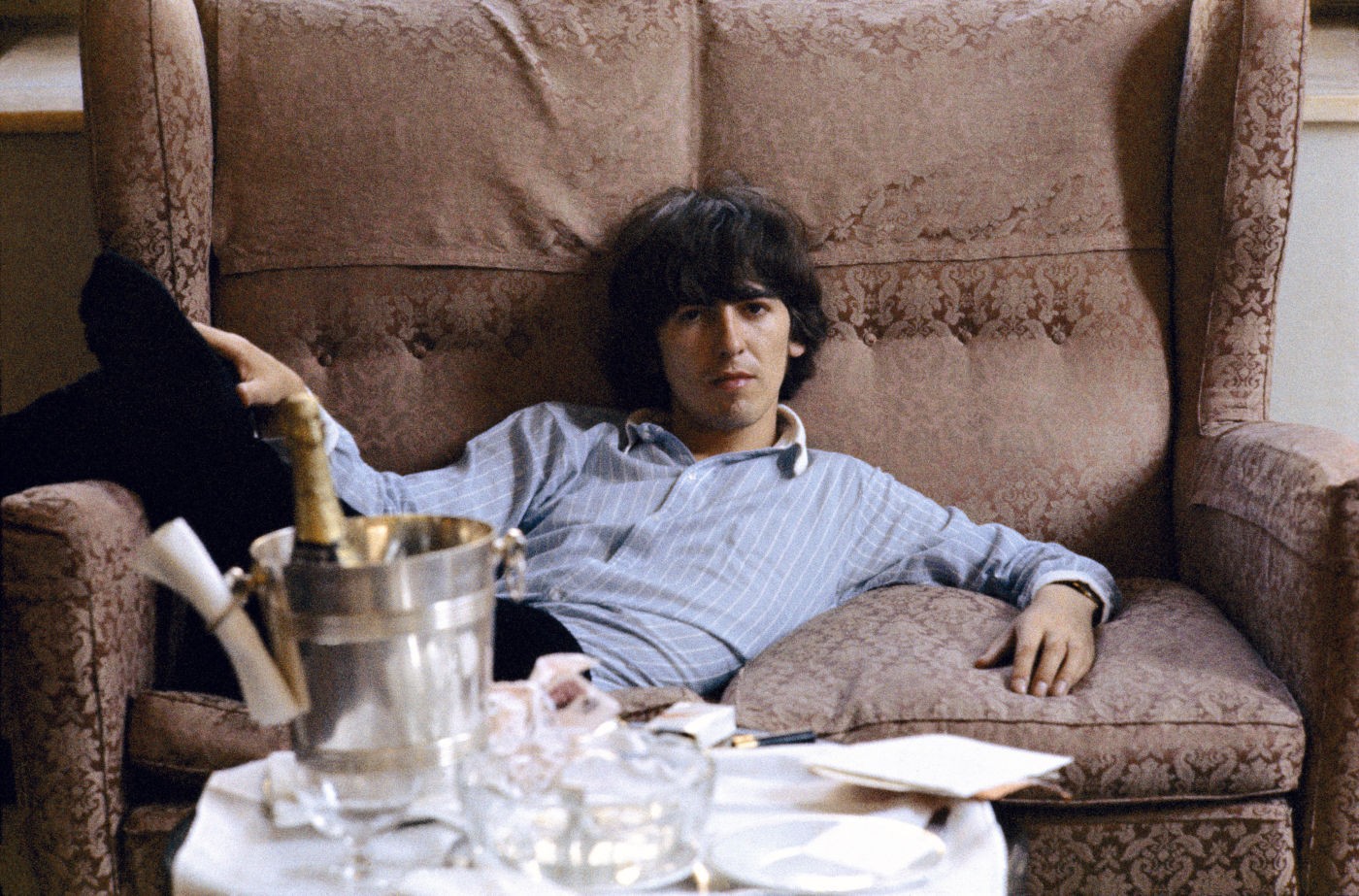
NYFF: "George Harrison: Living in the Material World" 

Serious Film's Michael Cusumano here to report on what will surely go down as one of my favorite titles of the New York Film Festival and one of the most entertaining movies of 2011.

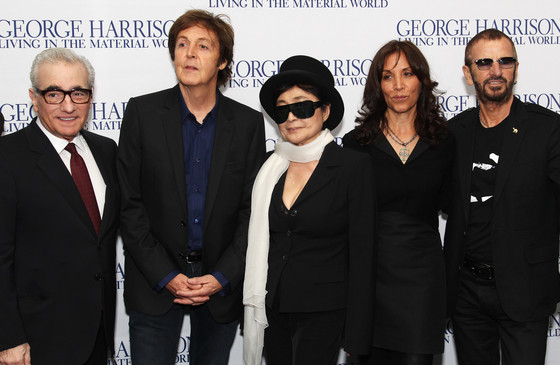
Of the many pleasures of Martin Scorsese’s new documentary George Harrison: Living in the Material World the most amazing must be that it managed to make several Beatles songs feel new again. For the first hour of the documentary we watch as the young and intense Harrison takes a backseat to brilliance and charisma of Lennon/McCartney. When the unspeakably beautiful strains of Harrison’s Something finally break out over the theater speakers, it isn't just the power of the music that gets to you but the thrill of watching a world class talent explode with his full potential. It's an emotionally overwhelming moment, far from the only one in Scorsese’s second great rock documentary after his equally brilliant Bob Dylan masterpiece No Direction Home. 

As with that documentary, Marty skips right past the usual biopic beats and aims for the heart of the man. In the film's opening moments we cut from the early seeds of Beatlemania straight to the band’s final, tired dissolution under a mountain of legal documents. It’s Marty’s way of alerting us that this will not be the usual Ed Sullivan and screaming teeny bopper montage we’ve all seen a thousand times. Rather, this is the story of one of the 20th century’s seminal figures and how achieving unimaginable success at an early age led him to search for a fulfillment fame couldn’t bring.

Five years in the making, Material World automatically qualifies as essential viewing for anyone who cares about rock history or, for that matter, documentary filmmaking. In addition to new interviews with all the key players in the story including surviving Beatles Paul and Ringo, Marty’s research team has done an heroic job tracing down footage that hasn’t seen the light of the day for decades, including moving, unfiltered looks at the tension of the band near its end. 

Harrison was a driving force not just in music, but in charity, the British film industry, and, with his well-publicized embrace of Eastern cultures, a major, radical influence on spirituality in the western world. Dealing with a man at the heart of the entertainment industry who nevertheless hungered for spiritual truth, Scorsese clearly has a strong affinity for his subject. And for all the cultural significance covered, the success of this film comes down to Scorsese’s earnest attempt to map the soul of his fellow artist. 

@ London Premiere: Scorsese w/ Paul McCartney, Yoko Ono, Olivia Harrison, Ringo Starr

Previously on NYFF
A Separation floors Nathaniel. A frontrunner for the Oscar?
Carnage raises its voice at Nathaniel but doesn't quite scream.
Miss Bala wins the "must-see crown" from judge Michael.
Tahrir drops Michael right down in the titular Square.
A Dangerous Method excites Kurt... not in that way, perv!
The Loneliest Planet brushes against Nathaniel's skin.
Melancholia shows Michael the end of von Trier's world. 

Saturday
Oct012011

NYFF: "The Student" and "A Separation"

In an effort to not fall behind on NYFF coverage, here's a double feature from Argentina (possible Oscar submission) and Iran (Oscar submission!) .

THE STUDENT
Have you ever longed to learn every detail of the chaotic, multi-partied, backroom deal heavy politics of Argentina through the metaphorical microcosm of elections at a Buenos Aires university? If you answered "yes" than Santiago Mitre's The Student is the movie for you! If you answered "huh, what?" than I should quickly add that I'm not entirely sure that that's what The Student is on about. The movie's continual barrage of name-and acronym heavy information, both in dialogue and in dry omniscient narration, and its crowded character map of continually changing alliances and sudden betrayals suggests to me that politically aware Argentinians would understand and revel in its deeper implications more clearly than I possibly could.

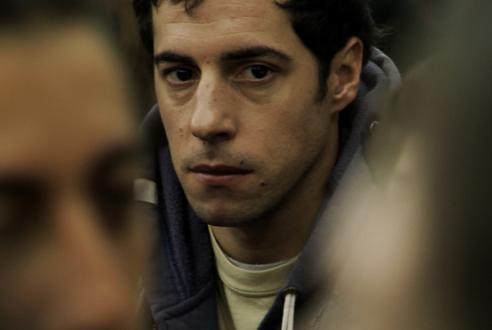
As it is I was, like the titular character Roque (Esteban Lamothe), initially only fascinated by this vivid new world opening up all around me without ever quite understanding it. One terrific shot in the movie looks at the back of Roque's head, more specifically his ear, as he drinks up a ton of dizzying new knowledge, with more focus and determination than he ever uses while snorting up a line of coke or screwing his latest conquest. Unlike Roque however, who reveals hidden political aptitude that dwarfs but doesn't quite mask his obvious limitations, the lessons never stuck. Part of The Student's point is how quickly the various rugs will always be pulled out from under you in the dirty game of politics, but the ever shifting landscape eventually frustrates with its perpetual loop of climaxes that become anti-climactic, given that they merely reset the crowded board of players rather than ending the game. The Student's 124 running time becomes an endurance test, a Sisyphian lecture for a quiz that will never come.  B- (C+?)

A SEPARATION
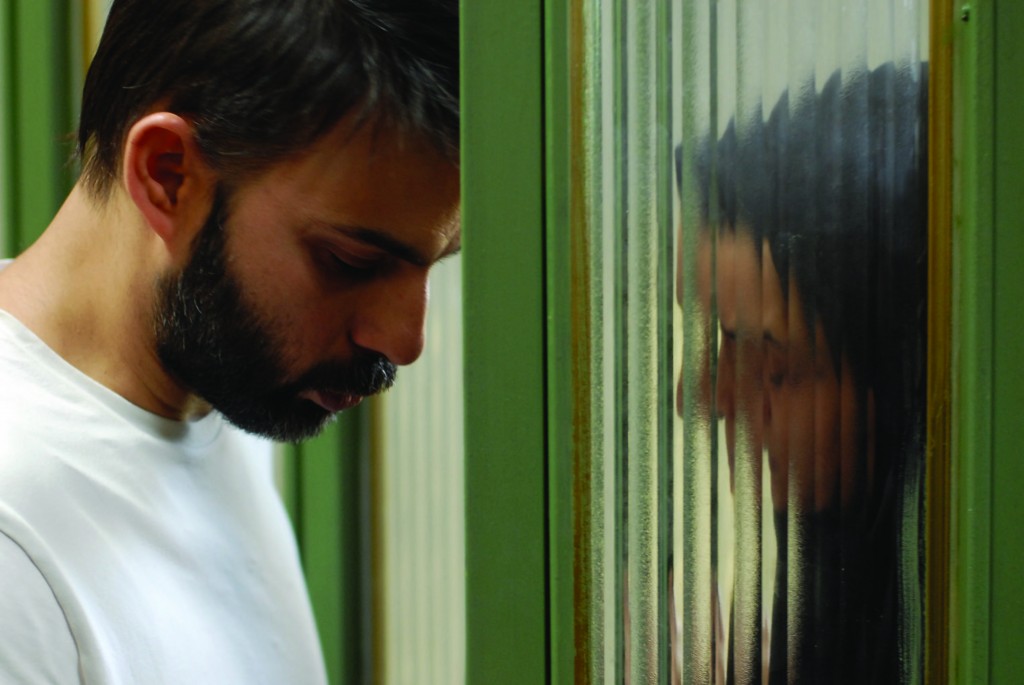
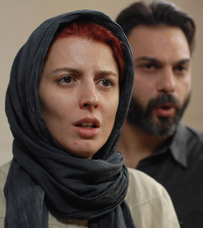
Our next film, which is nearly the exact same length, achieves quite the opposite effect, growing more fascinating with each new scene and abundant detail. Asghar Farhadi's A Separation initially appears to be a well made but standard marital drama, as Naader (Peyman Moaadi) and Simin (Leila Hatami) spar in front of a judge over custody of their child Termeh (Sarina Farhadi). Simin wants to move to America where her daughter will have more opportunity (though the family seems well off in Iran) and Naader, almost too-willing to let his wife go, is unwilling to part with his daughter. His mind is elsewhere, perpetually worrying about his ailing father who has Alzheimers.

Naader has issues with Razieh (Sareh Bayat), his cleaning woman

The separation, though semi-amicable (no one is losing their temper), sets off a chain of unfortunate events. Through an economically conveyed but richly textured series of plot points, Naader has an altercation with the hired help (a poor couple, also with a troubled marriage) who are supposed to clean house and care for his father in Simin's absence. Soon everyone is in court again albeit for entirely different reasons. What starts as a well acted and sensitively filmed portrait of an unraveling family quickly expands into a vivid exciting portrait of families on precarious emotional ledges. In what can only be described as an embarrassment of riches, A Separation does all of this while also handily becoming the most exciting courtroom procedural movie in many a year. All the hard facts become soft and twistable when filtered through multiple emotional upheavals, religious beliefs, well meaning lies and day-to-day domestic issues.

Simin (Leila Hatami) and Naader (Peyman Moaadi)American audiences accustomed to casually and wrongly assuming a monolithic Middle East culture will find the movie eye-opening and instantly relatable; the tension between economic classes, as well as the secular and religious will feel all too familiar. Best of all, though, A Separation side-steps the easy and common cinematic path of demonizing or idealizing any of its warring characters. Every time you've come to a conclusion about a character or come close to hating or blaming them, writer/director Farhadi (of About Elly fame) opens a new door or window into their soul and circumstances. This prismatically sympathetic and insightful film is one of the best of the year. A 

FWIW: Sony Pictures Classics will release A Separation in US theaters on the dread date of 12/30/11 making it technically eligible for every Oscar category.

Previously on NYFF
Carnage raises its voice at Nathaniel but doesn't quite scream at him.
Miss Bala wins the "must-see crown" from judge Michael.
Tahrir drops Michael right down in the titular Square.
A Dangerous Method excites Kurt... not in that way, perv!
The Loneliest Planet brushes against Nathaniel's skin.
Melancholia shows Michael the end of von Trier's world.