Oscar History
Film Bitch History
Welcome

The Film Experience™ was created by Nathaniel R. All material herein is written by our team. (This site is not for profit but for an expression of love for cinema & adjacent artforms.)

Follow TFE on Substackd

Powered by Squarespace
DON'T MISS THIS

Oscar Volley It's Back
Oscar Charts Updated! 

COMMENTS
What'cha Looking For?
Subscribe

Entries in sports (91)

Saturday
Sep242011

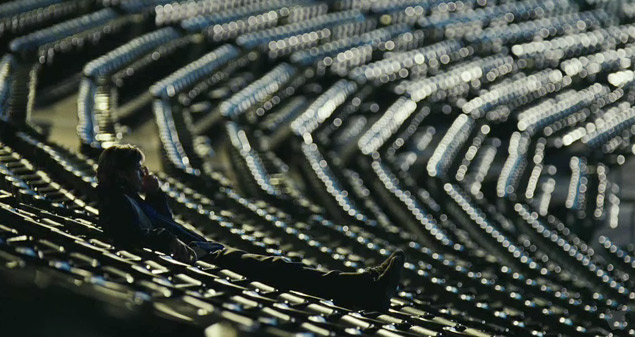
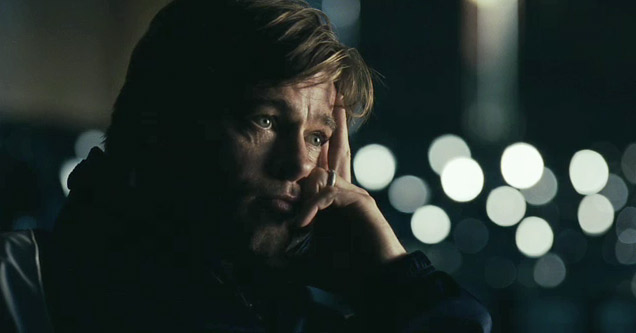
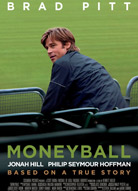
Review: "Moneyball"

Moneyball is an instant contradiction, a fine humanistic film championing an innovative but dehumanizing method of team-building, reducing all star athletes to statistical equations. The film has two stories to tell, that of a middle-aged man finally making his mark on the game he was supposed to rule in his youth, and the reinvention of baseball management to achieve a more equitable playing field with or without mega-funds.

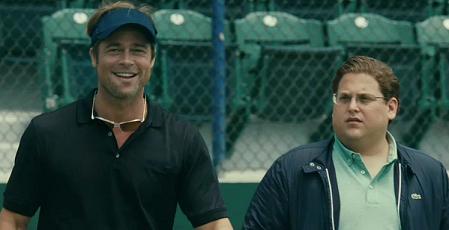
The story begins after a disheartening loss for the Oakland Athletics. The humiliation is compounded by the loss of three star players who the A's don't have sufficient money to replace. General Manager Billy Beane (Brad Pitt) butts heads with owners trying to get more money and with his own management staff who are entirely resistant to innovative thinking. Enter young economics / statistics master Peter Brand (Jonah Hill moving up to the majors?) who frees up Billy's mind with his theories on why so many players are over and undervalued. They begin to make controversial and provocative changes which mystify or anger the baseball powers that be  including their own team's manager Art (well played by Philip Seymour Hoffman).

There's a smart visual well into Moneyball's first act in which huge banners of the A's three lost stars are dropped from their places of honor crumpling as they hit the ground like the deflating egos of management. Billy takes the leap of faith with Peter and they rebuild with new players, a team of misfit toys, who are all undervalued (or not valued at all). Shortly afterwards, when we see the stadium again, there is only one banner trumpeting one of the League's oldest fan-beloved players David Justice (Stephen Bishop) whose glory days are far behind him. 

Moneyball's solid screenplay (by Oscar winners Aaron Sorkin and Steven Zaillian) has a good joke at the expense of metaphors but I can't resist this one. For all of Moneyball's strengths, from a solid cast with vivid cameos (Reed Diamond from Dollhouse is superb in a one-scene face/off with Brad Pitt) to able and sharp direction (Bennett Miller of Capote fame) and editing (which skims veritable mountains of statistical information, old footage, and emotional backstory) it really all comes down to one star banner: Brad Pitt unfurled. 

I've been in this game a long time."

Yes, you have Brad Pitt, yes you have.

In his two decades of stardom, Pitt's best work has generally happened within three types: weirdos he attacked with gleeful creative gusto (Tyler Durden, Jeffrey Goines, Chad Feldheimer), strutting men that basked in their own golden light (J.D., Rusty and Paul McLean), and family men with wounded machismo (Mr O' Brien and Detective Mills);  In Billy Beane, all of Pitt's strengths coalesce as if he'd been in training for this one. He's loosely idiosyncratic and funny (that goofy business after a "good talk" with the humorless Art is just wonderfully endearing detail), he harnesses his potent movie star charisma with weary grace playing a man who, unlike himself, didn't live up to his golden boy promise, and in scene after scene but particularly when visiting with his teenage daughter, he lets his worried humanity show; he feels like a failure and this daring move is his last shot at glory.

Brad Pitt's shiny star turn is so good, in fact, that it neatly blinds you to the film's minor flaws. No one, including the man himself, is reinventing the wheel here and for all the star light that Pitt gives off, the film doesn't use any of it to fill in poorly lit corners. It raises but never addresses troubling side issues like what to do with the understandable revulsion that greets the dehumanization of players (exarcebated by so few of the players having distinct personalities) and it has a strange inability to flesh out the important side story of Art's insistence on managing the team in opposition to Billy's plans. The scene wherein Art finally capitulates to a different way of thinking would be a superb bit of economic storytelling in most films but here, given the underlit subplot, it feels like not enough as a wrap-up.

Billy continually worries that all of his accomplishments will be dismissed if he loses the final game of the season. The film needn't worry about the same thing. The final game here is a beautifully elongated nearly sports-free quietitude while Billy merely contemplates his options and a coda that works as a reprise of one of the sweetest earlier scenes with tenderness and even gently needling humor as the credits begin to roll. Late in the film we're told "you can't help but romanticize baseball" and it rang so true, even to me! I don't know the first thing about baseball, nor do I care to, but I was nodding my head like some dreamer in the bleachers waiting to catch that fly ball.  B+ 


Oscar Notes: It's rare when late August / early September hype survives intact the following February but (for now) it's looking like this may well be the golden year for Hollywood's golden god. In the past I've stated that Brad would never win until he was in his 60s (they make the adonises wait) but I'll quite happily be proven wrong since I've been on Brad's team for twenty years. Beyond Pitt's likely nomination (a third... and easily his most deserving since Oscar's idea of his "best" work is suspect.) I think you can safely bet on Moneyball's statistical scrappiness factoring into several categories barring those generally reserved for eye candy films. In short: we need to update our prediction charts

Friday
Sep092011

Review: "Warrior"

WARRIOR, a sure to be crowd-pleaser features two down-and-out bruiser brothers (Joel Edgerton and Tom Hardy) and their alcoholic father (Nick Nolte) all preparing for an Ultimate Fighting challenge with a $5 miilion purse. It's exactly the kind of movie you're expecting it to be. As the film begins there's Springsteen-like (Springsteen-lite?) warbling on the soundtrack and the palette's chief color, blueish gray, is smeared all over the screen. This is all handy shorthand for weary/bruised manly-man working class drama. Warrior wants you to feel as comfortable in your theater seat as you might on your couch as it works, sweats and trains towards its predictable but appropriately rousing conclusion. Which is not to say that Warrior isn't any good… just that it's both confident and content with its big meaty grip on the super familiar genre it belongs to and adores. 


The first rule of Fight Club is: do not talk about Fight Club. Tommy (Hardy) is the only Conlon family member who obeys...


(pssst. I do mention Oscar once in connection with Nick Nolte, but I think people are getting carried away on that front.)
Friday
Sep092011

TIFF: Biopic Boys will be Boys

Paolo here in Toronto. My first TIFF movies are about real-life men who customarily look nothing like the attractive actors who play them on the big screen.

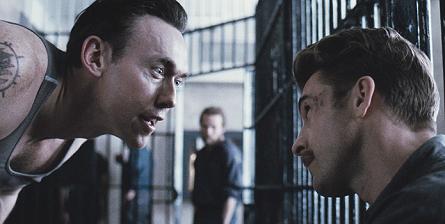
Edwin Boyd is a step in the right direction for Canadian cinema, since making a heist film like this is both relatively cheap and lucrative. It's about the WWII veteran turned 1950's Torontonian bank robber of the same name played by Scott Speedman. Speedman puts an athletic sensitivity to the role, whether Edwin is inside a singing booth or jumping over the counter to get the loot he wouldn't have gotten in his former job as a kind-hearted bus driver. The story covers him facing and indulging temptations, his addiction to the wrong kind of attention as well as to robbing banks, which he and his gang continue to do despite multiple arrests. There are clichés here, the biggest one is the golden-hearted criminal who also likes to get drunk and play music while celebrating his jackpots. I will give credit to the film's capability on whetting the audience's appetite on period specificities. It's also a treat to watch its grey and white cinematography, capturing the rough surfaces of the city's architecture or his snowy escape from authorities. The supporting cast includes Kevin Durand as Edwin's right hand man and Brian Cox as the protagonist's father.

Also took in the Brad Pitt vehicle Moneyball which is about the baseball team Oakland Athletics in their 2002 season.

The film's first half is has a problematically distinct voice from its second, making it difficult to forget that two writers are responsible for its script. The first, which I'll call the Steve Zaillian half, has Pitt portraying the A's general manager Billy Beane. The script makes him have the same conversation with other people, telling his financier, other GM's, his precocious daughter, her mother (Robin Wright) and her mother's boyfriend (Spike Jonze) that he's fine even if both parties know, through local and national news, that his team is having board room and locker room problems. The A's are having trouble finding 'stars' like Jason Giambi who have left the team. Fortunately, Billy meets Peter Brand (Jonah Hill), a fictionalized version of Paul de Podesta who introduces the idea that instead of buying 'stars,' the team has to 'buy runs.' It's a method that, to someone like me who knows nothing about sports, sounds like cheating.

The underlying tension in many scenes in the film's first half is in anticipating Billy to squirm or get angry under all of these people's microscopes. This half also allows its audience to think about what might have happened if the person originally slated to direct this movie, Steven Soderbergh, had done so. Hopefully I'm not the only person who can see Soderbergh's skills in satire, and he would have highlighted these characters' callousness and childlike stubbornness. 

The second half, when the A's fate turns around, belongs to a writer with a more distinct voice, brainy frat boy Aaron Sorkin. Just like Charlie Wilson's War or Studio 60, this movie has its share of Abbott and Costello-like telephone or office conversations. He also tends to romanticize whatever he's writing about, which is baseball this time around. He even makes Peter, a generally scientifically minded character in the first half, seem emotional later on. But admittedly it still works better here than the affected humanity in The Social Network. Director Bennett Miller, with the help of his male dominated cast (including the surprisingly capable Hill) also negotiates and sutures these two voices well.


Wednesday
Aug032011

The Link of Warrior 

<-- Coffee Table Book Alert!
Photographer Tim Palen has immortalized the bodies of Tom Hardy and Joel Edgerton for a coffee table book called "The Men of Warrior" that's out on August 9th (available for pre-sale now here or here). The book as we imagine it -- all we've seen is this cover -- is a smart marketing movie for the Warrior film in which the two fine actors play two sparring brothers. Obviously people will see this for the muscle abuse alone, yes? That's why people go to boxing matches, right? I don't know. I'd never go to one -- too bloody/sadistic for me -- but I'd happily look at photos. The book has a foreward by Tom Hardy and (presumably) a ton of pictures of him.

Links in the Ring
Kenneth in the (212) Have you heard about this Faye Dunaway / NYC apartment eviction story.
My New Plaid Pants attends the Wet Hot American Summer anniversary party. We were just celebratin' that.
GLAAD the Gay and Lesbian Alliance Against Defamation ranks the TV networks on their LGBT inclusive. Top marks for CW and... ABC Family? How weird. who'da thunk it? Not that you can always trust GLAAD. They've made some weird suspect calls over the years. Showtime has a smidgeon more gay representation than HBO among premium channels.
Film Dr has some questions for those of you who have seen Cowboys and Aliens
aqui tinha a truth
Empire Steve McQueen's Shame starring Michael Fassbender has a UK release date (Jan 13th) still no word on the American release after its TIFF bow. 

Alt Screen no way! Lost silent Alfred Hitchcock film The White Shadow (1923) discovered/restored. Sort of.
The Critical Condition the ultimate pop song tournament continues into the second round. I like the second round less because I'm sure this is where all of my favorites start losing. Like "Edge of Seventeen" being bested by "Livin' on a Prayer" (thus far). That is so unright.
My New Plaid Pants which is hotter: Dominic Cooper or a Boston Terrier?  

Tuesday
Jul262011

Happy Birthday Sandra Bullock, I guess...

Paolo here.

Back in 2009 I stumbled into what looked like Bullock's CAA page, and seeing a certain factoid, I posted this question on my Facebook. "What do Stanley Kubrick and Sandra Bullock have in common?" "Well neither of them have an Oscar," a friend of mine said. He spoke too soon. [Correction: Kubrick has an Oscar but not for directing. Shake fist]

Then it was time to watch the live feed of the Oscars on campus. The fedora-wearing cinema studies students were passing around this hipster German beer and I took a sip and put it down. I swore that if Bullock won the Oscar, I'd throw my beer at the screen - I didn't, no one should. The sound of angry young men and some women collectively screaming against her victory is one of the ten greatest experiences I've ever had in a movie theatre. How the powers that be hustled such a seemingly mediocre film into a Best Picture nod and a Best Actress win was like watching steel beams bend by themselves.

Anyway, to commemorate Bullock's birthday, I watched neither the movies that I remember her being good at (A Time to Kill, Crash) nor the ones I saw in high school nor college that did not age well (28 Days) or even the fun ones (Practical Magic). Instead I saw John Lee Hancock's The Blind Side, the movie that won her the said Oscar and made her, on paper, better than Kubrick. To be honest, I had two tall glasses of beer, ruining some brain cells and I was afraid that this film would do more damage.

Click to read more ...