Oscar History
Film Bitch History
Welcome

The Film Experience™ was created by Nathaniel R. All material herein is written by our team. (This site is not for profit but for an expression of love for cinema & adjacent artforms.)

Follow TFE on Substackd

Powered by Squarespace
DON'T MISS THIS
COMMENTS


What'cha Looking For?
Subscribe

Entries in Best Actress (932)

Friday
Jul082016

Halfway Mark: Best Actressing of 2016 (Thus Far)

Previously at the Halfway Mark: 
• 5 Favorite Pictures and imaginary Oscar scenario
• 11 Costume Design Honors from couture to the puritanical with swimwear on the side
• Cinematography & Production Design Sunset Song, etc...
• Heroes & Villains from Deadpool to Shere Khan
• 23 Male Actor Honorees in 5 categories

Cue fireworks. It's the grand finale. Our brief Halfway Mark Review honoring the best of the 50+ movies we've seen that have been released between January 1st and June 30th, is now at its end. But don't worry. The listing impulse fully never goes away and there's more excitement soon as we'll start updating the Oscar charts tomorrow. Naturally we're ending with BEST ACTRESS if five categories -- the same categories we previously did for the men.

If I had a ballot (hey, I do... albeit not an AMPAS ballot) here's what I'd honor from the year thus far -- January through June releases only though I've seen some July & August titles. [Disclaimer: The most noticeably actress-led film I haven't yet seen this year is The Meddler so please dont read anything into the absence of Susan Sarandon.]

Best Actress in a Leading Role

  • Sally Field as "Doris" in Hello My Name is Doris
    Doris is a CHARACTER but Sally never fails to humanize her written eccentricities making sure that she's the endearing source of the laughter rather than its target.  
  • Tilda Swinton as "Marianne Lane" in A Bigger Splash
    The "vocal rest" was her idea -- imagine an actor purposefully losing all their lines! -- and the result is you see Tilda's face and body alone capturing and reflecting the drama and auteurist impulses
  • Anya Taylor-Joy as "Thomasin" in The VVitch
    That angelic face is sensually attentive and her behavior innocent but mischievious. So many possible Masters (God, Lucifer, Herself, General Teen Hormones, and Restlessness)
  • Rachel Weisz as "Short Sighted Woman" The Lobster
    What a tricky tone to master, but she's in control. Her voiceover is beautifully at odds with her meekly submissive than overtly romantic screen self
  • Mary Elizabeth Winstead as "Michelle" in 10 Cloverfield Lane
    Sells shifting (dis)belief in this strange new reality while doing right by primal horror. Nails the only real in-script details about this character -- whip-smart instincts and a "Flight or Flight" response

Choices in 4 more categories after the jump...

Click to read more ...

Thursday
Jun302016

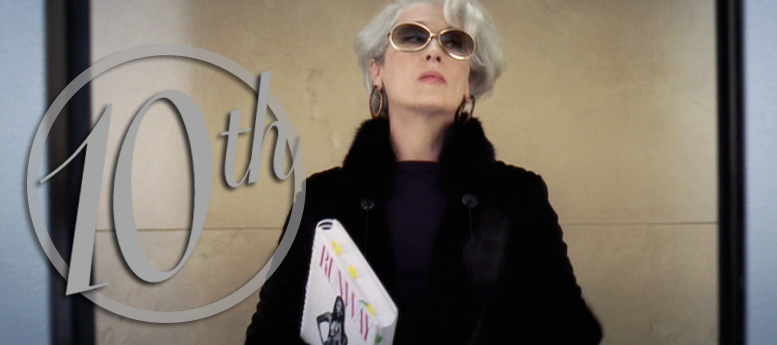
Gird Your Loins. The Devil Wears Prada is 10! 

Gird your loins.

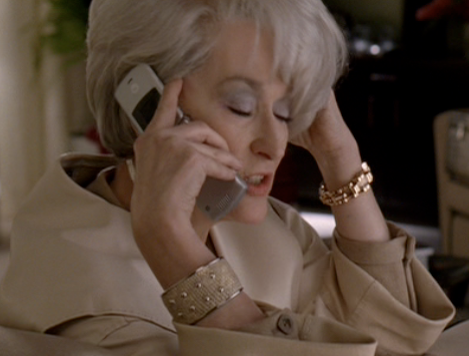
We really had meant to do The Devil Wears Prada anniversary up big but the month got away from us. Today, 10 years ago, The Devil Wears Prada opened in theaters as counterprogramming and blew up, becoming one of 2006's biggest hits and endearing La Streep to a whole new generation of fans. Sadly she didn't win her third Oscar then (it would have solved so many problems later on. Plus, more importantly, she deserved it!). Because time slipped away from us, and tales of our incompetence do not interest her, we present this classic from the old site on this special occasion.

Ten Best Miranda Priestley Line Readings

My flight has been cancelled... "

10. How incredulous and put-out she sounds without even raising her voice. The way she says "school" when referencing her kids recital which she's desperate to attend is giggle worthy, too. So childish. Translation 'How could such a thing happen to the center of the universe... me?'

There you are Emily. How many times do I have to scream your name?"

09. 'Actually my name is Andrea.' Oh shut it Hathaway. She doesn't care. She will call you what she likes and you'll come running...

Click to read more ...

Tuesday
Jun282016

Olivia @ 100: Light in the Piazza

For Olivia de Havilland's Centennial (July 1st) we're hitting classics and curios in her career. Here's Chris Feil on a forgotten film that became a new classic musical...

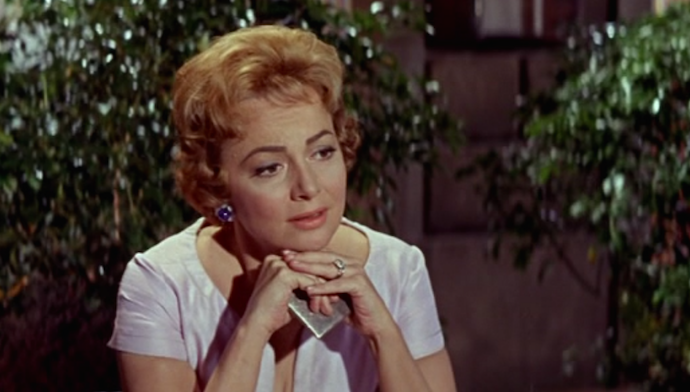
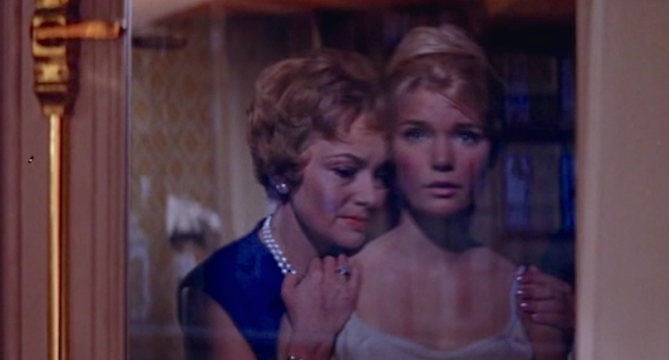
I came to Olivia de Havilland's work in Light in the Piazza thanks to a (still enduring) obsession with the Adam Guettel musical, both adapted from Elizabeth Spencer's novella. While it's not surprising that the film hasn't endured (it lacks the stage version's soaring emotional heights), de Havilland's performance deserves a better place in her legacy. Even with a youthful love story as its center and gorgeous Florence as backdrop, you can't take your eyes off of the concerned mother - and not just because she spends the entire film drenched in custom Christian Dior!

As Meg Johnson, de Havilland is spending a holiday with her young daughter Clara, who falls in love with a charming Italian boy. The reason for her overbearing concern is the secret of Clara's developmental disability that freezes her to a childlike disposition - something the musical uses as an Act Two reveal that the film never hides. By addressing this conflict early on we understand Meg from the outset, especially thanks to the actress's relatability. De Havilland's real prowess in the role is her deep emotional access and intelligence; she keeps the film from stooping to the cheap sentimentality that's all too common in films about disability.

Her Meg is not simply a foil to Clara's love story. De Havilland is telling her own fading romance with her husband, projecting the aches and heartbreaks of their lifetime together in a very specific struggle of weathered marriage. Her dissent against her husband in regards to Clara's care could cause the end of her marriage or may be its only hope, but she plays it solely as selfless motherly affection. Meg's final "I did the right thing" would be hokey final note in the hands of a less soulful actress, de Havilland makes it a hard-won personal triumph with her pure connection to character.

Victoria Clark may have taken the character to glorious Tony winning vocal heights on stage, but this performance is emotionally transformative in its own way. The film may have been forgotten in the broader de Havilland filmography, but the star is in top form and as accessible as ever.

Previously: The Heiress (1949), The Dark Mirror (1946), The Adventures of Robin Hood (1938) and It's Love I'm After (1937).

Monday
Jun272016

Emmy FYC: The Actresses of "Penny Dreadful"

Our Emmy FYC series concludes with Nathaniel's final plea for Penny Dreadful...

When Penny Dreadful aired its surprise series, not season, finale a week ago, the event felt as dark to fans as Vanessa Ive's increasingly fatalistic worldview. In its 3 short seasons the series grew quickly from a gimmicky concept -- all your favorite monster myths thrown together! --  with rich visual panache (Season 1) to a complex, increasingly focused, and confidently disturbing drama (Season 2) to a rushed and scattershot but even more thematically daring and superbly acted grande finale (Season 3). By the Season 2 premiere it had become abundantly clear that the blood-pumping heart of this gothic universe, belonged to its haunted, dangerous, three-dimensional women...

Click to read more ...

Friday
Jun242016

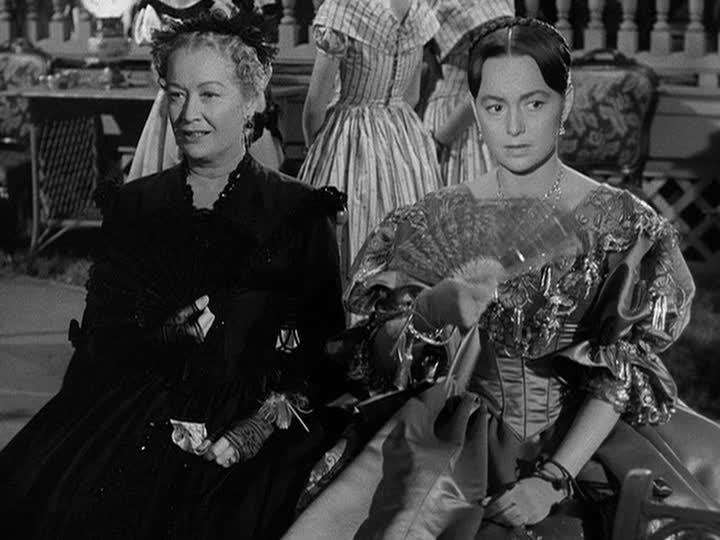
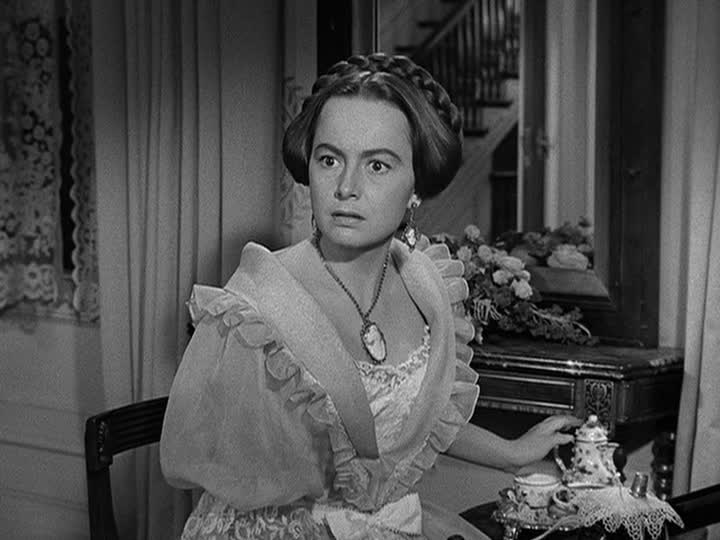
Olivia @ 100: The Heiress

We're counting down to Olivia de Havilland's historic 100th birthday (July 1st!). Team Experience will be looking at highlights and curiosities from her career. Here's Tim...

Olivia de Havilland is more than a living link to the Golden Age of Hollywood, more than a gorgeous movie star, more than a two-time Oscar winner. She's one of the most significant figures in the history of the American film industry: the woman who broke the back of the studio contract system when she successfully sued Warner Bros. for career independence in 1943. As Hollywood's first independent movie star since the silent era, de Havilland was suddenly in a position to make all of her own creative decisions, leading to a string of challenging dramatic roles that didn't simply trade on her good looks and holy innocent persona.

Both of de Havilland's Oscar wins came about thanks to this period of chasing her own projects, and the second of these performances, in 1949's The Heiress, is a particularly fine example of the movie star as Serious Actress. Based on a play adapted from a Henry James novel, The Heiress tells a straightforward enough melodrama: in 1840s New York, a woman with an annual income of $10,000 from her mother's will and another $30,000 to come when her father passes. A painfully shy, relatively homely women crawling up in years, she falls for the first man who pays her any attention, and he of course turns out to be a craven gold-digger. When her father threatens her with disinheritance the cad leaves, giving her plenty of years to grow good and bitter.

What enlivens this material is, in large part, the exemplary casting of the four main characters: de Havilland as the naïve heiress, Ralph Richardson as her father, Montgomery Clift as her shiftless lover, and Miriam Hopkins as her spinster aunt, unhelpfully projecting her own romantic visions onto the young lady. That's a lot of acting power, and having such great scene partners helped to raise de Havilland's own game, allowing her to have more complicated, and much darker, reactions that most of what she'd been able to achieve in the years prior to that.

She's great at playing a wallflower, in the second film in two years (following The Snake Pit) where she de-glammed herself for Art and Oscars. De Havilland can only look so ugly, even with the hair and make-up department raising her hairline almost to the top of her head, but the actress sells herself as a plain, awkward frump by constantly shrinking herself inwards, hunching down, delivering all of her lines a little bit too quietly and with nervous pauses. But she's even better in the last third of the movie, when she's playing the cold fury of a scorned romantic: there's a deep revulsion burned into her eyes and voice, giving the material its necessarily outraged finale. Without her fury, The Heiress is a handsome soap opera; with her, it becomes a dark tragedy.

For a performer who'll always forever be linked with the fairytale saint Melanie from Gone with the Wind, the haggard look on de Havilland's face and the raw pain in her voice are uniquely shocking and potent. It's as self-effacing as any star turn in the 1940s, and it's an achievement that could only come about in the brave new era of self-directed acting careers that de Havilland herself helped to create.

Previously: The Dark Mirror (1946), The Adventures of Robin Hood (1938) and It's Love I'm After (1937)