Oscar History
Film Bitch History
Welcome

The Film Experience™ was created by Nathaniel R. All material herein is written by our team. (This site is not for profit but for an expression of love for cinema & adjacent artforms.)

Follow TFE on Substackd

Powered by Squarespace
DON'T MISS THIS
COMMENTS


What'cha Looking For?
Subscribe

Entries in Best Cinematography (70)

Saturday
Apr182020

April Foolish Predix Pt 2: Visuals & Sound

Hello brave readers willing to fantasize about the 93rd annual Academy Awards while the bulk of the internet (but not us!) is convinced they won't exist! We've previously covered potential options for Best Animated Feature so now let's talk all the craft categories before we get to the 'big eight' (Screenplays, Director, Acting, and Picture). It's a wild wild world out there in terms of possibility. We only know:

a) which movies are "definitely*" still planning to open this year
b) the kinds of things Oscar tends to like in a normal year
c) a vague idea and plentiful hunches about which movies are closest to being finished in post-production and will risk opening. 

So please take all of these predictions in the way they are intended: a bit of fantasy escapism based on past punditry experience mixed with vague ideas about what might happen in the future of this tumultuous year. 
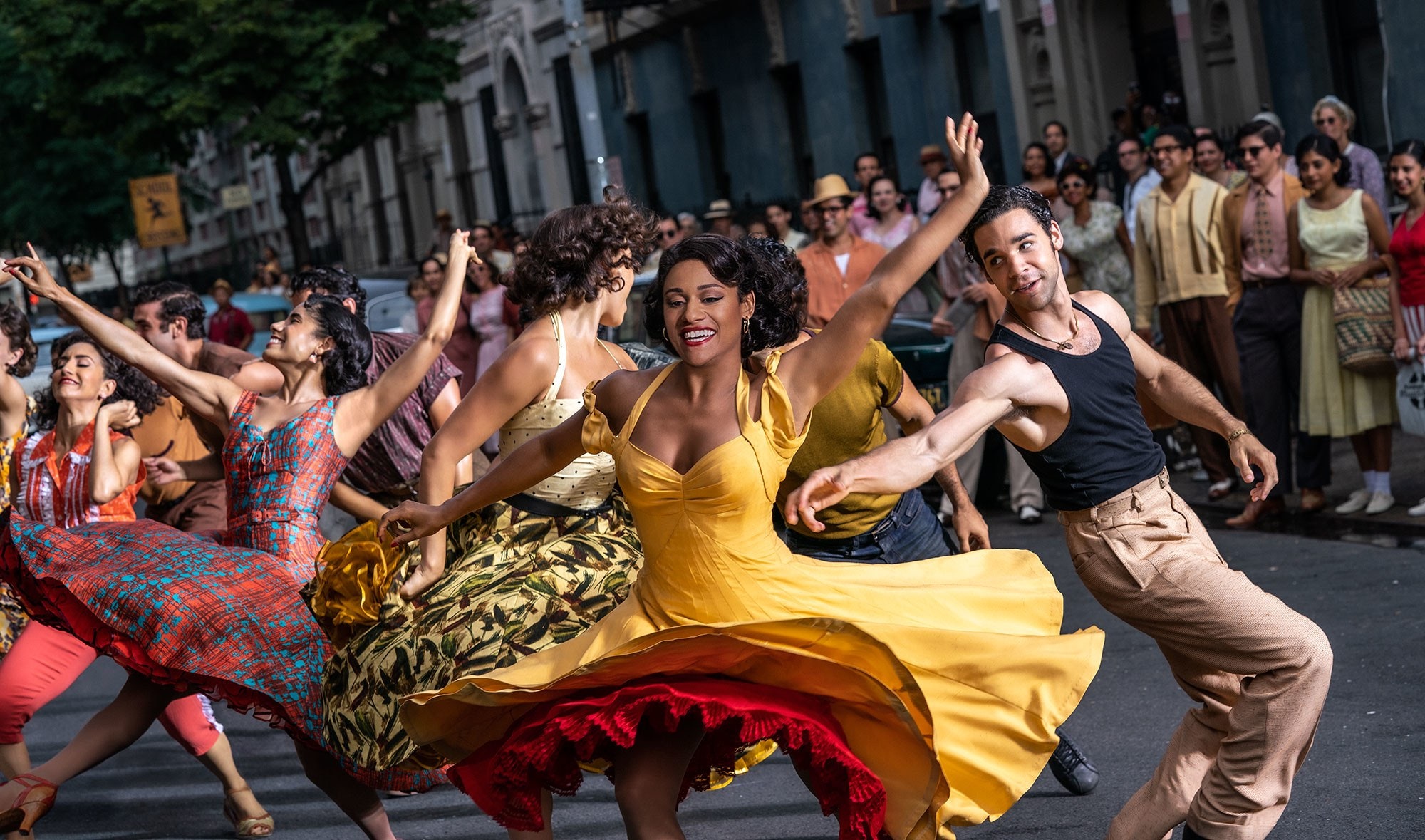


VISUAL CATEGORIES
Our favourite film categories to think about apart from Actressing & International Film. Come look at what we think might happen in Costume Design, Cinematography, and more. 

SOUND CATEGORIES
These are much less fact-based. Composers are often the last part of a creative team hired so a lot of upcoming pictures dont have composers announced yet. Especially since Hollywood isn't at work at the moment. So this is wild guesswork. We also dont know which movies will have original songs. So we are blindfolded while looking at these crystal balls. It's quite odd, punditry, in this pandemic world.
Thursday
Apr162020

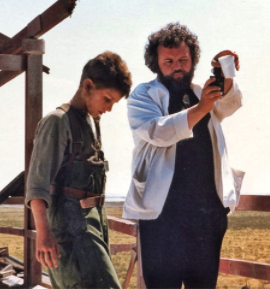
Beauty Break: The work of Allen Daviau (1942-2020) 

on the set of Empire of the Sun (1987) with Christian Baleby Nathaniel R

The film industry has lost another major talent to the coronavirus. Five time Oscar nominated cinematographer Allen Daviau has passed away at age 77 from complications from COVID-19. The acclaimed director of photography was born in New Orleans but grew up in Los Angeles so he was close to the movies before making them.

He met Steven Spielberg in the 1960s and worked with him before either of them had ever had a Hollywood gig on the short film Amblin' which Spielberg's production company was later named for.  Though Daviau was never particularly prolific and retired from the cinema in 2004 he left behind beautiful pictures and was honored with a liftetime achievement award from the American Society of Cinematographers in 2007. Let's celebrate that fine eye after the jump with some of his work...

Click to read more ...

Tuesday
Feb042020

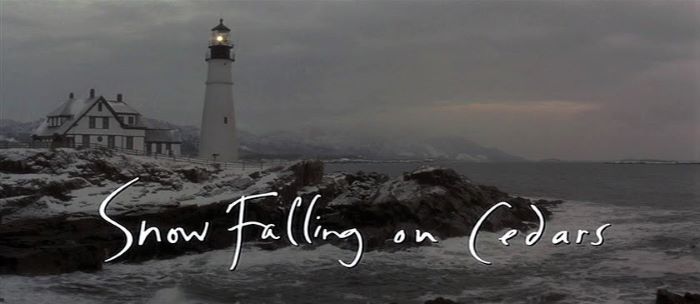
1999 with Nick: Best Cinematography Falls on "Cedars"

This week, in advance of the Oscars, Nick Davis is looking back at the Academy races of 20 years ago, spotlighting movies he’d never seen and what they teach us about those categories, then and now...

Spotlight Movie: Snow Falling on Cedars

Today's case study from the 72nd Academy Awards is a less auspicious instance than yesterday's of a movie sneaking onto Oscar's ballot with just one nomination. I'd also call it an example of good filmmaking that, in context, arguably constitutes bad filmmaking, or at least disappointing and misguided filmmaking. Cinematographer Robert Richardson is not the exclusive or even the primary defendant in the case I’m going to make. He was probably executing to the best of his ability the mandates of a director and a producing team intent on the picturesque. Still, I’m not sure we needed to reward him for following such dubious orders. And now, as so often in this movie, we flash back...

Click to read more ...

Monday
Feb032020

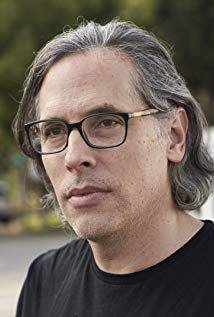
Interview: Rodrigo Prieto on working with great auteurs and "The Irishman"

Rodrigo Prieto has long been one of the most versatile cinematographers in the world. He first came to international fame with the gritty Oscar nominated Mexican drama Amores Perros (2000) though filmmakers in Hollywood, we learned in our interview, had noticed his skill even earlier than that. Since then he's worked all over the world and in an impressive array of genres and styles.

We gave you a teaser of our long sit down with this great visual stylist a couple of months ago (we had to grill him about Brokeback Mountain first) but we were meeting to discuss The Irishman. Martin Scorsese's latest Best Picture nominee had yet to open when we spoke but it was a critical darling immediately and Prieto secured his third Oscar nomination for his contributions to the mournful epic. We spoke to him about his visual choices, what he loves about his job, and working with auteurs like Martin Scorsese and Ang Lee. How do they differ on set and which of Prieto's films had they seen to convince them to begin their long collaborations?

[This interview has been edited and condensed for clarity]

NATHANIEL: Your first several movies were in Mexico. It was Amores Perros (2000), wasn’t it, when Hollywood came calling? Could you feel your career exploding? 

RODRIGO PRIETO: It was actually a little bit before. My fourth movie All of Them Witches got international recognition. That's what got me my agents. I did another movie called  Un embrujo (1998)  that Carlos Carrera directed that got an award in San Sebastian  for cinematography. It put me on the “10 to watch list” in Variety. That's the one that made me think, you know, people might have started hearing my name a little bit...

Click to read more ...

Wednesday
Jan152020

A long take is a held breath.

by Cláudio Alves

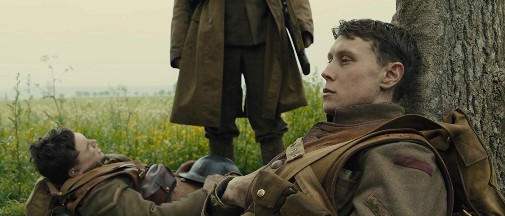
Long takes are a constant subject of fascination for filmmakers and film lovers alike. The technical challenge inherent to them makes many directors salivate at the prospect of showing off their craft. At least, that's what, as an audience member, it sometimes feels like. Though, to characterize the long take as a mere tool of formalistic showmanship would be wrong. Depending on the case, this mechanism can be transformative, capable of bending the audience's perception of time, their attachment to what they're watching and sentimental engagement.

In 1917, Sam Mendes uses the long take as a key to sensorial immersion and ever-tightening tension. Each cut is a blink, a breath, a repositioning of the eye and recalibration of the senses. It's something that's a convention and brings comfort to the viewer. When you take it away, one feels as if the action never stops, like there's no time to breathe or to disengage with the narrative. A long take is a held breath and it can be a gloriously suffocating thing to experience…

Click to read more ...