Oscar History
Film Bitch History
Welcome

The Film Experience™ was created by Nathaniel R. All material herein is written by our team. (This site is not for profit but for an expression of love for cinema & adjacent artforms.)

Follow TFE on Substackd

Powered by Squarespace
What'cha Looking For?
Subscribe

Entries in Vivien Leigh (31)

Thursday
Oct292026

Best Actress at the dawn of the Age of Television: An Alternative Oscar History

by Cláudio Alves

From 1950 to 1955, only one performer won the Best Actress Oscar from an original screenplay rather than a stage-to-screen adaptation. She was Audrey Hepburn, who took the prize for 1953's ROMAN HOLIDAY, at the 26th Academy Awards.

While most of the world was rebuilding from the brink of ruin, the USA, whose territories the war barely touched, transitioned from WWII into a period of booming prosperity. As discussed in my last alternative Oscar history post, this led to a rise in conservatism and the dreaded Blacklist. But as the 50s dawned on Hollywood, another existential threat rose to challenge the big screen. I’m, of course, talking about TV, that essential symbol of midcentury domesticity. If in 1950 the appliance was still a novelty, things changed quickly. Five years later, nearly 60% of American households held court around those all-too-tempting goggle-boxes. For the film industry, this was catastrophic, as it posed unprecedented competition.

People could now get what they used to get from cinemas from the comfort of their own homes. It’s not unlike the crisis caused by the rise of streaming platforms in our day and age. Only, back then, the American movie industry responded through an arms race for new forms of spectacle, technological innovations that the television’s small screen couldn’t hope to replicate. CinemaScope and other versions of widescreen filmmaking became standardized over the square-ish-ness of the Academy ratio. Genres like the Biblical epic surged in popularity, as did other marks of lavish opulence, musicals and the like. But also films that tested the Code’s limits, from Tennessee Williams’ adaptations to the gamine-lite (dis)pleasures of The Moon Is Blue. 

But how did this reflect on the Best Actress race, both that of our actual Oscar History and the one dictated by my personal preference? And what about the rest of the world? Believe it or not, Hollywood isn’t the end-all-be-all of cinema…

Click to read more ...

Thursday
Sep032026

Best Actress and the end of the Great Depression: An Alternative Oscar History

by Cláudio Alves

Miriam Hopkins in BECKY SHARP (1935), Janet Gaynor in A STAR IS BORN (1937), and Vivien Leigh in GONE WITH THE WIND (1939) were the first 3 Best Actress nominees from full-color movies.

The woes of the Great Depression demanded escapism from Hollywood. Such spectacle came in a myriad of forms, including some technical advancements.

By 1935, the three-strip Technicolor process was ready for features, blessing the silver screen with hues that called themselves natural while shining bright like something out of a dream. New genres came into being, too, sometimes as an echo of the dark times – think gangster pictures and their basis in social realism turned pulp or the rise of horror at Universal – and sometimes as an antidote. The screwball comedy was a child of the Great Depression, alright, with some of its greatest hits holding a blissfully distorted mirror to off-screen miseries, distracting from them and offering some magical impossibility as succor for the soul. In other areas, movies kept getting bigger, upping the ante in ways that recalled the great epics of silent cinema, those endeavors that moved armies and mountains for the camera’s gaze and the audience’s pleasure.

Obviously, this all reverberated through the Oscars, including and especially the Best Actress race. But will my personal ballots reflect it in the same fashion? Well…

Click to read more ...

Tuesday
Jul302024

Ranking the two-time Best Actress winners

by Baby Clyde

Hilary Swank accepts her second Best Actress Oscar at the 77th Academy Awards.

To celebrate the 50th birthday of two-time Best Actress winner Hilary Swank, I've decided to rank all of the double champs in everyone's favorite category. It's a list of all-time greats, but the performances range from the sublime to the truly Dangerous. They are being judged solely on the performance, but I may be somewhat swayed if they beat out more deserving nominees or didn't win for their best work. I do not include those overachieving triple and quadruple recipients (Kate, Frances, Meryl, and Ingrid) who don't need any more attention. So, with a hearty Happy Birthday to the birthday girl, let's see how our Million Dollar Baby stacks up against her second-time sisters…

Click to read more ...

Sunday
Apr072024

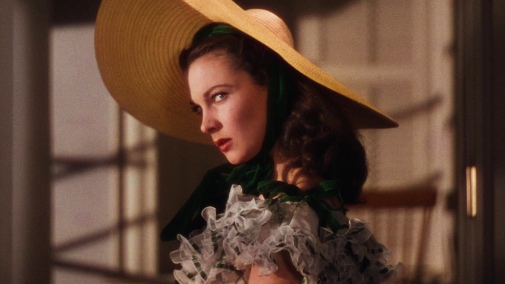
Scarlett O'Hara's Best Looks

by Cláudio Alves

Since 1939, Gone with the Wind has been re-released countless times in American theaters. This year, it's enjoying another of those on April 7th, 8th, and 10th to celebrate the picture's 85th anniversary. While defined by gross politics and a nostalgic view of the Confederacy that was already cause for contestation by some in the 1930s, it endures as a symbol of Old Hollywood craftsmanship at its peak. Indeed, it's difficult to think of a production that better exemplifies the sheer ambition of the studio system, its grandeur, and stunning spectacle. Technical ingenuity abounds, as does an eye for powerful imagery. It's so beautiful that some of its shots endure as cultural artifacts, even when divorced from their origin.

Today, I want to celebrate one aspect of its splendor near and dear to my heart – the costumes by Walter Plunkett. Specifically, I've given Scarlett O'Hara the same treatment Bella Baxter got, and ranked her ten best looks…

Click to read more ...

Monday
Aug082022

Tennessee Williams @ the Oscars

by Cláudio Alves

Vivien Leigh accepts her second Oscar in 1952.

The Supporting Actress Smackdown of 1951 is coming at the end of the month, bringing with it a revisit to the first Tennessee Williams adaptation to catch the Academy's eye. Elia Kazan's A Streetcar Named Desire marked the start of a period when Hollywood couldn't get enough of the American playwright, bringing most of his celebrated texts to the screen in big studio productions that attracted the cream of the talent crop of filmmakers and actors. These projects were incredibly captivating for the latter, with their guarantee of juicy roles prone to critical acclaim. Over just fourteen years, 19 performances were Oscar-nominated, and five won. 

Let's explore the list of AMPAS-approved Williams adaptations, find out where one can watch them, and share some Oscar trivia along the way... 

Click to read more ...